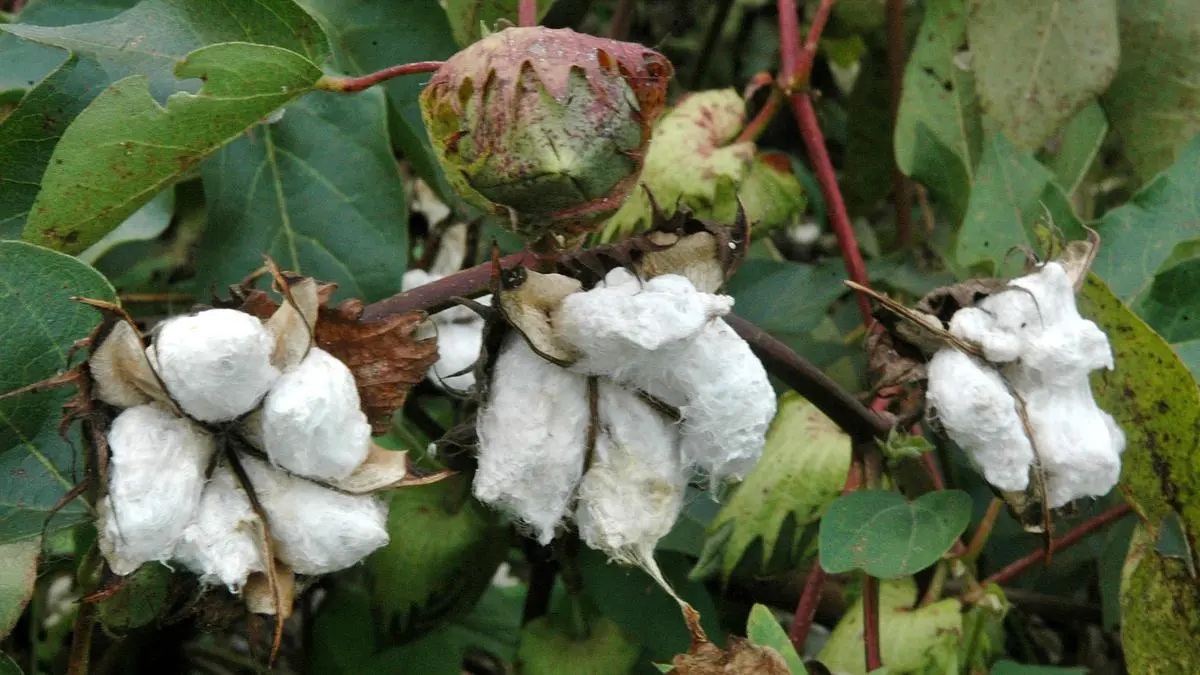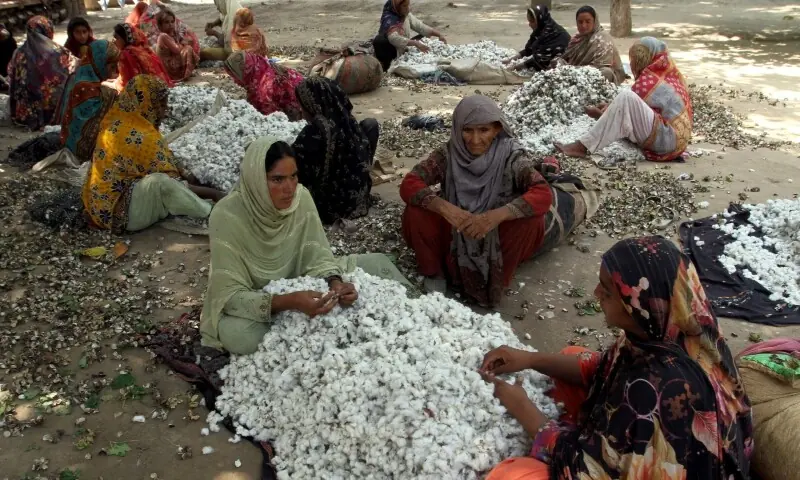
When Arizona became a state in 1912, cotton was a shiny, up-and-coming industry. At least it was for new Arizonans — Native Americans farmed cotton here for thousands of years.
But much of the space cotton took up has been repurposed for other Arizona developments.
That’s the story of the Hudsons, whose family farming history traces back to Tempe. In the early 20th century, E.W. Hudson was hired by the U.S. Department of Agriculture. Hudson would change state history by developing a strain of long-staple cotton at a laboratory in Sacaton, Arizona.
Different staples are the lengths of the fiber strands that make up cotton. Long-staple cotton produces stronger and softer fabrics, which are more valuable.
The strain Hudson helped create is what’s now called Pima cotton.
Hudson and his wife eventually moved to Tempe and started farming cotton and other crops. But when the demand for Valley real estate began to grow, the Hudsons sold their farmland in Tempe and went as far west as the Parker Valley, on the state’s western edge along the Colorado River, where they could lease land and resources at a lower price from the Colorado River Indian Tribes.

“What we were paying the Colorado River Indian Tribes for water was like, about 5% of what it costs to raise the water up with a pump,” said E.W. Hudson III, grandson of the late E.W. Hudson, at his family home in Mesa.
The family’s lease in the Parker Valley was eventually sold to a bigger farming operation, and the Hudson family transitioned to a different industry: real estate. Back in Tempe, the Hudsons invested the tens of millions of dollars made selling their farmland into real estate developments.
Another of E.W. Hudson’s grandsons, Cliff Hudson, still lives on what used to be part of the family farm in Tempe.
“It all came from cotton, and really because my mother was pretty sharp at developing real estate,” Cliff Hudson said.
Several places in Tempe were even named after the Hudsons. But they were stripped of the name a few years ago because the original E.W. Hudson was a member of the Klu Klux Klan.
Cliff says his grandfather wasn’t a racist, but joined because he didn’t like Catholics and didn’t want them teaching in public schools.

The story of the Hudsons is shared among many other Arizona farming families. What used to be farms are now strip malls, apartment complexes and office buildings.
“Maricopa County used to be a top [producer] for cotton. Unfortunately, as we have urbanization, it just continues to sprawl,” said Jadee Rohner, executive director of the Arizona Cotton Growers Association. “And so we see the cotton production moving out of Maricopa.”
As recently as 1982, Arizona had more than 120 cotton gins. Today, there are eight. And only one still operates in Maricopa County.
Cotton farmers’ chief problem is the price of their crop. It’s fluctuated somewhat over the decades, but is now the same as it was in 1979 — 65 cents per pound.
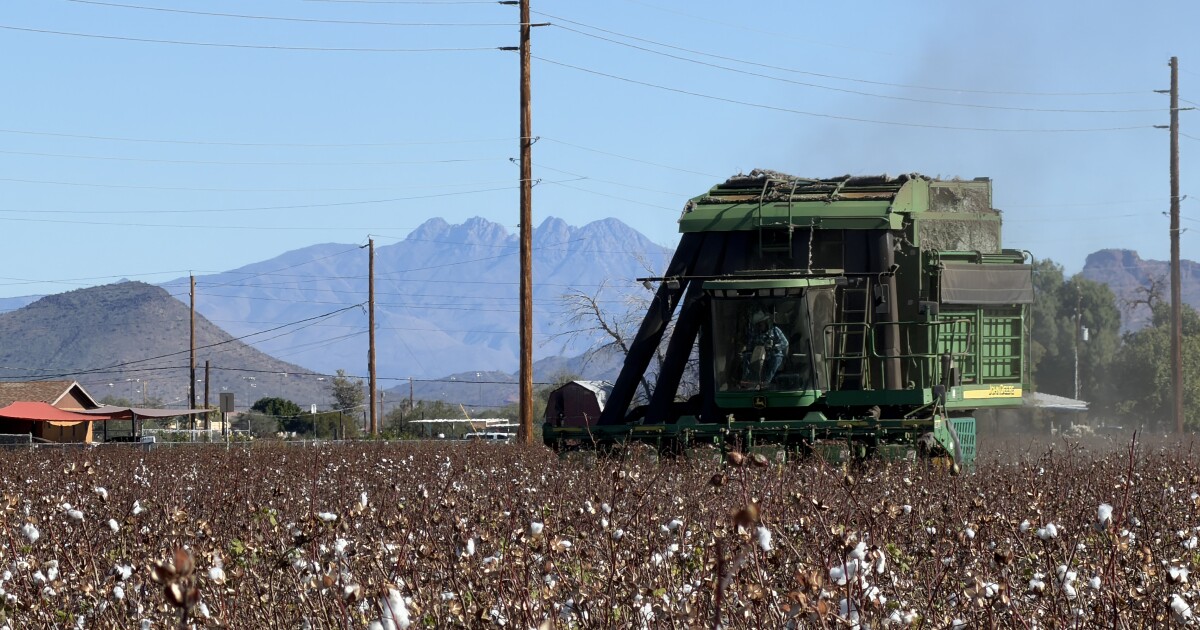
“Think about a cotton picker, one of the big John Deere, big green machines that’s going to go through the field and pick cotton. That machine costs $1.4 million. 40 years ago, that machine cost $40,000,” Rohner said. “So farmers are getting the same price for their end product that they were 40 years ago, but the inputs when it comes to machinery, water, seed, fertilizer, those things have almost tripled in cost.”
Other cotton-growing countries, like Brazil, also have fewer regulations on environmental concerns like emissions and herbicides, so it’s cheaper to grow cotton there, and easier to make a profit with low prices.
Cotton production trends in Arizona, 1912-2022

Claudia Montanía, George Frisvold and Dari Duval
/

“You can’t farm the price of this equipment. You can’t. It’s impossible,” E.W. Hudson III said.
There were two peaks of cotton cultivation in state history. In 1953, Arizona grew close to 700,000 acres of cotton. In 1981, it spiked again to over 600,000.
Today, that number has dropped down to around 100,000 acres.
The situation with cotton has spurred federal lawmakers to introduce a bill called the Buy American Cotton Act. The legislation aims to increase demand for U.S. cotton by offering tax credits to businesses that use it.
And the federal budget bill last year included money to bail out cotton farmers. The bill raised the seed cotton reference price and updated marketing assistance loan rates for cotton farmers. Raising the price of seed cotton changes the price floor and is intended to help farmers make a better profit.
These provisions ensure greater financial stability and better risk management for cotton producers.

None of the cotton produced in Arizona stays in the state. It’s mainly exported to Asia, where there are spinning mills to turn cotton into fabric, or as Rohner says, “from dirt to shirt.”
“We don’t have mills, the quantity of that infrastructure, in the United States anymore,” Rohner said. “A lot of it has been taken overseas to produce. They have cheaper labor, they have cheaper inputs.”
Only 1.5% of all the cotton grown in Arizona is the Pima cotton Hudson’s grandfather developed. There was even a time when Arizona grew most of the Pima cotton in the world.
In fact, Rohner takes umbrage with the fact that any other cotton could be considered better.
“Pima cotton is a higher quality than Egyptian cotton,” she said. Want to know a really fun fact? The only thing special about Egyptian cotton is that it’s grown in Egypt. There’s really, it has the same quality as upland cotton. It’s really not that special.”
Although Pima cotton is softer and more expensive, it also takes longer to grow, has a lower yield, and is less resistant to both pests and heat. It also needs to be processed in a special kind of gin.
Even the Hudsons avoided growing much Pima cotton since the shorter-staple variety is more reliable.
“You had to have the price to make it successful. So nah, I couldn’t follow in my grandfather’s footsteps, and my father didn’t either,” E.W. Hudson III said.
Hudson is growing vegetables in his backyard in Mesa. Although the Hudson family has young descendants, no one is farming anymore. But, there’s something about farming that just seems to stick with people.
At 76, Hudson said he wants to move his family out of the Valley and buy another farm. He said his grandfather wanted the same when he was older.

Farmer Adam Hatley is the same way. His own father is still working on the crops at age 91.
Hatley wants to keep farming in the family, but understands the costs of farming cotton all too well. Cotton is just one of the crops he grows while making a living in Scottsdale, making him one of the rare cotton farmers left in the Valley.
Hatley is also president of the Arizona Cotton Growers Association and the former chair of the Cotton Research Council. He says it’s not just the cotton industry that’s hurting. Local farms go out of business in the United States every day.
“Economics of it have been challenging. And then with urban development, even here within the community, There’s a lot of development going on and housing and the freeway and the commercial corridor,” Hatley said.
Even though Hatley wants to keep farming in his family, financial reality makes that dream harder to achieve.
“So we are slowly getting squeezed out, but as long as we can, we’ll keep doing what we’re doing,” he said.