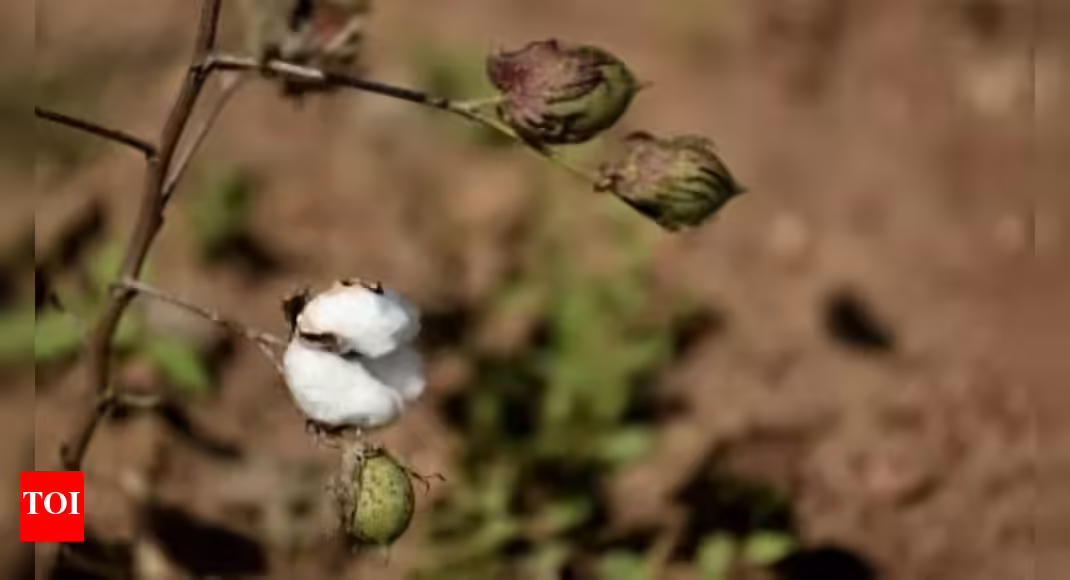
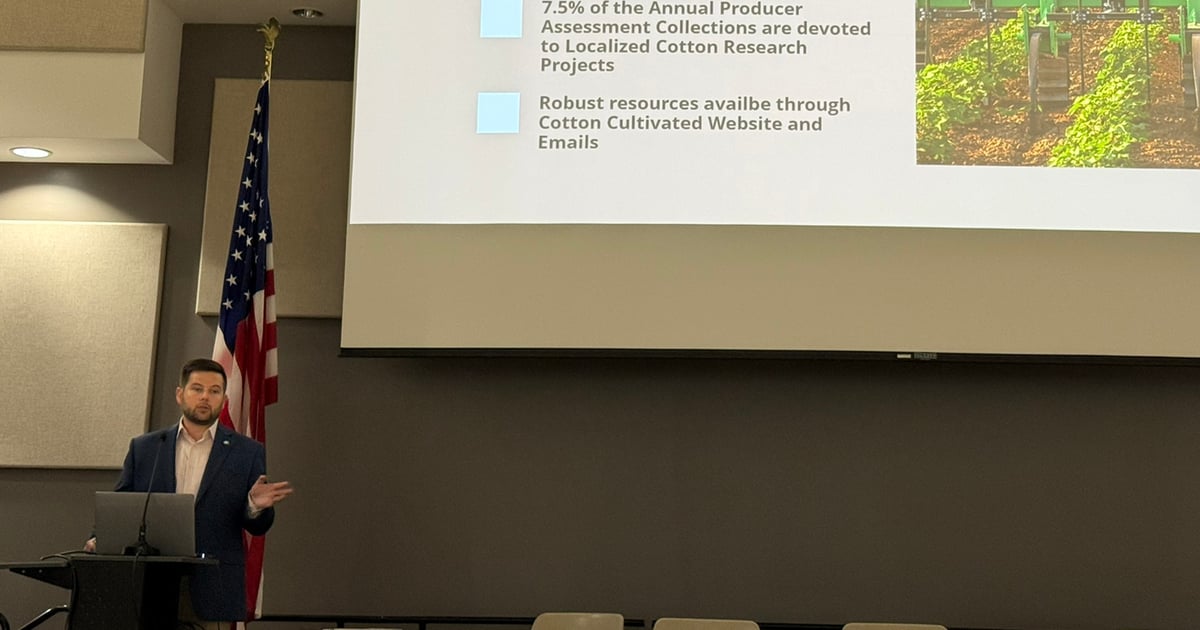
When I attended the 2026 University of Tennessee Cotton Focus on Feb. 19, I was prepared for gloom. Instead, it was much nicer to hear about how we move beyond persistent low commodity prices and high input costs than it would’ve been to continue merely bemoaning bad economics.
The room was as full as I’ve seen for this particular meeting, and more than a few farmers were there to pick up on what UT was delivering. Despite market conditions, several positive developments could be coming cotton farmers’ way in the upcoming year.
The One Big Beautiful Bill Act brings significant improvements to the ag safety net, said UT Extension economist Aaron Smith. Producers with base acres can expect substantial Price Loss Coverage payments. Additionally, the legislation includes enhanced crop insurance premium subsidies, making risk management tools more affordable and accessible.
Smith highlighted the potential to increase base acres through previously unassigned acres. He also emphasized sophisticated risk management approaches that farmers can leverage. His framework helps producers understand exactly when their financial exposure occurs through price protection strategies. That information is available online at UT Extension’s website.
He also noted that only 18,000 of Tennessee’s 227,000 insured acres utilized companion crop insurance coverage in 2025. There is significant room for farmers to enhance their risk protection through programs like Supplemental Coverage Option and Enhanced Coverage Option policies.
Agronomically, he noted that paying attention to low cost-per-unit production through adjustments such as modified seeding rates, fertilizer application and timing can help growers’ bottom line. Growers are already going in that direction, but closer analysis with Extension research can move that bar further.
UT’s ag trade economist, Andrew Muhammad, commented on the world market. He pointed out that there has been a significant market shift with Vietnam as the largest buyer of U.S. cotton. Growth in Southeast Asian textile manufacturing suggests these markets may continue expanding, which is good news for American cotton growers.
While U.S. cotton is the most globally dependent ag commodity, Muhammad said the cotton community needs to continue to support strategic export promotion programs in markets in Southeast Asia. He mentioned current USDA-funded projects as successful examples.
Buddy Allen, president and CEO of the American Cotton Shippers Association, was also there to point out that he sees campaigns, such as the National Cotton Council’s “Plant Not Plastic” campaign, have the potential to move more U.S. cotton into the market.
We’re counting on it.