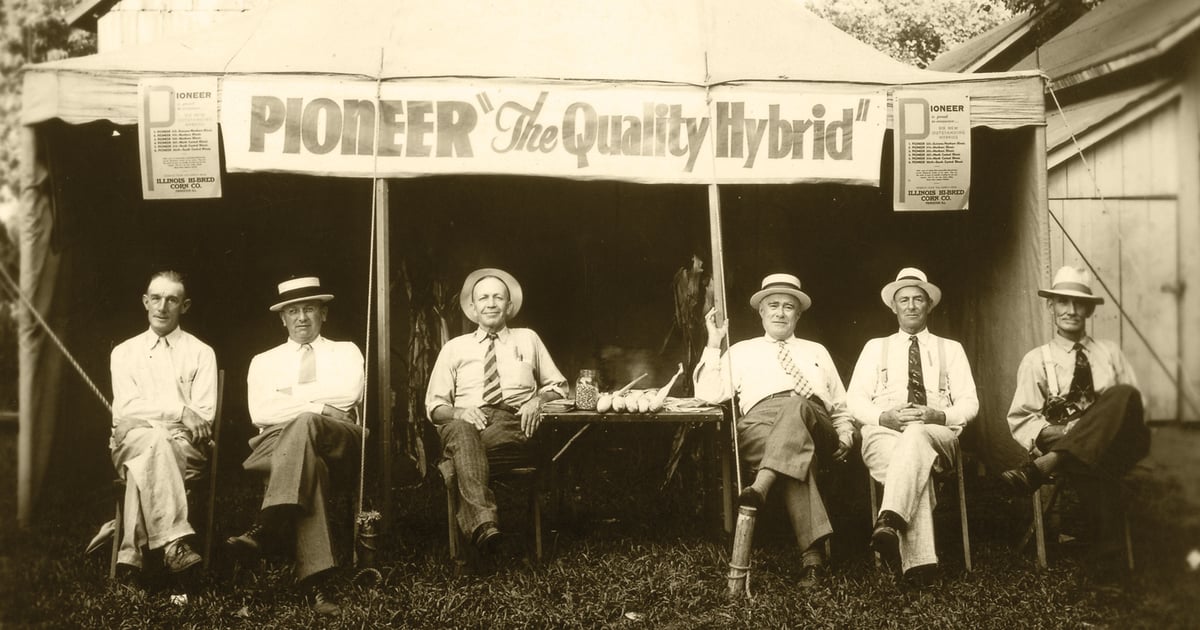
Celebrating its 100th anniversary in 2026, Pioneer has reached a milestone moment to reflect on a century of innovation, leadership and impact on the seed industry. Founded by Henry A. Wallace in 1926, this seed brand began as a bold experiment in corn breeding and quickly grew into a driving force for agricultural progress.
The company Wallace founded was first called the Hi-Bred Corn Co. Pioneer was added to the name in 1935 to differentiate it from other companies and reinforce its place as an innovator in the breeding and sale of hybrid seed. Today, Pioneer is the global flagship seed brand of Corteva Agriscience.
The following is a background of the company’s progression through the century from Lance Gibson, Corteva agronomy training manager. He and Mark Jeschke, Corteva agronomy manager, have jointly written about the history of corn and the brand in Pioneer publications.
A revolution in corn breeding
Wallace was one of the first people to understand the significance of corn hybridizing methods that were initially published by George Shull at Cold Spring Harbor Laboratory in New York in 1909 and further developed by Edward East at the Connecticut Ag Experiment Station.
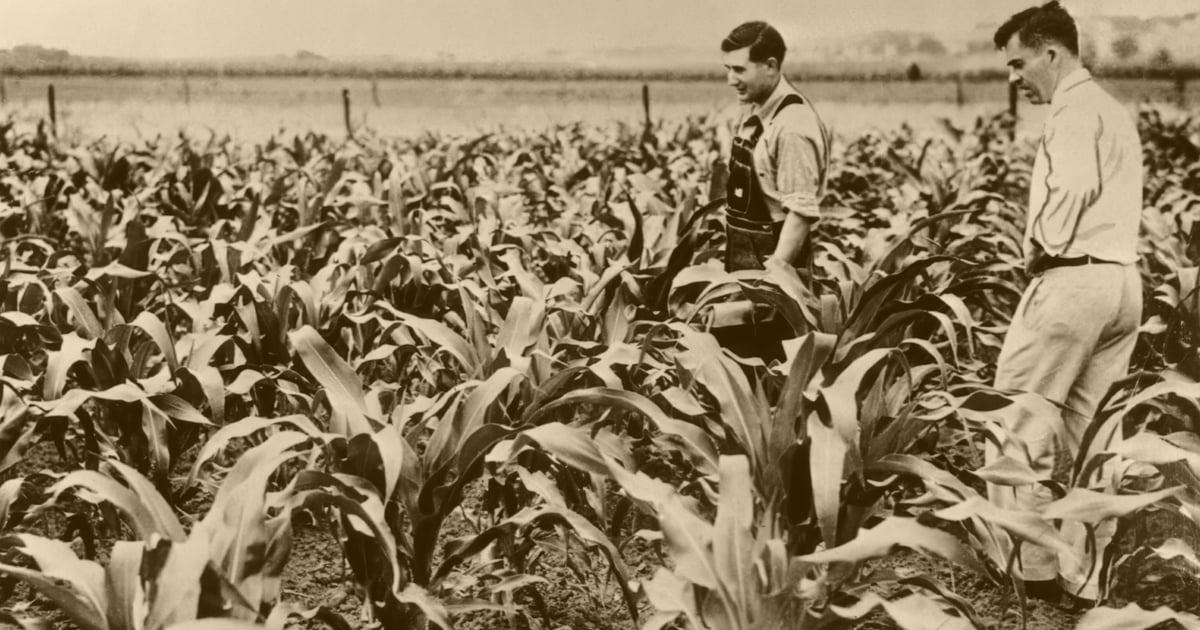
Wallace began experimenting with corn breeding as a youth in 1904 near his home in Des Moines, Iowa, by crossing open-pollinated corn varieties. Fascinated with the new science of genetics, he attended Iowa State College.
After graduating in 1910, he was a writer and editor for his family’s magazine, Wallaces Farmer. Actively continuing his interest in corn breeding, he began creating inbreds in 1913.
Needing more land for corn breeding and hybrid development testing, Wallace moved his plots to Johnston on the northwest edge of Des Moines in 1920.
Wallace was an early proponent of the need for scientific yield testing to determine the best-performing varieties. He, along with professor H.D. Hughes of Iowa State College, was largely responsible for starting the Iowa Corn Yield Test in 1920.
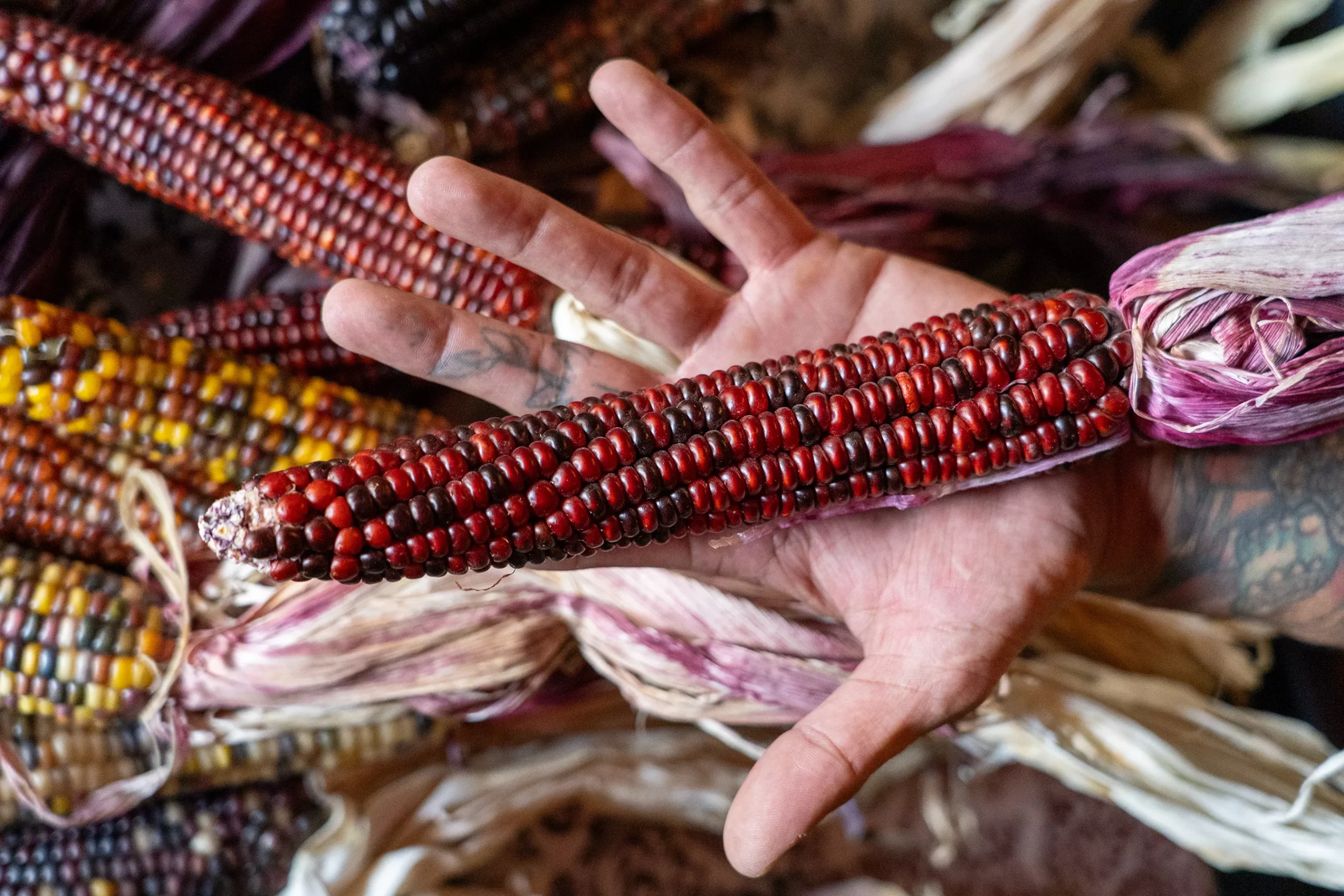
In 1923, Wallace produced a new hybrid called “Copper Cross” — a cross between the open-pollinated varieties Leaming and Bloody Butcher. He entered Copper Cross in the 1924 Iowa State Corn Yield Test and won.
Entering the marketing channel for seed corn was one of the issues Wallace had to overcome. Initially, he partnered with the Iowa Seed Co. to produce and sell his seed. Eventually, Wallace organized a group of Des Moines businessmen to form the Hi-Bred Corn Co., which was incorporated in Iowa on April 20, 1926.
For the first five years, Wallace and the Hi-Bred Corn Co. were dependent on existing seed companies to help market and sell the seed in their mail catalogs. Convinced that hybrids would revolutionize corn production and farming, Wallace created the farmer-dealer network with his company as a better way to reach farmers and sell hybrid seed corn.
Moving hybrid corn forward
Five hybrids from crosses containing inbreds created by Wallace, including Copper Cross, were entered in the 1924 Iowa Corn Yield Test. These were some of the first hybrids entered in the test. All five finished near the top against the best open-pollinated varieties.
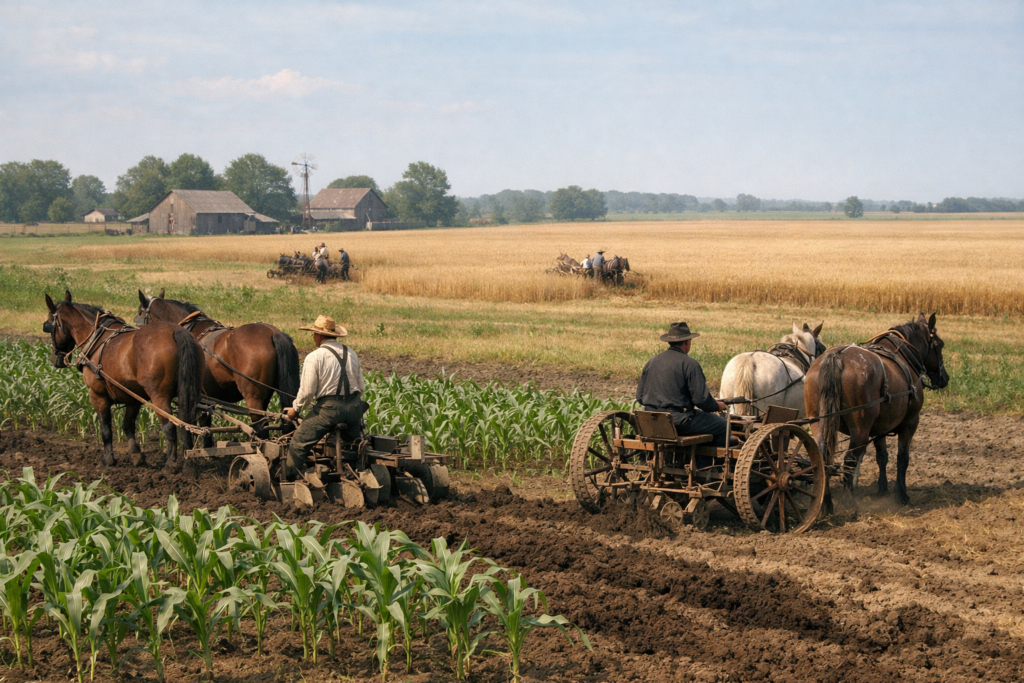
Still, it took another decade before hybrid seed corn gained popularity among farmers. With open-pollinated corn, farmers saved their best-looking ears and planted those varieties instead of buying hybrid corn seed.

AD CAMPAIGNS: Pioneer started advertising campaigns to sell hybrid corn, such as this 1939 ad.
In 1935, only about 6% of Iowa corn acreage was planted to hybrids, as most farmers continued to save seed from their own fields. Farmers weren’t accustomed to buying new seed each year, plus hybrid seed was expensive to produce and was in short supply.
The situation began to quickly change in the mid-1930s. Yield tests and farmer experience during the Dust Bowl years of 1934 to 1940 showed hybrids to be vastly superior to open-pollinated varieties under drought stress. Once farmers had evidence of the benefits of hybrid corn, the transition away from open-pollinated varieties was rapid. In 1938, hybrid corn was planted on 50% of Iowa corn acres, and adoption was nearly 100% by 1942.
How Pioneer Hi-Bred expanded
As most farmers planted open-pollinated varieties, U.S. corn yields were stagnant at 20 to 30 bushels per acre until acceptance of hybrid corn jumped after the 1936 drought.
Pioneer as a company grew rapidly with the adoption of hybrid corn. By 1945, it had 10 corn breeders, and Pioneer hybrids were processed in 12 production plants spread across Iowa, Illinois and Indiana.
Pioneer’s annual participation in the Iowa Corn Yield Test, official performance tests in other states and publishing of the results in Wallaces Farmer were major drivers for the acceptance of hybrid corn and the growth of Pioneer.
By 1940, Pioneer hybrids had begun to dominate official yield tests in Illinois, Michigan, Minnesota, Missouri, Nebraska and South Dakota. Even as hybrid competition from other companies began to build, Pioneer hybrids almost made a clean sweep of first-place honors in maturity classes in the 1949 Iowa test.
Pioneer began to differentiate itself from other corn seed companies in the late 1950s and 1960s through its crop management service and support. One of the first formal Pioneer crop management publications was “Keys to Corn Profits,” initially published in the 1950s and continued through the 1970s. A Pioneer Technical Services Department was formed in 1962, followed by the addition of full-time field agronomists in 1965.
They trained the Pioneer salesmen, held customer meetings during winter and made customer follow-up contacts in spring. These efforts helped build a reputation for providing customers with a high level of agronomy support.
Increased research and development
Pioneer became a leader in improving corn genetics through its large network of breeding stations. It used higher plant population densities for selecting inbreds and hybrids, and a wide area of testing across various growing conditions in the U.S. and Canada. A vast number of on-farm hybrid comparisons were made.
A research station was established at York, Neb., in the early 1950s to screen crosses throughout the dryland areas of the U.S., which was critical to improving corn’s resistance to drought.
In 1973, the company became incorporated as Pioneer Hi-Bred International Inc., with its first public offering of company stock.
Pioneer had 79 scientists and technicians employed in research, with 21 research stations for seed corn located in 13 states and five countries. Seed was produced under arrangements with 640 independent farmer-growers and processed in 15 seed corn production plants in Illinois, Indiana, Iowa, North Carolina and Texas. Sixty-five corn hybrids were being marketed primarily through 2,500 independent dealers and, to a lesser extent, ag retailers.
From 1970 to 1999, Pioneer expanded internationally. In addition to seed corn, the company began developing and marketing varieties of soybeans, wheat, sunflower, canola and inoculants. Before 1970, it added sorghum and alfalfa to its lineup.
Industry and ownership changes
The seed industry went through extensive changes in the 1990s as commercialization of the first biotechnology traits reshaped the business landscape. Pioneer began searching for a partner to help it invest research and development dollars to compete in the new biotech marketplace. The company found one in DuPont Co.
In 1997, DuPont acquired a 20% stake in Pioneer. In 1999, DuPont purchased the remaining 80%, bringing together DuPont’s desire to increase its presence in the life sciences with the expertise from Pioneer in seed development, production and distribution. Pioneer continued to run under the Pioneer name, as Pioneer — A DuPont Company.
The 2010s brought another round of sweeping changes to the ag industry. In December 2015, it was announced that DuPont and Dow would merge, driven in part by economic conditions. Low prices for corn and soybeans, and high costs for land, equipment, fertilizer and chemicals had hurt farm income for consecutive years.

WEIGH TESTS: One of the ways Pioneer promoted hybrid corn was through weight tests. Farmers became believers after seeing increased weight — and yield — of hybrid corn vs. open-pollinated varieties.
The Dow-DuPont merger closed in 2017. In February 2018, the new company was announced as Corteva Agriscience, which became a publicly traded company in June 2019.
Pioneer became the flagship seed brand of Corteva. More changes came in October 2025, when it was announced the seed and crop protection business of Corteva Agriscience would split into separate companies — with the crop protection business retaining the Corteva name and the seed business operating under a new name.
Looking to the future
The future of plant breeding promises advancements through genetic tools, precision breeding techniques and climate-resilient crops to address global food security.
Key resources include genetic markers, reference genomes, databases, transcriptions and gene expression profiles. These tools are crucial for identifying genes linked to desirable traits, understanding genetic diversity and accelerating breeding programs.
Molecular markers and advanced analytics will continue to enhance traditional breeding by enabling the selection of disease-resistant, drought-tolerant and high-yielding plants, leading to faster and more precise crop development.
What do they see for Pioneer’s second century? Here’s how Gibson and Jeschke sum it up: “Pioneer has a storied history as the seed industry leader for agronomy research, knowledge and expertise. This reputation was built over decades through talented and dedicated people, sound crop management research and timely, accurate crop management information.
“These investments will allow Pioneer to continue offering growers better products, coupled with industry-leading agronomic support and local sales experts, and continue to deliver strong performance to farmers for years to come.”