
Brown: This includes all the farm service agency loan programs. For young and beginning farmers, there are actually quite a few loans where the bank will put up 45% of the money. The federal government will put up 45% of the money, and then the producer just has to put down a 10% down payment. A lot of producers associate that with their local bank, but their local bank is actually utilizing those credit programs through the farm bill.
B Magazine: What is the future of the programs not included in the administration’s Big Beautiful Bill?
Brown: The U.S. House is going to try to move something. They’re going to try to mark up a bill here in February, late February is what they say. It’s hard to move legislation when you’re in an election year like this, so I think it’s a tough road. A lot of Democratic representatives and senators want to reverse the nutrition title changes back to what they were before, and given that this legislation will have to pass with 60 votes in the Senate, I don’t think there are 60 votes in the Senate. Congress introduced a bill for additional direct payments to crop producers. Sen. Bozeman from Arkansas is using kind of the (late January) winter storm as a disaster to tie in for some farm bill support. So that might be something that gets across the finish line.
B Magazine: The Trump administration has enacted the Farmer Bridge Assistance Program. How helpful will that be to the typical row crop farmer in Southeast Missouri?
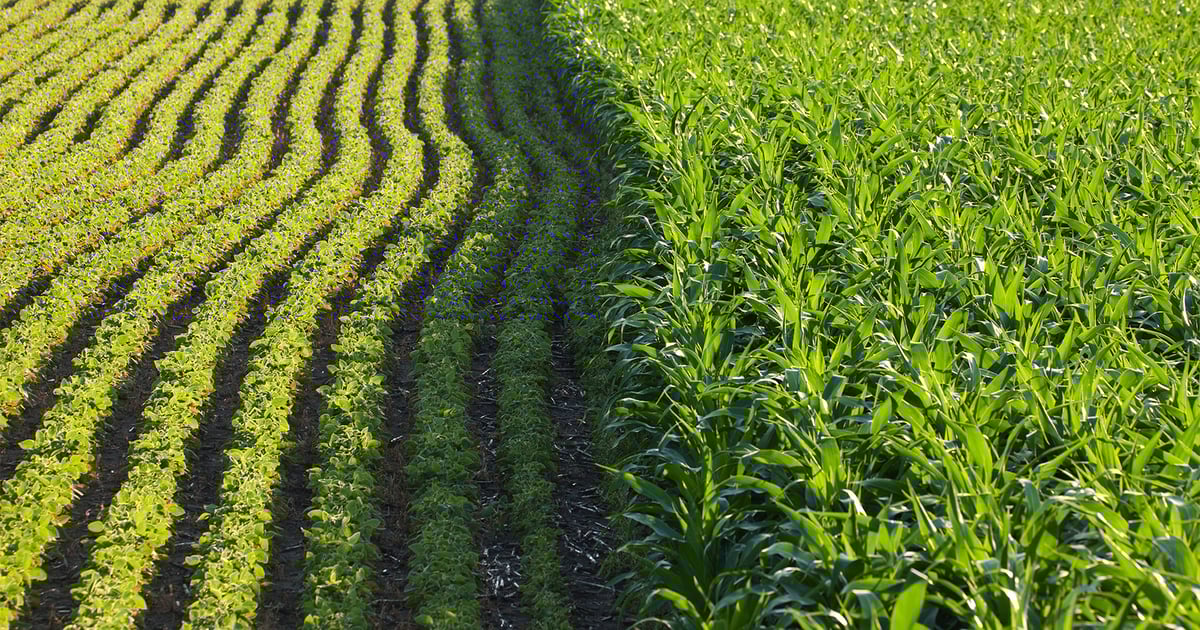
Brown: It has the potential to be very significant for Southeast Missouri Producers. One of the challenges for producers in the Southeast is that nothing is bringing in money to provide liquidity. The Farm Bridge Assistance provides some liquidity and also assurance for a banker to renew operating loans. The payment rates are going to be paid out on per acre. It’s more than $44 an acre for corn, $30 per acre for soybeans and $39 per acre for wheat. Producers planting beans behind wheat would qualify for both the wheat and the soybean payments on the same acre. Rice will receive $132 per acre and cotton $117. For some producers, they’re going to get support on some acres and not on other acres because of payment limitations.
B Magazine: Every few years, we seem to have a fiscal crisis in agriculture, caused by a variety of factors. How can producers and the government better deal with these situations?
Brown: If you think about agriculture, we live in boom and bust periods. You go through these boom periods, and then you have these long periods like what we’re in now, and I would suggest like what we experienced from 2014 all the way through 2019, 2020, to where producers bled cash. They’re bleeding liquidity, and they’re trying to find other sources of diversified income. The problem is our tax code’s really not set up in a way you can manage that volatility of income. When you have these prolonged periods of suppression, like what we’re experiencing now, you start hearing calls for federal assistance, and so the government comes in and they provide the liquidity and that kind of starts to cycle over again.
B Magazine: Is Congress making the system better?
Brown: We just kind of keep tinkering with it. It kind of keeps pushing our producers further out on a dock instead of a bridge, and the problem with the dock is that as you move out on a dock, the water below you gets deeper. We’ve built an industry that has very little margin to withstand downturns. We need to find a way in the tax code that allows farmers to build cash reserves to withstand downturns.