
Credit: Food & Wine / Dunkin’ Brands Group, Inc / Getty Images
Key Points
-
HHS Secretary Robert F. Kennedy Jr. sparked debate by questioning the safety of high-sugar coffee drinks and urging chains like Dunkin’ to provide evidence that their drinks are safe.
-
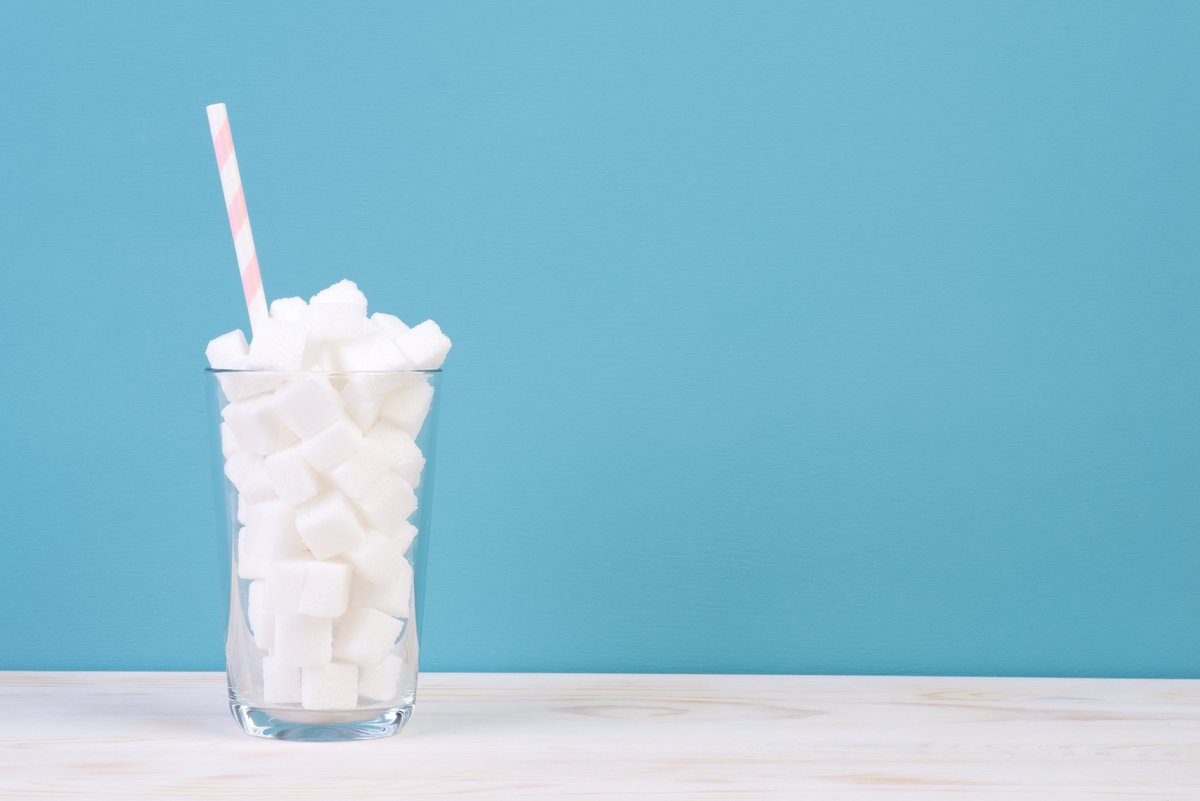
Some large Dunkin’ drinks pack up to 172 grams of sugar — far exceeding daily recommendations — with factors like skim milk boosting the total sugar due to lactose.
-
Experts say sugary drinks are best as occasional treats, as regular consumption is linked to higher risks of Type 2 diabetes and heart disease, though small ordering tweaks can cut sugar.
Sugary Dunkin’ drinks have been getting plenty of attention after Health and Human Services (HHS) Secretary Robert F. Kennedy Jr. questioned their safety. His comments ignited a public sparring match with lawmakers in Massachusetts, where the brand is headquartered.
“We’re going to ask Dunkin’ Donuts and Starbucks, ‘Show us the safety data that shows that it’s OK for a teenage girl to drink an iced coffee with 115 grams of sugar in it,’” Kennedy said at a rally in Texas in late February 2026, before suggesting he would pull certain ingredients if they can’t be proven safe.
Massachusetts governor Maura Healey responded on X with an image resembling the 1835 “Come and Take It” flag used in the Texas Revolution, swapping a Dunkin’ cup for the original cannon. Kennedy later doubled down on his stance, writing on X, “No one is taking away your Dunkin’ — but isn’t it reasonable to ask whether a drink loaded with 180 grams of sugar is safe?”
The older version of the Dietary Guidelines for Americans, for 2020–2025, stated that while no amount of added sugars or non-nutritive sweeteners is recommended or considered part of a nutritious diet, a single meal should contain no more than 10 grams of added sugar. The American Heart Association (AHA) recommends that added sugars comprise no more than 6% of your daily calories, or about six teaspoons of sugar a day for most women and nine teaspoons a day for most men.
However, the average daily intake of added sugars among American adults aged 20 and older is 17 teaspoons, according to the Centers for Disease Control and Prevention (CDC).
The comments on both posts were flooded with messages of support, debate about why these brands were specifically targeted, and questions about just how much sugar is in Dunkin’ drinks. The answer: It’s a range, as with many brands. Here’s what dietitians want people to understand, along with why many experts say you don’t need to swear off these sugary drinks entirely to maintain a balanced diet.
Some Dunkin’ drinks have surprisingly high sugar levels
None of the drinks on the Dunkin’ menu contain 180 grams of sugar, but a few come close when you order the large size. It’s not always obvious what these drinks will be. Some beverages with skim milk, for example, have more sugar than those with cream.
Related: Sugary Drinks Are Fueling a Global Epidemic of Chronic Illness, According to a New Study
“Skim milk contains around 12 grams of lactose per cup. Cream has very little,” explains Scott Keatley, RD, co-owner of Keatley Medical Nutrition Therapy. “If cream is replaced with skim milk, total sugar rises because lactose counts as sugar.” Some recipes may also call for slightly more sweetener when lower-fat milk is used, Keatley says.
|
Most sugary drinks on Dunkin’s permanent menu |
||
|---|---|---|
|
MENU ITEM |
ADDED SUGAR (GRAMS) |
TOTAL SUGAR (GRAMS) |
|
Caramel Creme Frozen Coffee |
160 |
172 |
|
Butter Pecan Swirl Frozen Coffee with Skim Milk |
156 |
172 |
|
Vanilla Bean Coolatta |
150 |
167 |
|
Triple Mocha Frozen Coffee |
159 |
165 |
|
Caramel Swirl Frozen Chocolate |
148 |
165 |
|
Butter Pecan Swirl Frozen Chocolate |
144 |
162 |
|
French Vanilla Swirl Frozen Chocolate |
144 |
162 |
|
Caramel Swirl Frozen Coffee with Skim Milk or Whole Milk |
148 |
162 |
|
Mocha Swirl Frozen Coffee with Skim Milk |
148 |
157 |
|
Banana Frozen Chocolate |
136 |
146 |
|
Frozen Chai Latte |
111 |
129 |
|
Frozen Matcha Latte with Almond Milk |
109 |
109 |
|
Caramel Craze Signature Hot Latte with Skim Milk |
51 |
75 |
|
Cocoa Mocha Signature Hot Latte with Skim Milk |
50 |
69 |
Why sugary drinks are linked to chronic health issues
An arsenal of research suggests that added sugar isn’t great for your health in general. But data also indicates that sugary drinks — which typically account for 24% of our added sugar intake — might be especially harmful.
Case in point: A 2025 study published in the journal Advances in Nutrition analyzed data on health and sugar intake from nearly half a million people worldwide. The researchers found that those who regularly consumed high-sugar beverages had a greater risk of developing type 2 diabetes compared to those who consumed less sugar. (The link wasn’t the same for people who ate sugar.) For each 12-ounce serving of sugary drinks per day, the risk of developing type 2 diabetes increased by 25%. Every 8-ounce serving of fruit juice daily was associated with a 5% higher risk.
Similarly, a study published in the journal Nature Medicine in 2025 analyzed data on sugar-sweetened beverages from observational and randomized studies. The researchers found that approximately one in 10 new type 2 diabetes cases and one in 30 new heart disease cases worldwide were connected to sugar-sweetened drinks.
“Sugar-sweetened beverages are indeed a top health harm,” Christen Cooper, RDN, an associate professor at the College of Health Professionals at Pace University, says. “Unlike foods, which contain combinations of protein, fat, carbs, vitamins, and minerals, sugar-sweetened beverages contain nothing more than a shot of empty calories as pure sugar.”
When you consume these drinks regularly over time, the pancreas struggles to produce enough insulin, a hormone that regulates blood sugar levels, Cooper explained. “If the pancreas becomes ‘burned out,’ the shutting down of insulin production ensues, and sugar remains in the bloodstream. This is type 2 diabetes,” she says.
Related: Why Drinking Sugar May Be Far Worse Than Eating Dessert
Sugary drinks are also associated with increased appetite, which raises the risk of developing obesity, cardiovascular disease, cavities, and other chronic illnesses caused by inflammation, according to Yujia Zhang, RDN, LDN, a nutritionist and pediatric dietitian at the Frances Stern Nutrition Center at Tufts Medical Center.
Priya Fielding-Singh, Ph.D., director of Policy and Programs at the George Washington University Global Food Institute, agrees. “One of the clearest findings in nutrition research is that regularly drinking sugary beverages is linked with a higher risk of several chronic diseases.”
|
The most sugary limited-time drinks on Dunkin’s menu |
||
|---|---|---|
|
MENU ITEM |
ADDED SUGAR (GRAMS) |
TOTAL SUGAR (GRAMS) |
|
Monkey Business Cloud Latte |
61 |
86 |
|
Nutty Banana Cloud Dunkalatte |
54 |
77 |
|
Golden Hour Dunkin’ Lemonade Refresher |
75 |
75 |
|
Berry Acai Lemonade Refresher |
74 |
74 |
|
Berry Blue Lemonade Refresher |
74 |
74 |
|
Mango Protein Daydream Refresher |
55 |
68 |
|
Bananaberry Protein Daydream Refresher |
55 |
67 |
How often you drink sugary beverages makes a difference
The biggest concern is how frequently someone drinks sugary beverages, according to Keatley. “Even once in a while, a very sweet beverage can push blood glucose up quickly and require a strong insulin response to bring it back down,” he says. “For most healthy people, that system works. But overwhelming it with a large sugar load isn’t especially beneficial, even if it only happens occasionally.”
While Zhang says that even a limited amount of these drinks isn’t healthy, she agrees that most people can have them occasionally.
Related: Teens Who Regularly Drink These Beverages Face a 34% Higher Risk of Anxiety
“Your body can handle high intake of sugar on a single occasion,” she said. “However, having sugary drinks a few times a month along with other high-sugar and high-fat meals can put stress on our metabolic process,” Zhang says.
Fielding-Singh agrees. “Most of the research showing health risks from sugary drinks is looking at people who consume these drinks regularly — often daily,” she says. “For most people, in the context of an overall balanced diet, an occasional sweet drink is unlikely to have a meaningful impact on long-term health. The bigger concern is when it becomes a routine part of someone’s diet.”
Smarter ways to enjoy sweet drinks without an avalanche of sugar
Zhang emphasizes the importance of understanding how much sugar is in the drinks you enjoy. “Learning about the amount of sugar in each serving of syrup can help with smart ordering,” she says.
From there, it can be helpful to gradually cut back on syrups or sweeteners over time, according to Fielding-Singh. “Many people find that once they reduce the sugar in their drinks, beverages they used to enjoy start tasting much sweeter than they remember,” she says. “But this really does take time.”
Keatley recommends maintaining flavor while reducing sugar. “People can ask for fewer syrup pumps, choose smaller sizes, skip sweet cold foams or heavy drizzles, and use milk or a higher-protein milk option to make the drink feel more substantial,” he says. “Cinnamon, cocoa, espresso, chai spice, and unsweetened flavored additions can help a drink still feel indulgent without relying entirely on sugar.”
Overall, dietitians suggest thinking of these drinks as occasional treats. “Many of the large, sweet coffee drinks people buy today are nutritionally closer to a dessert than a cup of coffee,” Fielding-Singh says. “That doesn’t mean you can’t enjoy them, but it’s helpful to think of them more as a treat rather than a routine beverage.”
Reviewed by
Lauren Manaker MS, RDN, LD, CLEC: Lauren is an award-winning registered dietitian and three-time book author, with more than 22 years in the field.
Read the original article on Food & Wine