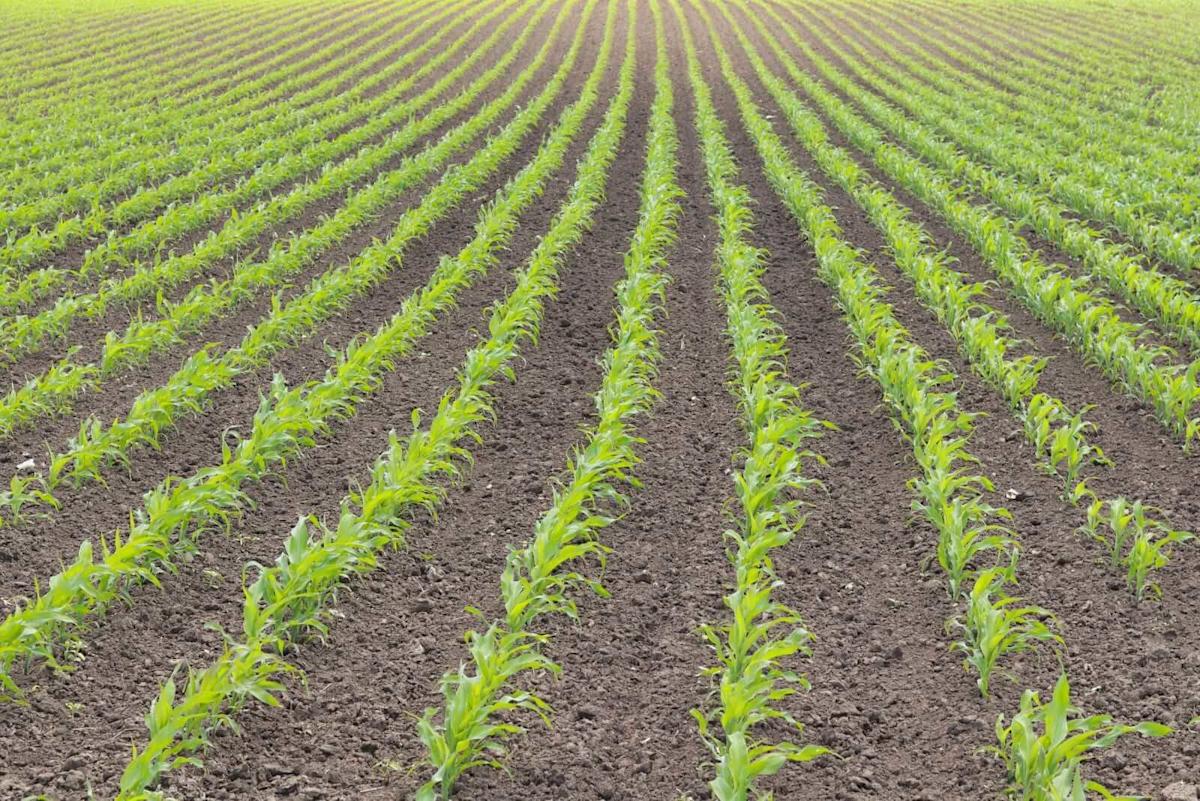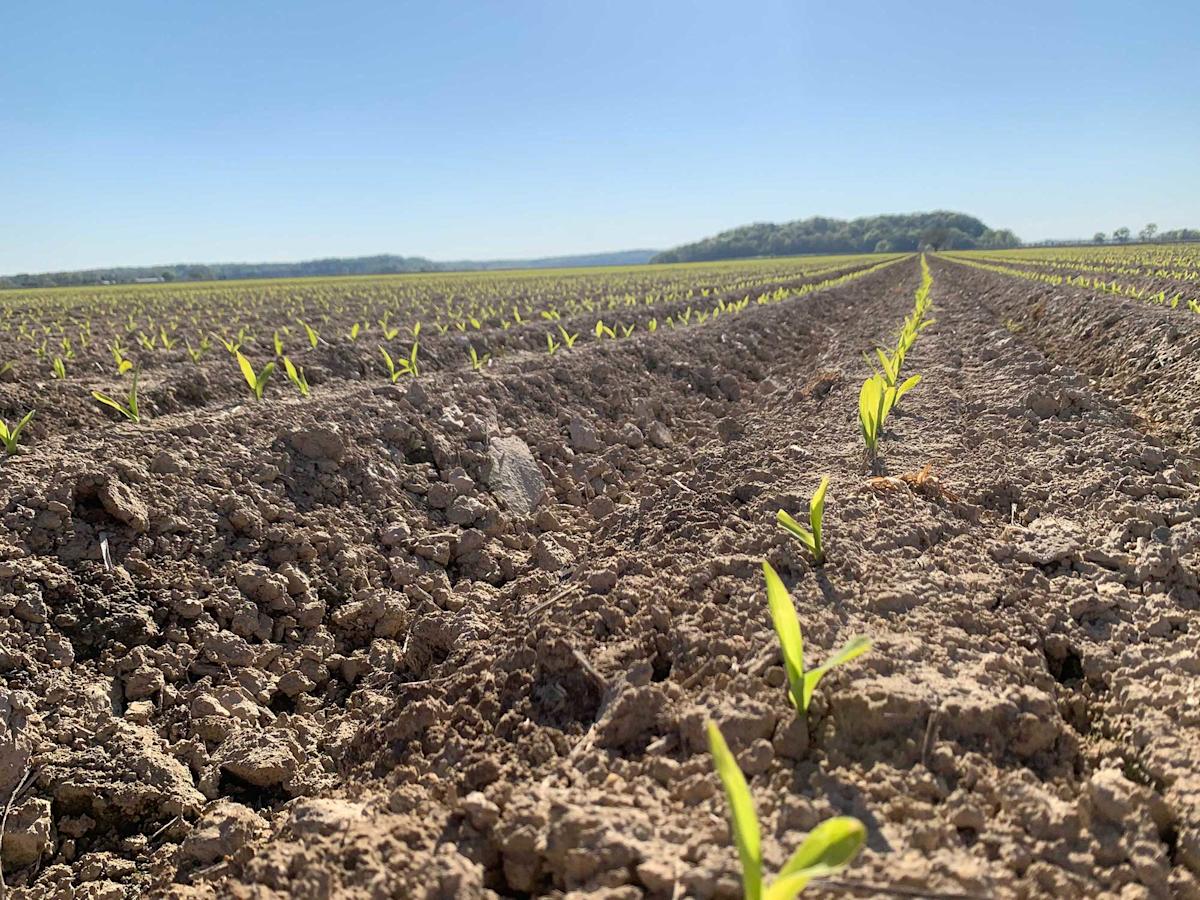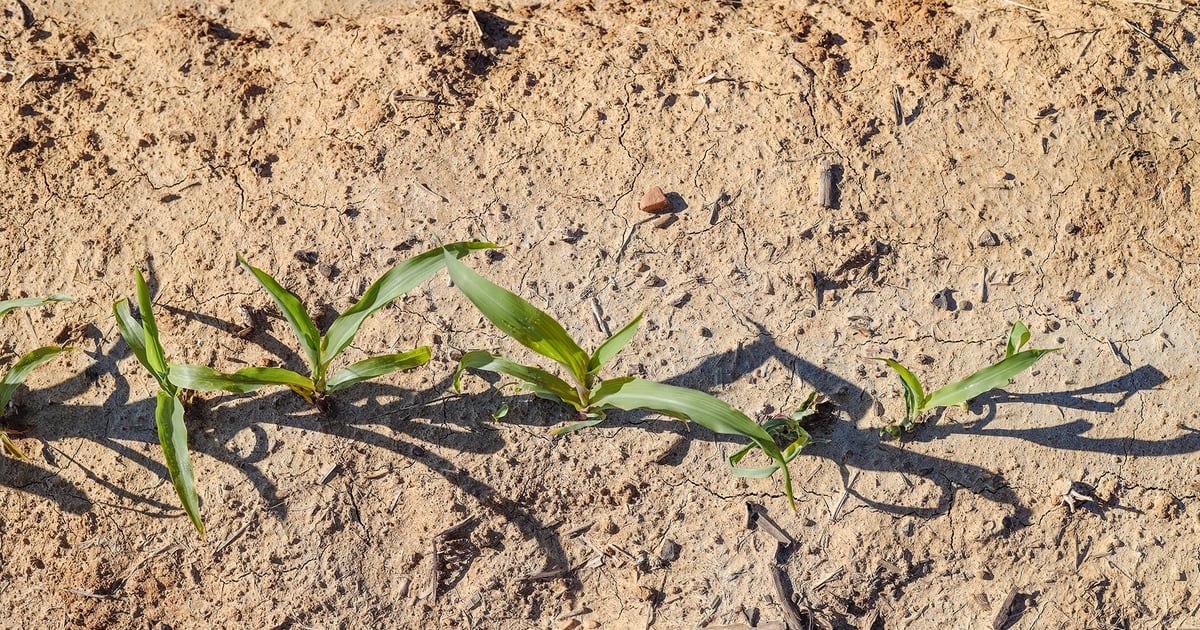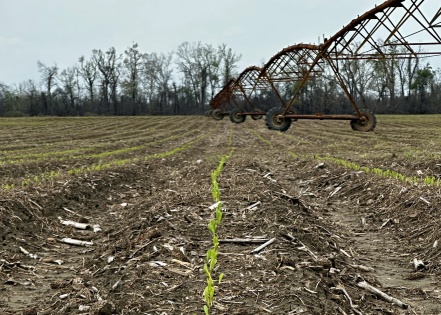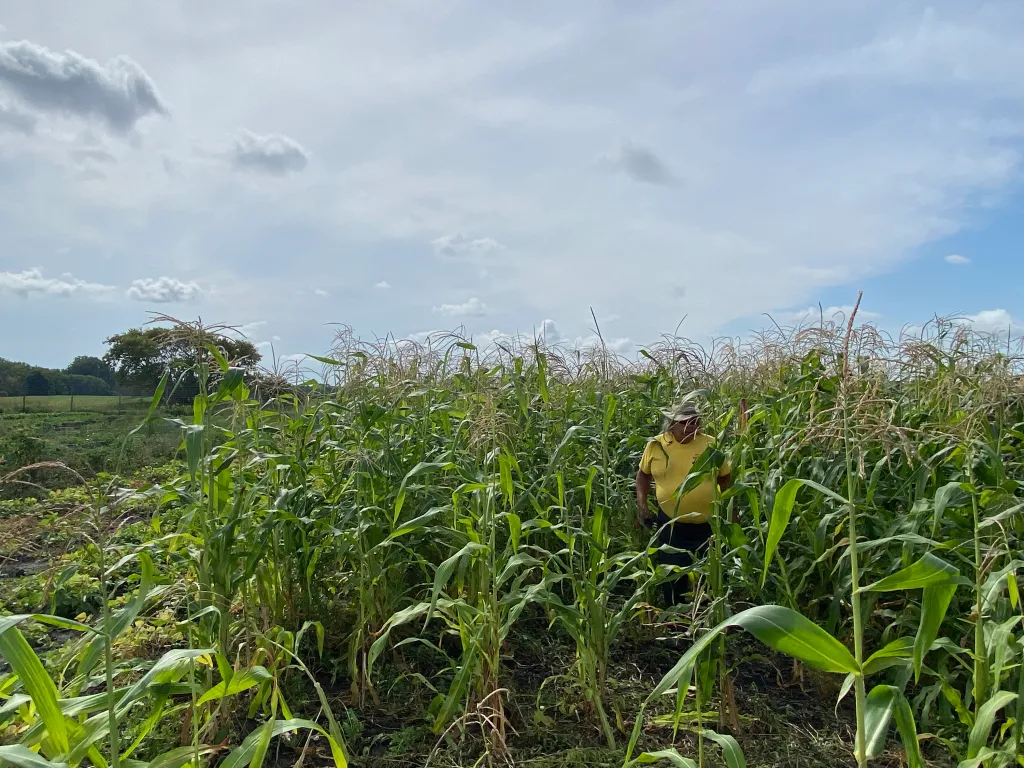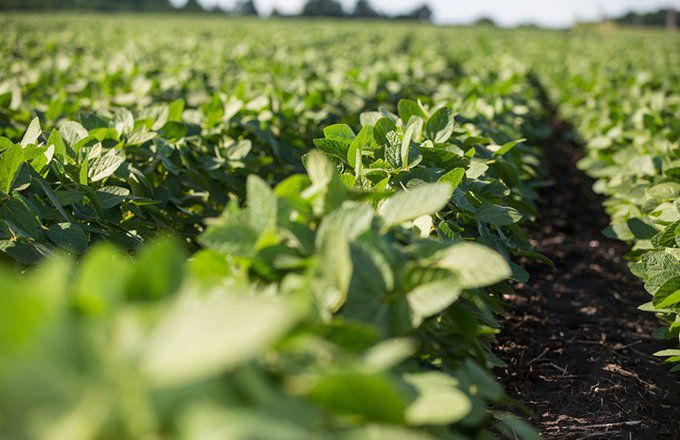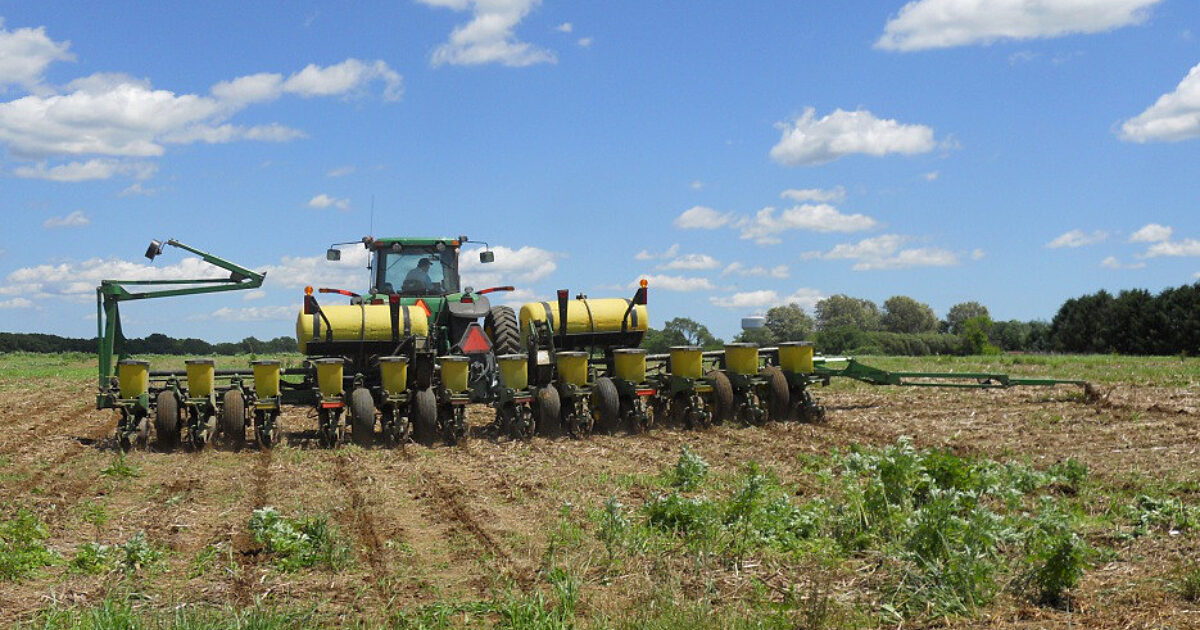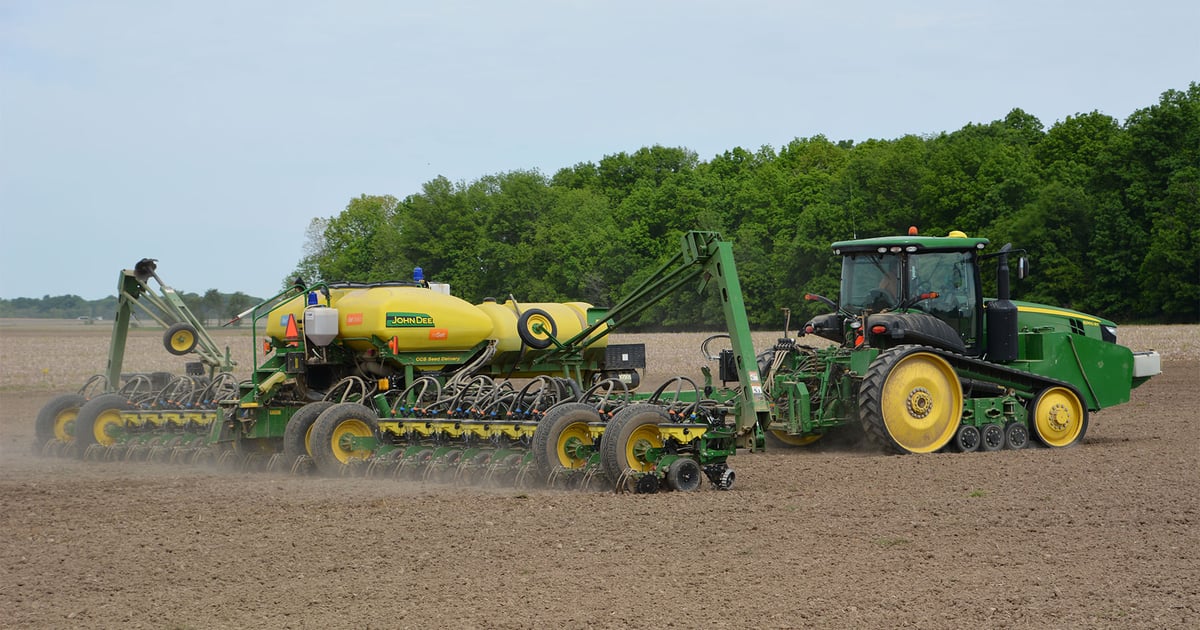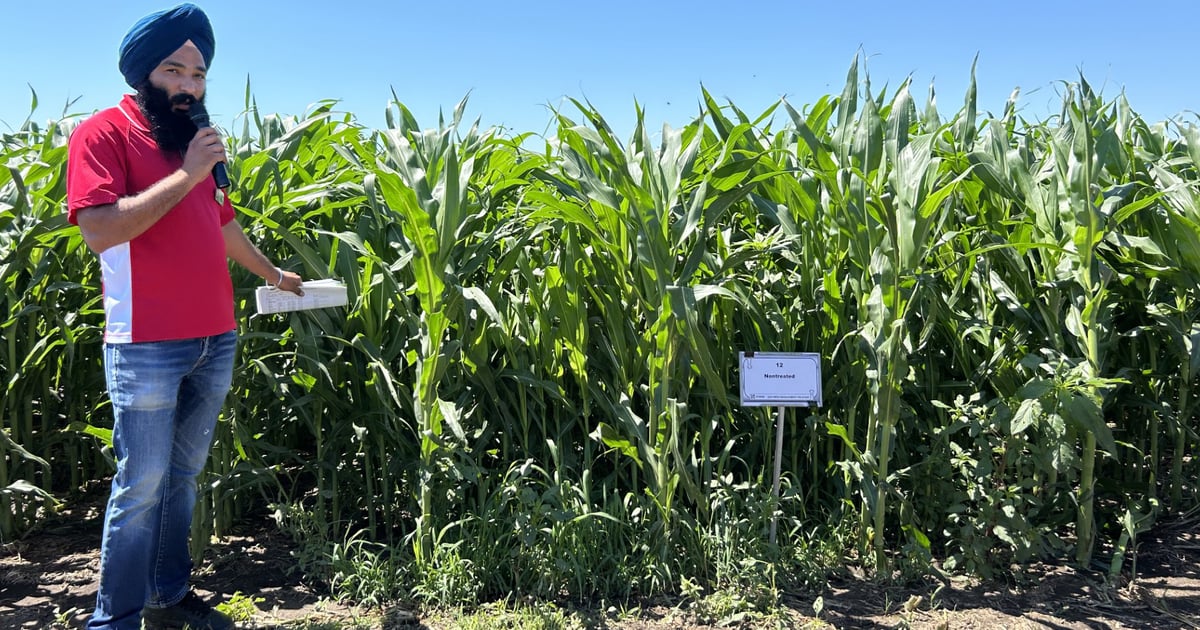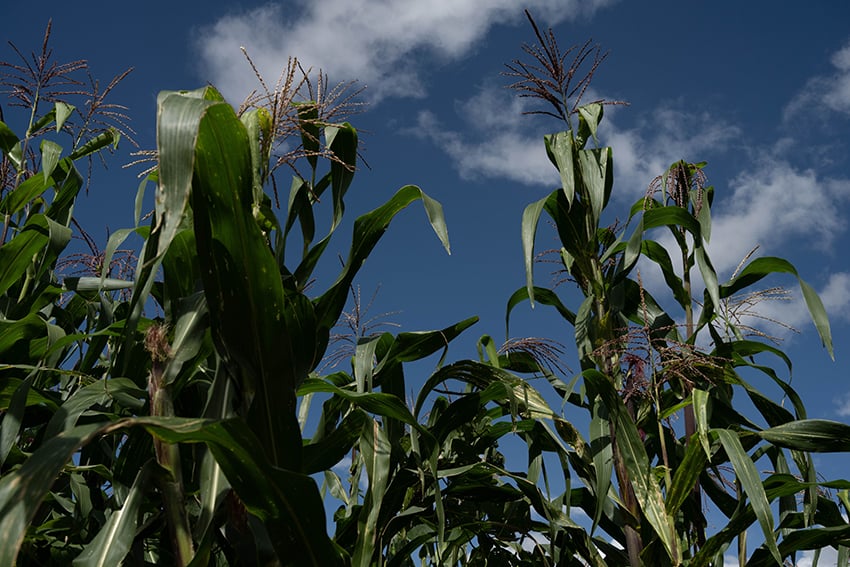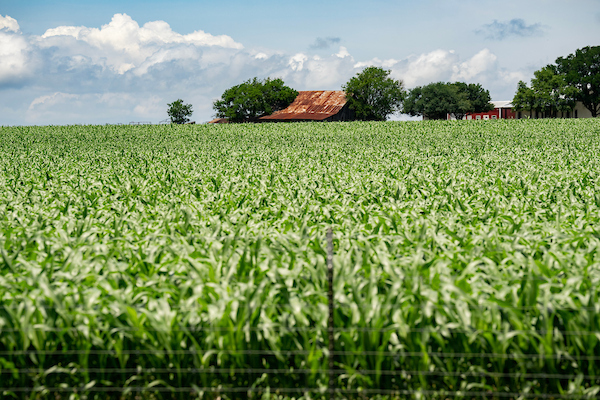
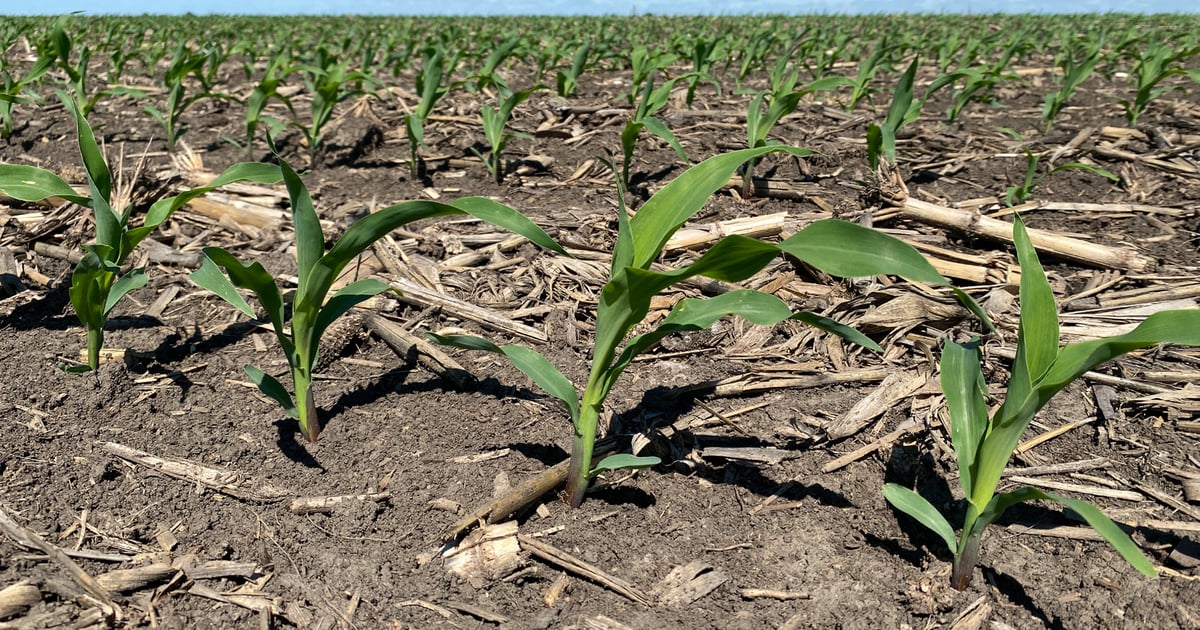
As corn emerges, early-season scouting can pay big dividends. A walk through the field at this stage can reveal potential issues with stand establishment, planter performance, seedling health and early insect or weed pressure.
Follow these seven steps for better corn stands:
1. Start with stand counts. Stand counts are done to provide an estimate on plant population in a field. To take a stand count, measure out the length of 1/1,000th of an acre based on your row width (See Table 1).

Table 1
Count only the healthy, normal-sized plants; don’t include runts or delayed seedlings, as they likely will contribute little to final yield. Take at least five to 10 counts randomly across the field, then multiply the average count by 1,000 to estimate plants per acre.
If stands look less than ideal, the next step involves doing some digging to understand why.
2. Evaluate uniformity and spacing. Plants that emerge later than their neighbors can act like weeds. Delayed emergence, as well as skips (missing plants) and doubles, can result from:
-
planter calibration or maintenance issues
-
soil and field conditions
Look for patterns that might align with or follow planter width, hybrid changes, tillage passes, sprayer width, drainage patterns, etc. Patterns are often the best clues to diagnosing the root cause.
3. Dig plants — both missing and healthy ones. If plants are missing, dig to investigate. Is there a seed? Did it germinate? Did it germinate but fail to emerge?
Also, dig up normal-looking plants to check for factors such as planting depth and sidewall compaction.
To check planting depth, find the seed and measure the mesocotyl — the white stem-like structure between the seed and where the nodal roots are developing. Since nodal roots form about ¾ inch below the soil surface, add ¾ inch to the mesocotyl length to estimate planting depth. Compare this to the target planting depth. Is planting depth consistent among plants and across different rows units?
While you have a trowel in hand, check for sidewall compaction by inserting it perpendicular to the row and lifting the soil up. If you can feel a distinct smooth, slick sidewall, this is sidewall compaction. This is often the result of planting into wet soils or using excessive downforce.
4. Assess plant health and other issues. Wilted, stunted or discolored seedlings can be a signal for things like:
Seedling disease. Inspect belowground growth for soft, brown or water-soaked lesions on the roots and mesocotyl, as this is likely due to a seedling disease. Pythium, Fusarium and Rhizoctonia can all cause similar symptoms, especially in cool, wet soils or when emergence was delayed.
Herbicide injury. Symptoms vary by herbicide group. Injured plants may have twisted, yellow or bleached leaves, or bottle-brushed roots. Injury may be due to carryover, overlap or misapplication (wrong product or rate for the soil or crop).
Fertilizer injury. Aboveground, seedlings may appear wilted, or stands may be reduced. Look for burnt root tips. Injury is often related to fertilizer proximity to seed placement.
Nutrient deficiencies may be real or temporary deficiencies. Temporary deficiencies can occur before the nodal roots are fully established, or when rooting is restricted by compaction or cool soils. Common early-season symptoms according to deficiency include:
-
nitrogen — pale green or yellow leaves
-
potassium — leaf-edge chlorosis or necrosis on older leaves
-
sulfur — interveinal chlorosis on new leaves
Environmental stressors — such as soil crusting, dry conditions, waterlogged soils and cold soils — can all impact corn seedlings.
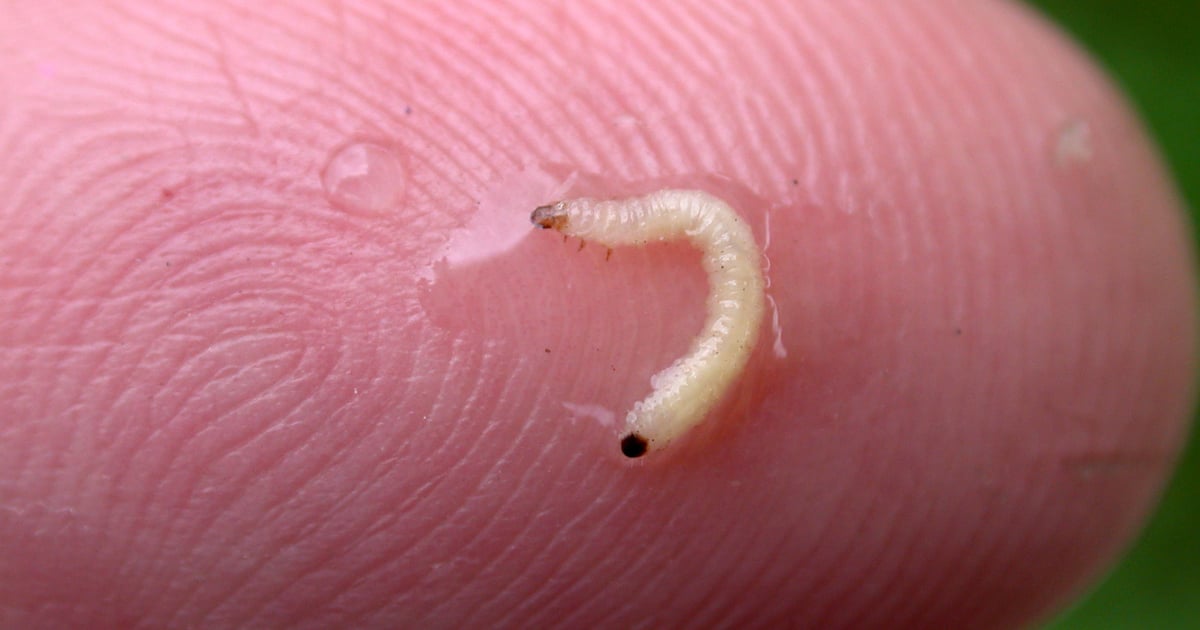
5. Look for insect feeding. Look for cutting, leaf feeding, wilting or missing plants. When digging, watch for wireworms, white grubs or seed corn maggots at the seed or roots. No rescue treatment exists for these pests, so documenting their presence informs future planting decisions.
Black cutworm and true armyworms are sporadic migratory pests. Fields with grassy weeds or that have cover crops can carry a higher risk for black cutworms and armyworms. Black cutworm larvae can cut plants and chew holes in leaves, while armyworm larvae feed on leaf margins and can strip a leaf down to the midrib.
6. Check for weeds. Early scouting also is the time to identify what weeds are germinating and how big they’re getting. Evaluate how well preemergence herbicides are working, and use this to help determine when to apply postemergence herbicides.
7. Consider replanting. If stands are less than ideal, evaluate if replanting is warranted by comparing the yield potential of the existing stand to the yield potential if you replant using Table 2. Don’t forget to factor in the costs associated with replanting (fuel, labor, terminating the existing stand, seed, risk of wetter grain at harvest, etc.).

Table 2
For example, if your crop was planted April 15 and you have 24,000 plants per stand on May 15, your expected yield is 94% of maximum. Replanting between May 15 and May 25 with an expected stand of 34,000 results in 88% to 95% of maximum.
After labor and replant costs, sticking with the existing stand likely makes more economic sense in this scenario. Also remember that there is no guarantee of achieving the desired stand if you replant.
Taking time to scout on a regular basis makes it easier to diagnose a problem before it becomes a big issue. Early detection can help preserve yield potential and can help make this growing season more successful.