
Our annual mango season is almost over. I hope you ate some good ones as they are not easy to find these days. India’s beloved fruit is mired in a cauldron of misfortunes, which include wayward weather, poor orchard management and unsafe post-harvest practices. Frankly, I am worried about what will happen a few decades from now. Will the 500-year-old Alphonso still be around? What will we lose if we lose our best varieties, most of which are centuries old?
Don’t lose sleep over it just yet— a lot many things in this world are hanging by a fine thread. Let me tell you a different story. One that I learnt not so long ago and it took my breath away.
The story of agriculture, we were told, is a result of ‘domestication’ of different plant and animal species by humans – a result of human ingenuity which began 10,000 years ago, laying the foundations of modern civilization. But, it appears, the forces that drove the human-plant relationship is much more complex.
Did we really tame, craft, and create the grains and fruits we eat today or was it the plants which made us do it in a co-evolutionary deal? To paraphrase Michael Pollan from his 2001 book, The Botany of Desire- A Plant’s-Eye View of the World, did we domesticate the potato, or did the potato domesticate us? We did tame a wild species of grass and turned it into the rice we eat. But one can also look at it this way: a wild grass, a weakling when compared to giant trees, used humans to clear vast patches of forests and colonize parts of the planet.
How fleshy fruit like mangoes evolved over millions of years inside tropical rainforests may sound like a thriller set in geological time scale. A catastrophic event about 66 million years ago— known as the K-Pg extinction event – wiped out a chunk of the earth’s plant and animal species, including all non-flying dinosaurs. Likely due to a massive asteroid which hit the planet, the explosion blocked sunlight and killed three quarters of all species. The next age, known as the Paleogene witnessed a rapid evolution of mammals including primates (our early ancestors), and angiosperms or flowering plants.
The angiosperms co-evolved with other species. From insects to birds, these flowering plants employed other species to multiply themselves. The bees lured by the nectar would carry pollens, the birds would eat the fruit and deposit the seeds far away. So, in exchange for a reward, angiosperms took the help of other species to colonize the planet.
The theatre in which the mango came into its own did not exist before the K-Pg cataclysm, I learnt from the book Mangifera indica—A Biography of the Mango and conversations with its author Sopan Joshi.
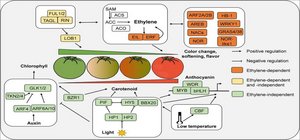
About 56 million years ago, during a phase of global temperature spike, the dense canopies of tropical rainforests prevented dispersal of seeds to newer areas. So, angiosperms had to find another way to propagate. They produced bigger seeds tucked inside even bigger nutrition-packed fruits. Then they struck a deal with primates living in trees to do the job of seed dispersal, luring them with changing colours of ready-to-eat ripe fruit.
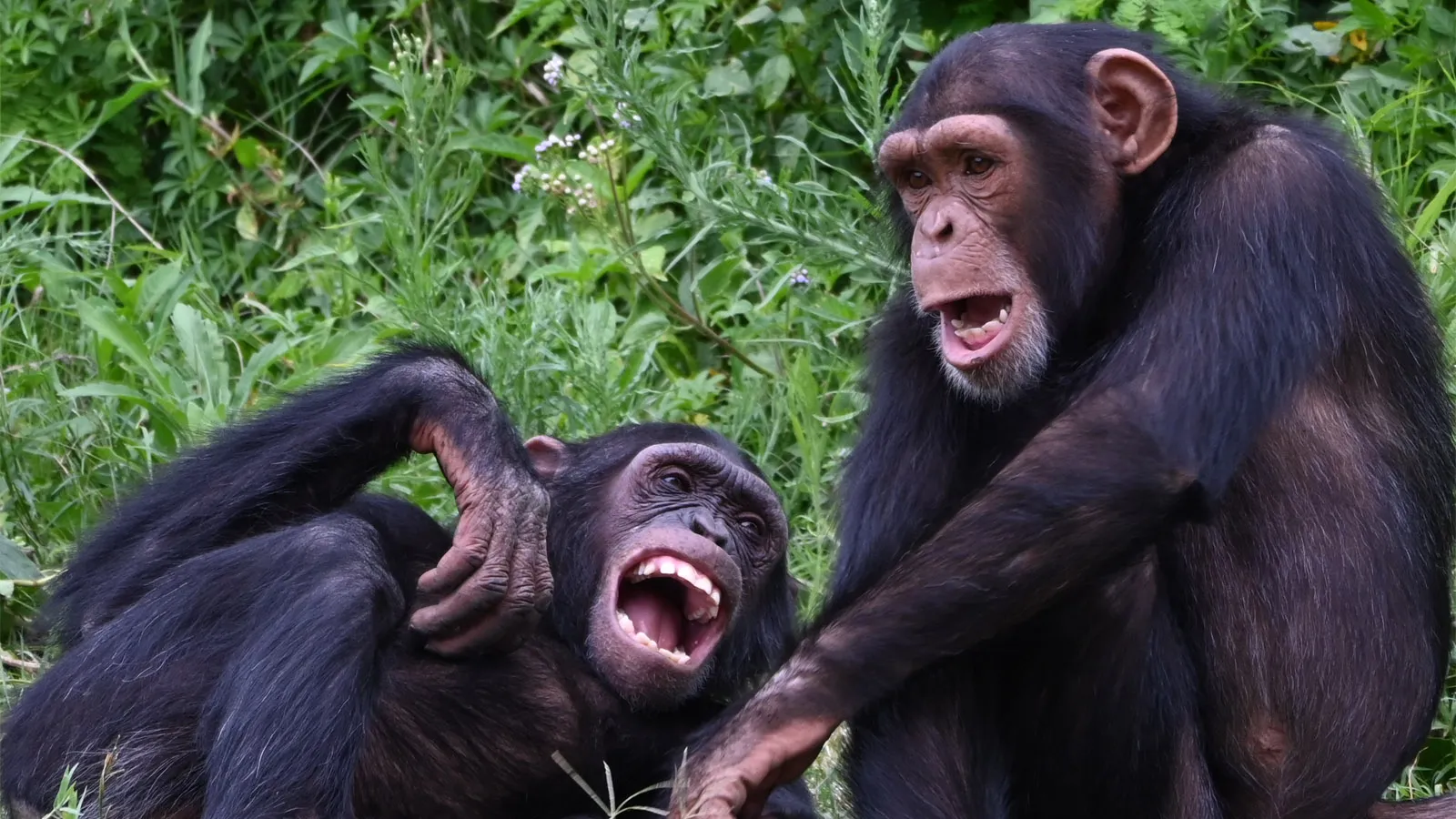
This was a period of co-evolution. Primates gained the ability to see a range of colours. They also developed forward-facing eyes (providing a better perception of depth in dense forests), unique shoulder joints, and dexterous hands that could grasp fleshy fruits. Joshi told me that the current scientific understanding is that, living on trees and searching for colour-coded ripe fruit in the canopies of tropical rainforests shaped the primate body.
This process of primate co-evolution with angiosperms is again a counter to the notion that humans are in control. We need not think of agriculture as an example of our mastery over nature. Plants have shaped us too. For me, this is a humbling rejoinder to the history of the human race as it sets out to ‘save’ the planet.
This is not to discount the role and imprint of our actions. As Pollan says, whether the apple or the snow leopard survives the human-induced climate crisis will depend very much on our desire to conserve one species over another.
State of the Climate

View Full Image
It’s the season of devastation in India and elsewhere. Extreme rains and floods in Gujarat and the north-east claimed at least 60 lives in May and June. In the ongoing June-September monsoon season, at least 80 rain-related fatalities have been reported from the hill state of Himachal Pradesh while 38 are missing. The deaths were due to flash floods, drowning, electrocution, accidental falls, landslides, lightning strikes, and snake bites.
Himachal received 35% more rains compared to normal till 8 July. Rainfall for the entire country was15% above normal between 1 June and 8 July. It seems the monsoon this year is going to be very wet. Keep a tab on weather updates and forecasts before you make any travel plans.
The challenge is, climate change is making it harder to forecast localized events like extreme rainfall, director general of the India Meteorological Department Mrutyunjay Mohapatra told Mint. The lead-time for forecasts has shrunk, for instance, from three days earlier to one-and-a-half days now.
Elsewhere, Europe is reeling under extreme heat. Roads have cracked open in Germany and tourists were barred from visiting the top of the Eiffel Tower in Paris as temperatures soared to a high of 41 degree Celsius. A new heat record was set in Spain at 46 degrees.
In Texas, US, over 100 people have died, including girls camping by a river bank, after heavy rains triggered flash floods. “This is what happens when you let climate change run unabated and break apart the emergency management system – without investing in that system at the local and state level,” an expert told The Guardian.
The news in brief
- By focusing on unproven technologies and fairy tales of colonising Mars, we are telling children that they will have to survive the climate crisis, without our help, writes Bibek Bhattacharya, who cowrites this newsletter with me.
- India added 6.5 gigawatt of renewable energy capacity in the first two months of FY25, more than double last year.
- As water dries up and land-use shifts, farmers are abandoning Kashmir’s staple rice for apples, vegetables—and real estate.
- Over half of the firms surveyed in a recent Morgan Stanley report experienced the climate’s impact on their operations, including increased costs and revenue losses.
- Will nuclear energy be the only way to keep the lights on as AI guzzles ever more power?
- India must devise an environmental, social and governance (ESG) ecosystem that places truth over optics and the planet’s survival above compliance checklists, argues Soumya Sarkar in a Mint opinion piece.
Know Your Jargon
Flash Flood

View Full Image
A flooding event which leads to a quick surge in water levels following a few hours of heavy rain is known as a flash flood. Flash floods occur in small catchments where rapidly rising and fast-moving waters create a devastating impact. A typical flash flood is often the result of multiple thunderstorms within a short span of time. Hydrological factors like terrain slope, soil type and vegetative cover often determine its impact. For instance, in a steep rocky terrain which is also heavily concretized, a relatively small amount of rainfall can trigger a flash flood.
Flash flood events have become frequent because of rising global temperatures. Warmer air holds more moisture for a longer period of time. The accumulated moisture is then dumped quickly, like a month’s rain in just a few hours – as in Wayanad, Kerala, last July when continuous heavy rains triggered landslides and slope collapse, leading to 373 fatalities.
Prime Number
3

View Full Image
Less than three out of every 100 cars and six out of every 100 two-wheelers sold in India in FY25 were electric vehicles. These numbers are lower than industry estimates from a few years back. As a result of the underwhelming sales, legacy car makers are now moderating their bets on electric and considering a diversified portfolio of vehicles. This Long Story in Mint looks at the obstacles facing EV manufacturers, ranging from the availability of rare earths and lithium-ion batteries to the government’s changing perception around electric vehicles.
Play of the Month

View Full Image
New games are combining adventure with environmental themes, offering players a chance to mock-save the planet while enjoying immersive gameplay. In one such game named Wheel World, you can take on elite cycling teams, scour the earth for rare parts, build the ultimate bike, and perform a ritual to save the world. In another game, ominously named Mycopunk, a ragtag squad of robots is tasked to rid the earth of a deadly fungal menace.
That’s all, for now. Bibek will be back with the next issue, in a fortnight.