Jan. 27, 2026, 6:04 a.m. ET

BRATTLEBORO, Vermont
Milk Source among top BAA herds for 2025 recognized by Holstein Association USA
A Wisconsin-based herd is among the top Holstein Breed Age Average (BAA%) herds. The list recognizes outstanding Holstein breeders nationwide who participate in Holstein Association USA’s classification program. Herds with ten or more cows that participate in the Classic or Standard options of the classification program receive a whole-herd BAA.
Topping the 2025 highest overall BAA list is Matthew T. Mitchell from Tennessee, with a BAA of 116.4. Also earning top five honors are: Jeffrey Jet Butler, Illinois, BAA of 115.9; Juniper Farm Inc, Maine, BAA of 115.6; and a three-way tip for Triple-T Holsteins, OH, BAA of 115.5; Milk Source LLC, WI, 115.5 and Currie Holsteins, NY, 115.5 (tie).
MADISON, Wisconsin
Free conference will explore the future of milking technologies
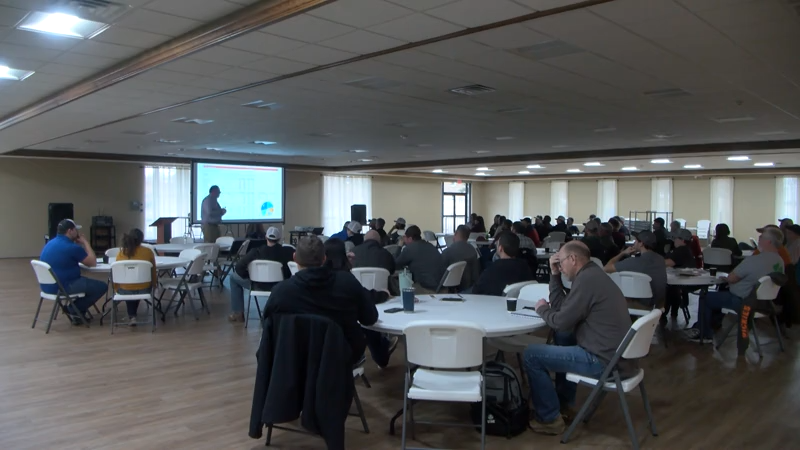
Dairy farmers, consultants, students, and service providers are invited to attend a free innovative conference on Wednesday, Feb. 25, from 10 a.m. to 4 p.m.on robotic and advanced milking technologies. This event will feature expert presentations from the University of Wisconsin, the University of Minnesota, and Iowa State University Extension, focusing on the profitability, labor efficiency, and herd health impacts of these technologies. The event will be held at the Crawford County Extension, 225 N Beaumont Rd, Prairie du Chien, Wisconsin. Register for free at https://go.iastate.edu/MILKINGROBOT. Lunch will be provided.
WASHINGTON
Tuna recalled for botulism risk accidentally shipped to 9 states, including Wisconsin
Canned tuna previously recalled for botulism risk has been mistakenly shipped to stores in nearly a dozen states, including Wisconsin, according to the U.S. Food and Drug Administration.
The Jan. 20 notice from the agency said recalled Genova Tuna products were shipped by a third-party distributor, Journal Sentinel reported. Affected products were originally recalled in February 2025 after manufacturer Tri-Union Seafoods discovered a defect on cans that led to leakages and potential clostridium botulinum contamination, the notice said.
The following recalled products shipped to Meijer stores in Wisconsin include: Genova Yellowfin Tuna in Olive Oil: 5.0 oz 4 Pack, UPC: 4800073265; and Genova Yellowfin Tuna in Extra Virgin Olive Oil with Sea Salt: 5.0 oz, UPC: 4800013275.
MADISON, Wisconsin
Free bird flu webinar for dairy producers
This free webinar on the bird flu virus brings together leading experts to share practical steps for monitoring, prevention, and response. Learn from UW-Madison Extension Dairy Program and featured speakers as they provide you the best practices for HPAI monitoring, prevention, and response for large dairy herds. The session will address both animal and human health concerns, equipping farms with actionable strategies to reduce risk and maintain safety.
The webinar is set for Feb. 17, 2026, from 1 to 2 p.m. Registration is now open at: https://go.wisc.edu/hpai2026
FARGO, North Dakota
Here’s how much fertilizer tariffs cost farmers in 2025
The full cost of fertilizer tariffs – and then some – may have been passed through to farmers in 2025, according to data released Tuesday by North Dakota State University (NDSU).
In its monthly Agricultural Trade Monitor, NDSU found that tariffs imposed by the Trump administration under the International Emergency Economic Powers Act (IEEPA) collected an estimated $958 million in revenue from selected imports of agricultural inputs between February and October of last year, Farm Journal reported. Of that, about: $44 million from seeds; $273 million came from agricultural chemicals; $530 million from farm machinery and $110 million from fertilizers.
ENDEAVOR, Wisconsin
Retail pricing helps move strong Wisconsin potato crop
The supply of potatoes is still strong from Wisconsin but also from a number of growing regions across the country, according to Fresh Plaza.
“Every region had an excellent crop this year so there’s a lot of supply on all colors of potatoes right now–more than there was last year,” says Tom Bulgrin of Gumz Farms of Wisconsin. “The supply chain is going to be full for quite a while.”
This follows good growing conditions in virtually all growing regions for potatoes last year. “The whole season, whether it’s here in Wisconsin or Minnesota or North Dakota or Kansas or Florida, every growing region had an exceptional year this last year. That’s part of the reason why the supply chain is a bit overfull right now,” says Bulgrin.
While Gumz ships potatoes year-round through partnerships in other growing regions, the supply from its Wisconsin farms should wrap up around March, which is generally when it finishes.
CHESTERFIELD, Missouri
Corn growers furious with new development on E15
Last week the House was expected to advance a funding bill that omits language allowing consumers across the country to access fuels with a 15% corn ethanol blend, often referred to as E15. Ohio farmer and National Corn Growers Association President Jed Bower blasted lawmakers, saying ‘corn growers are disgusted, disappointed and disillusioned that after spending years of calling for passage of E15, Congress has again punted.
“Bizarrely, members of Congress are now planning to establish a rural energy council to explore this legislation as if we are in the beginning stages of discussing E15. We already have a bill. We already have an agreement with the petroleum industry after months of negotiation. But instead of acting, Congress is now suggesting a process-ridden task force that kicks the can down the road once again.” Congress is choosing to leave America’s 500,000 corn farmers behind in favor of a handful of refineries.””
WASHINGTON
Specialty crops suffer staggering losses in 2025
U.S. specialty crops are in an economic crisis. In 2025, producers faced staggering economic losses — including $3.6 billion in almonds and $1.4 billion in apples — driven by high input costs, labor shortages and low market prices. The Specialty Crop Farm Bill Alliance and other industry leaders are expressing deep disappointment after a January 2026 federal spending bill failed to include dedicated aid for these growers. They are now calling for $5 billion in urgent relief.
Kam Quarles, National Potato Council CEO and a co-chair of the Specialty Crop Farm Bill Alliance says economic losses to specialty crops are on a level that could put farms out of business, threatening the country’s economic stability and the future of its food supply, The Packer reported.
WASHINGTON
China meets initial soybean purchase goal, but Trump’s shifting trade policy could disrupt deal
China has met its initial commitment to buy 12 million metric tons of soybeans from the U.S., but will President Trump’s ever-shifting trade policies 86 the deal?
China was among the countries that could face a 25% tariff for buying from Iran. And in response to opposition to Trump’s efforts to acquire Greenland, the president threatened to impose a 10% tariff on eight of America’s closest allies in Europe, reported the Associated Press
Iowa State University agricultural economist Chad Hart told the AP the whipsaw trade policies could undermine the trade agreement with China and jeopardize the commitment by the world’s largest soybean buyer to purchase 25 million metric tons of American soybeans in each of the next three years.
WELD COUNTY, Colorado
Climate startup plans to inject liquid manure a mile deep in Weld County
By injecting manure deep below the Earth’s surface, Vaulted Deep, a Houston-based climate startup, hopes to transform a local environmental hazard into a tool to combat global warming.
Julia Reichelstein, the company’s co-founder and CEO says instead of letting those wastes go back out into local environments, we put them really deep underground, where they’re stored safely and permanently, according to CPR News.
Vaulted Deep has a facility running in Hutchinson, Kansas. In late 2024, it submitted plans to build Monarch Fields, a similar site on a parcel of pastureland in Weld County near Wiggins, Colorado, about 50 miles northeast of Denver. Weld County is home to 500,000 dairy cows. If approved, the company would drill eight wells more than 6,000 feet below the surface, reaching rock formations it claims can lock away organic sludge for eons.