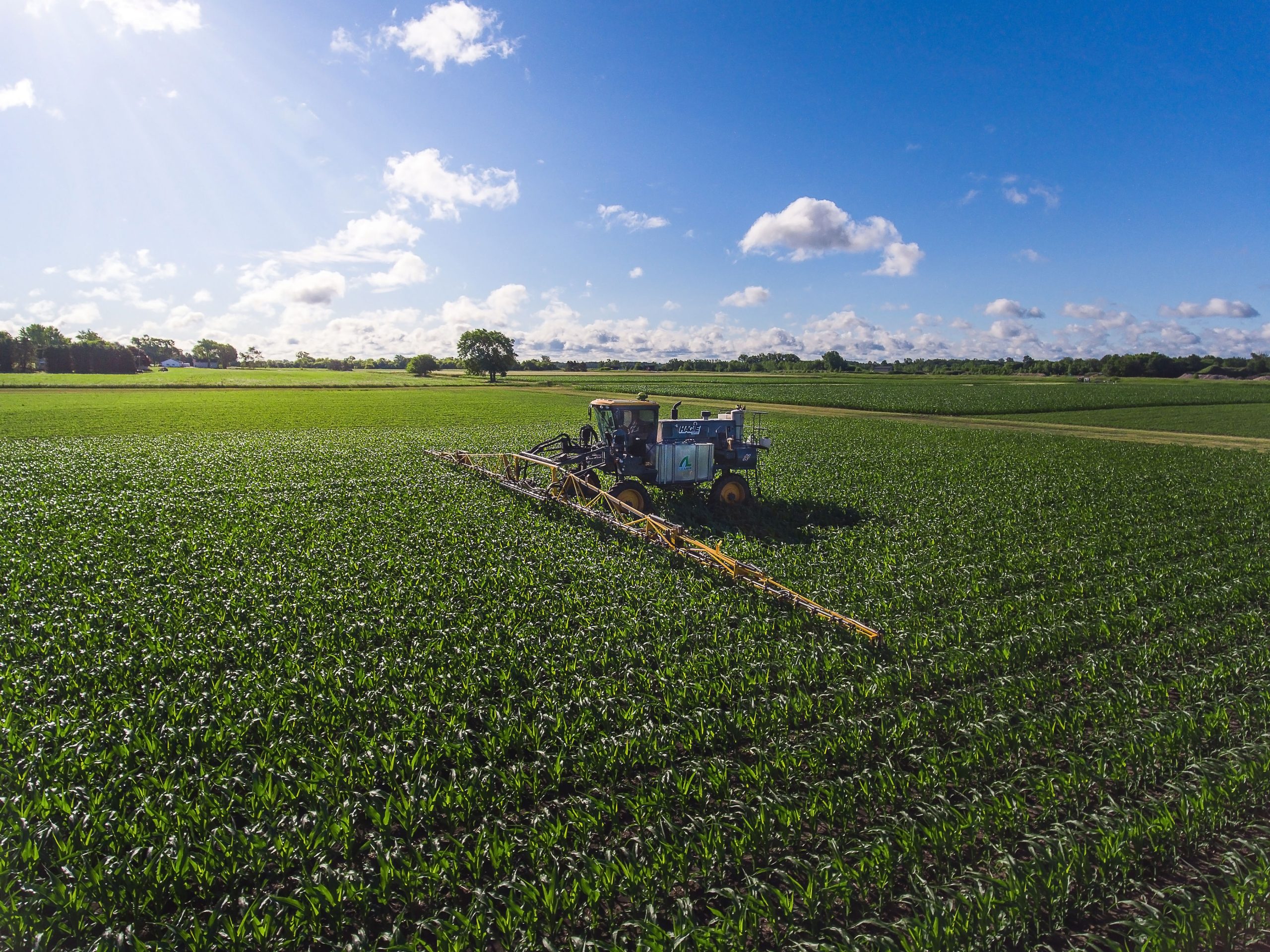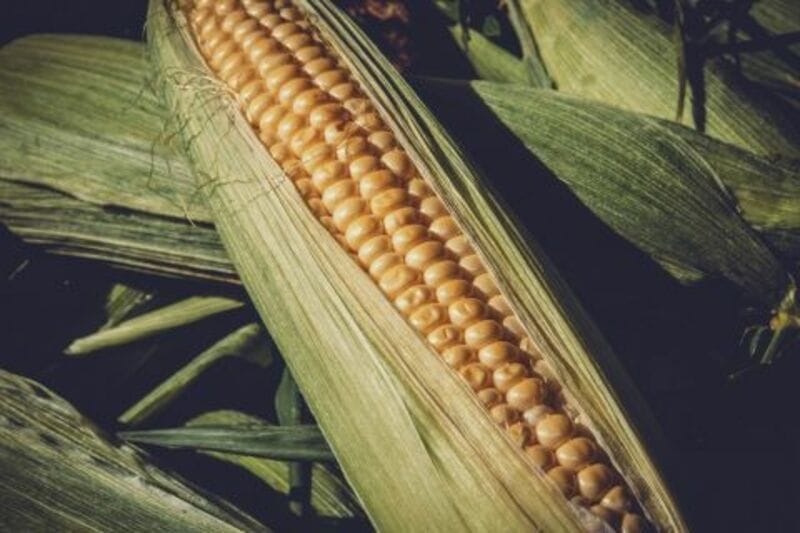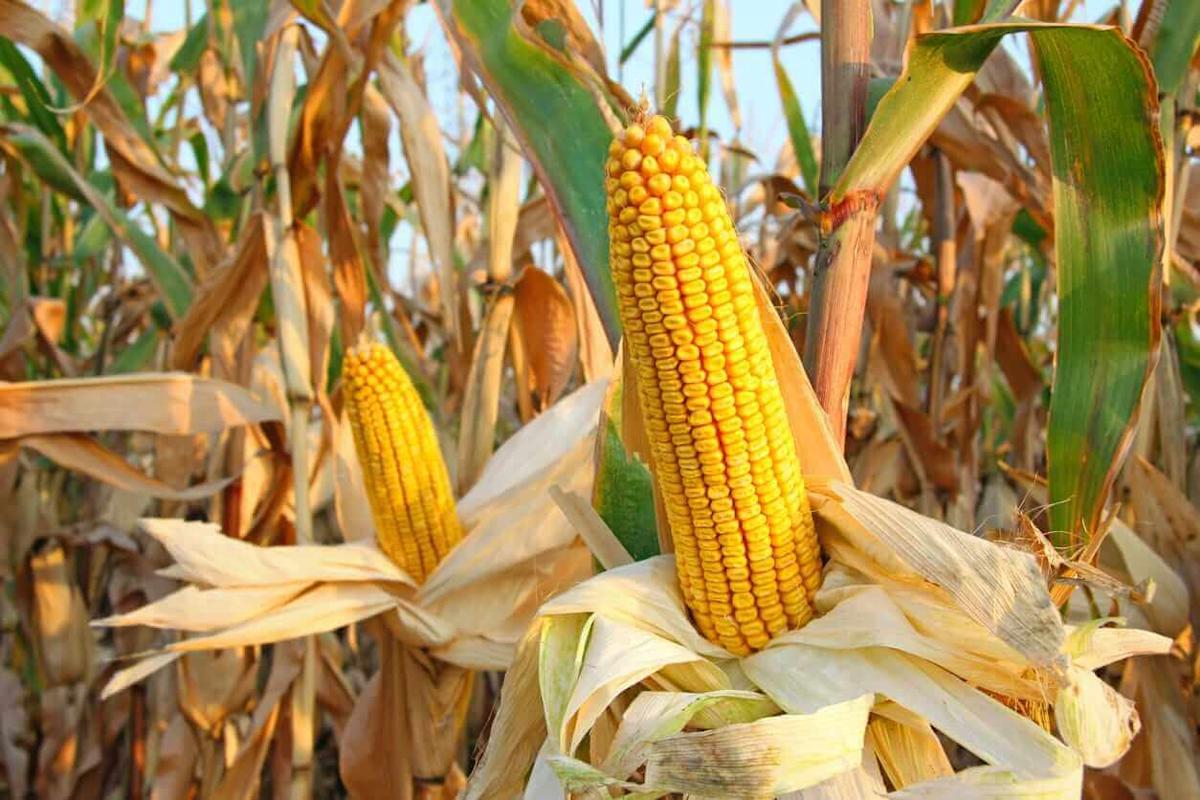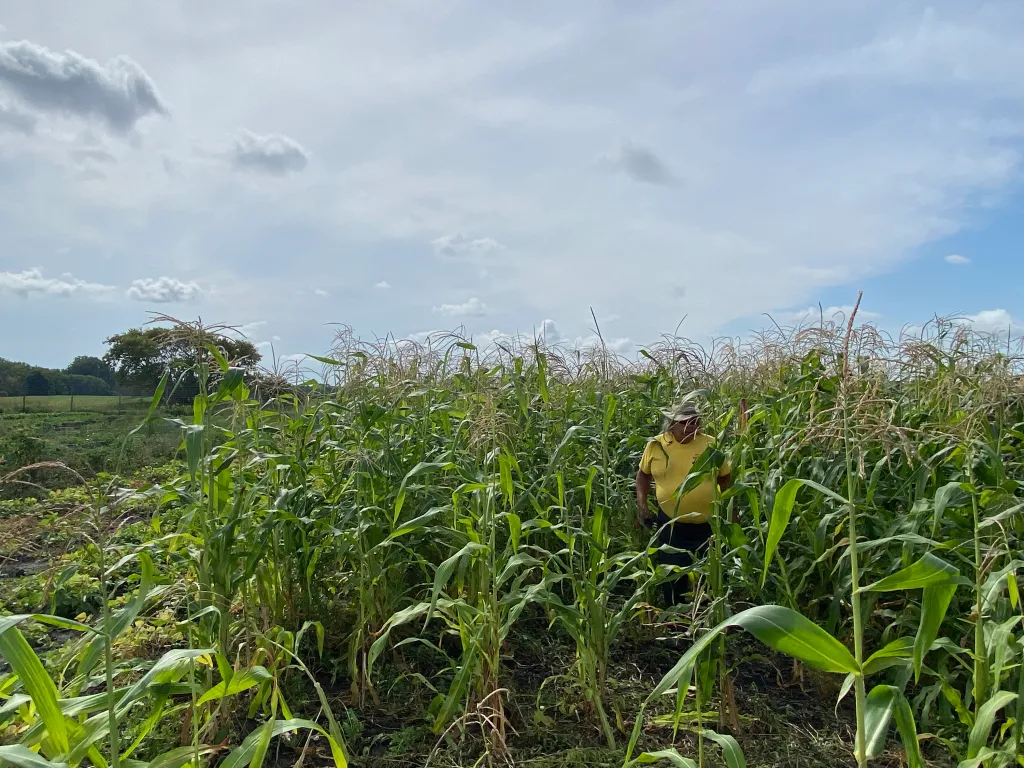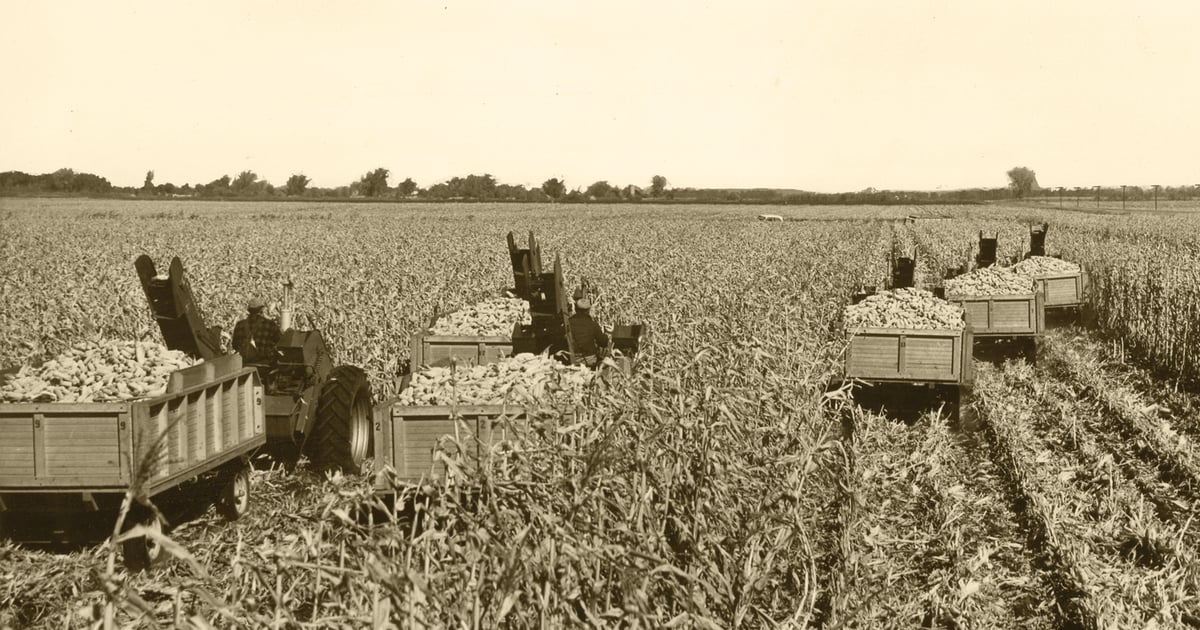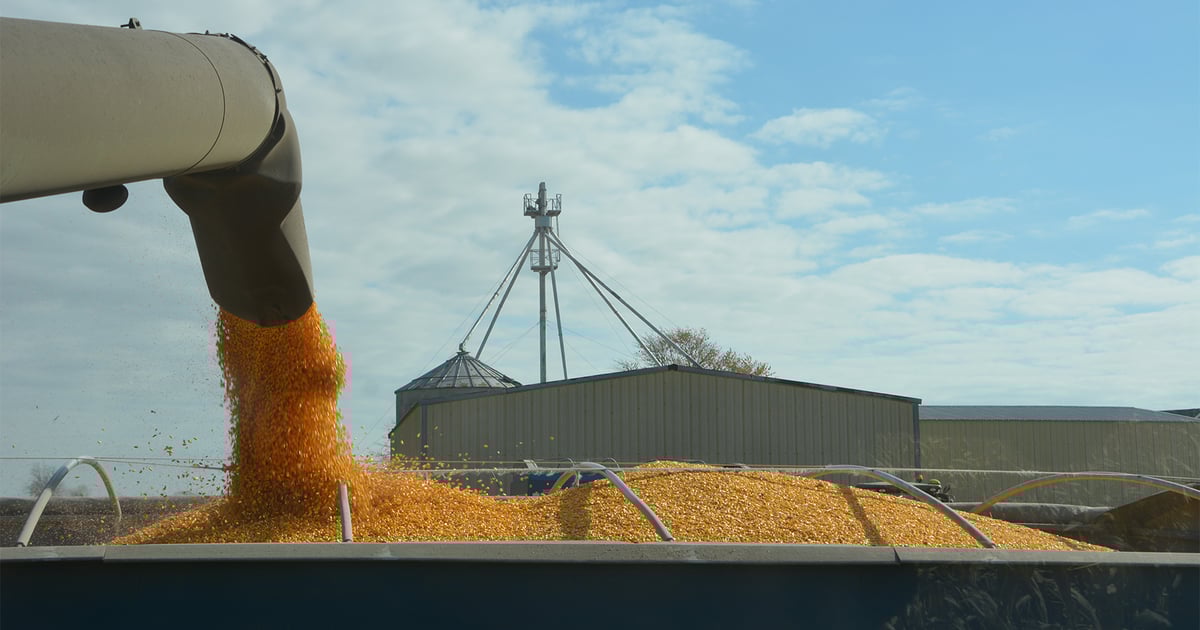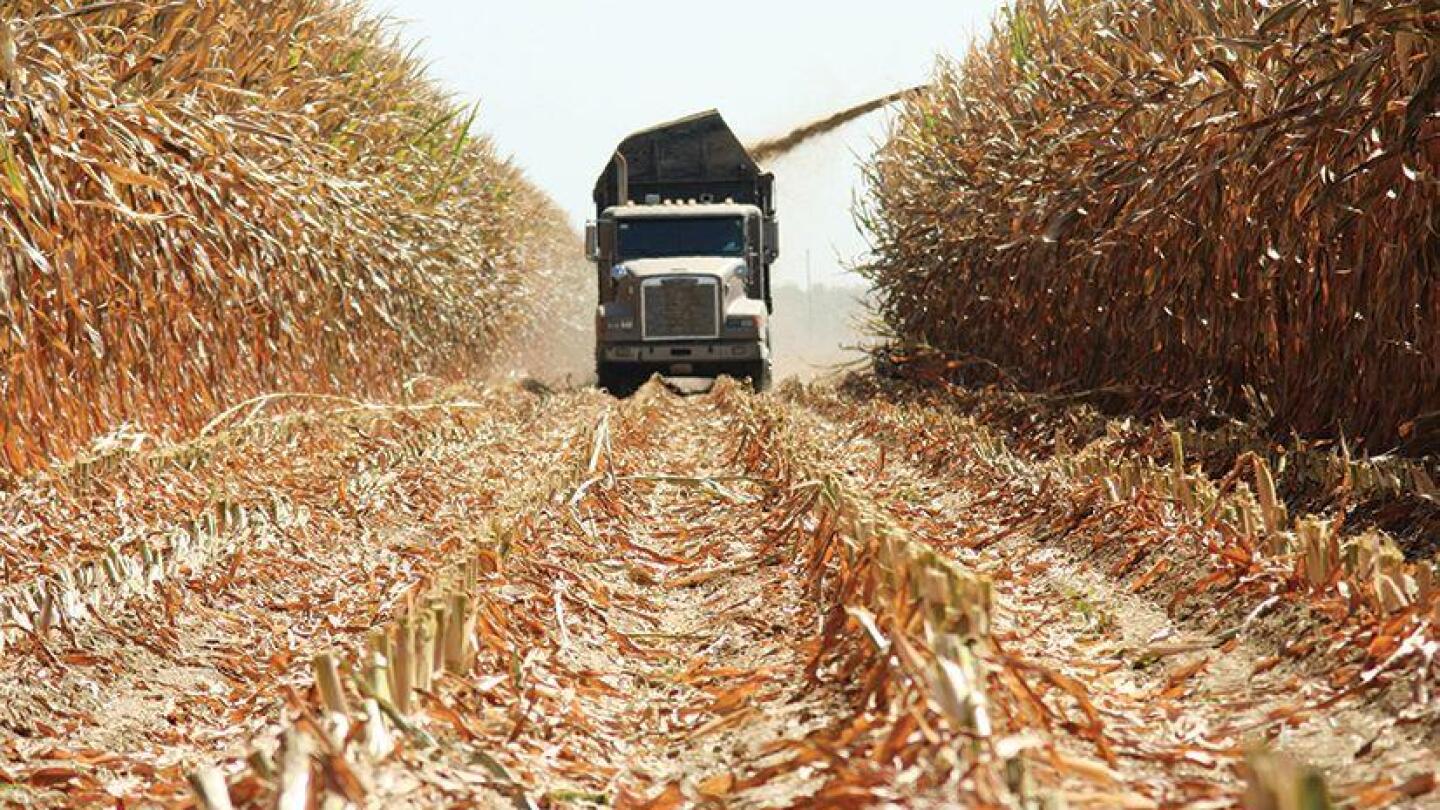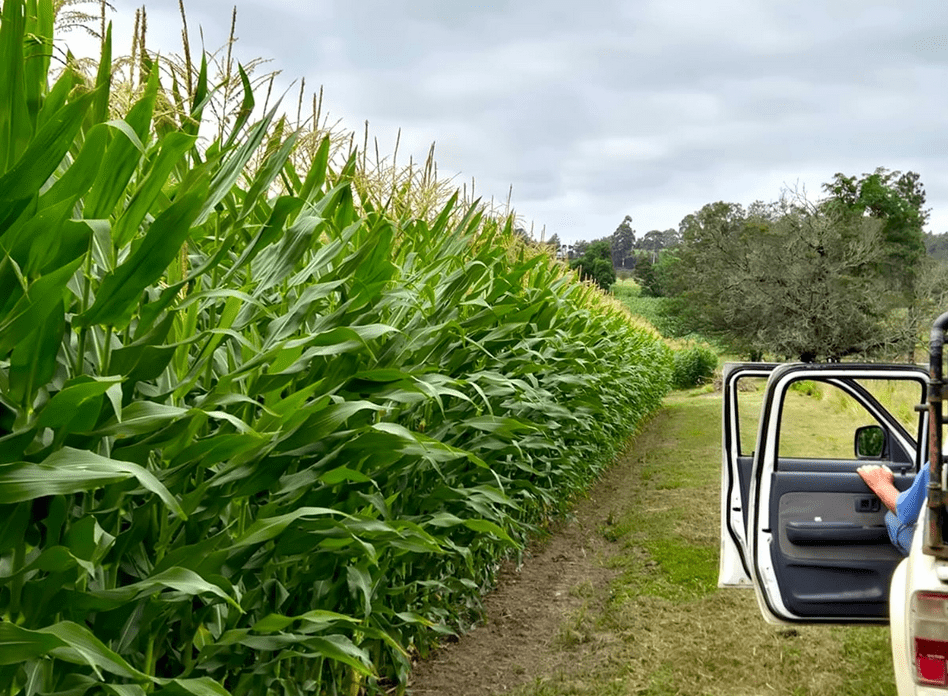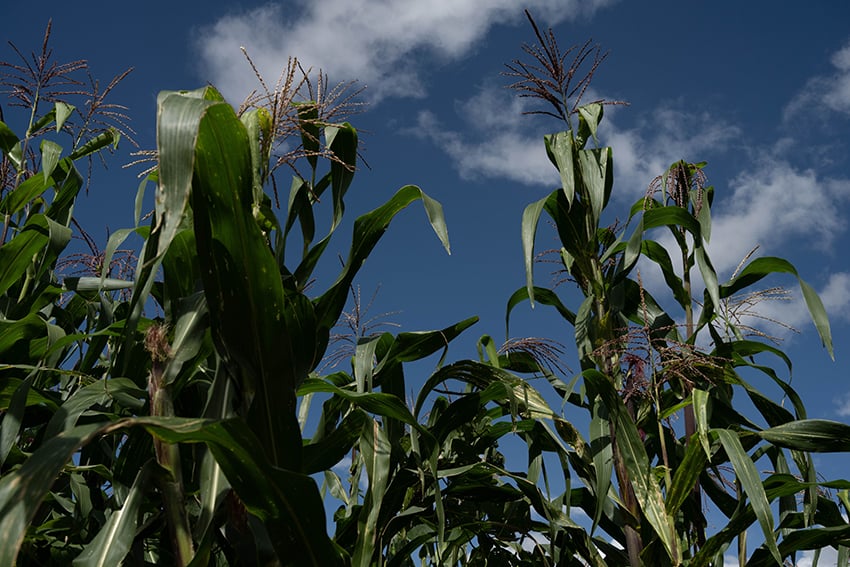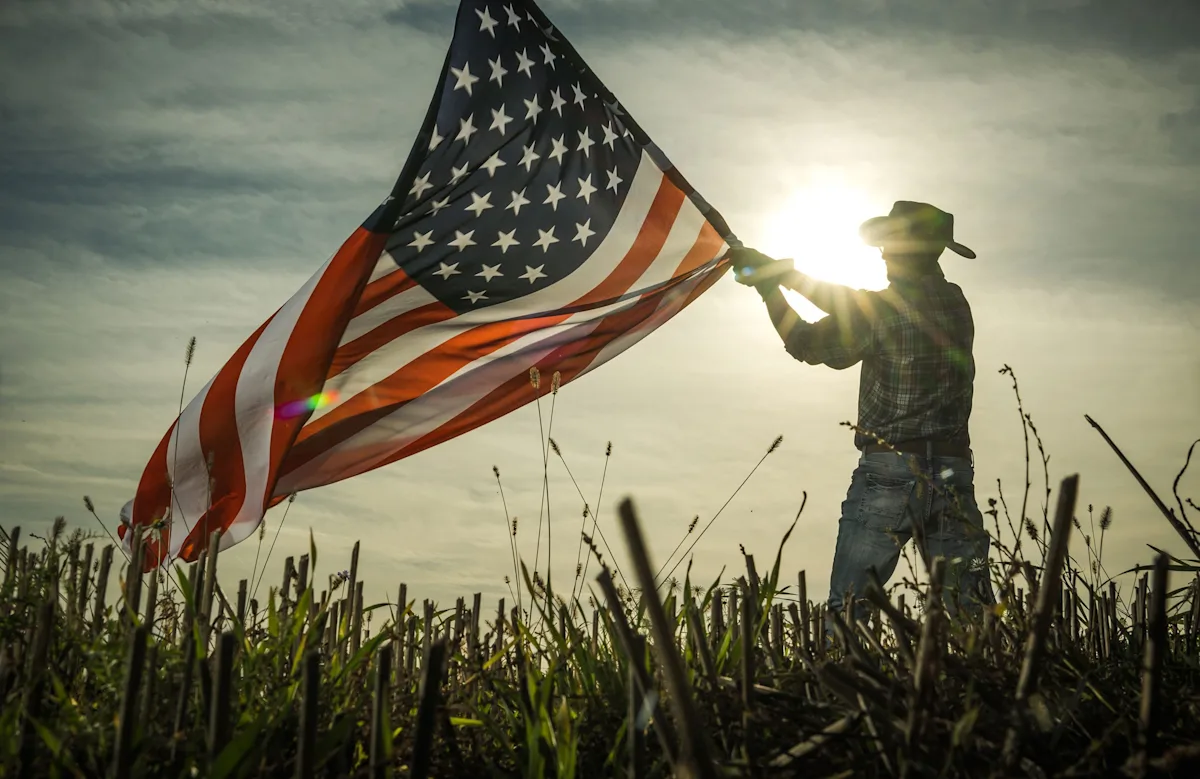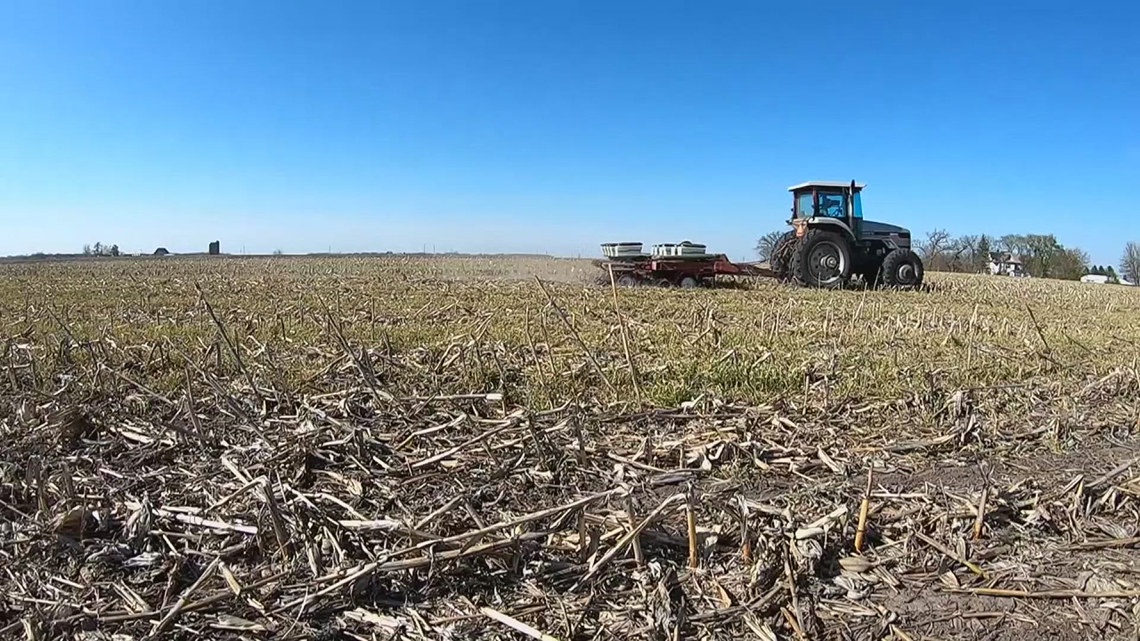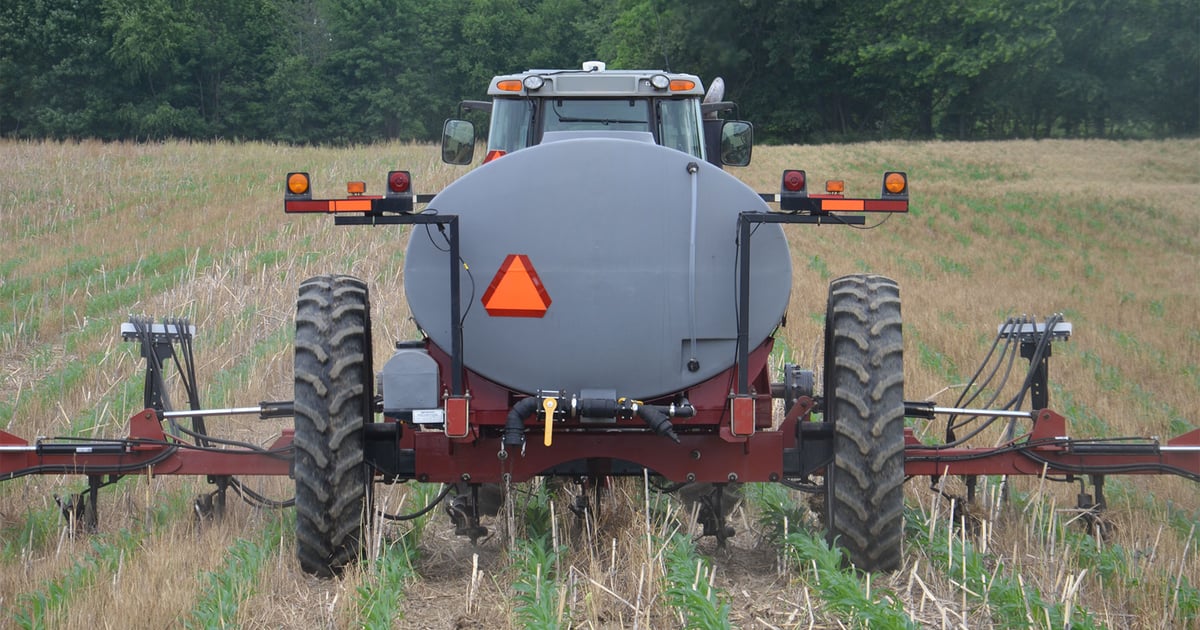

Corn is harvested from a Kansas field in September 2014.
File photo
A Kansas farmer who lied to the government about crops that he sold being destroyed by weather has pleaded guilty to bank fraud and making false statements, the U.S. Attorney’s Office for the District of Kansas said Friday.
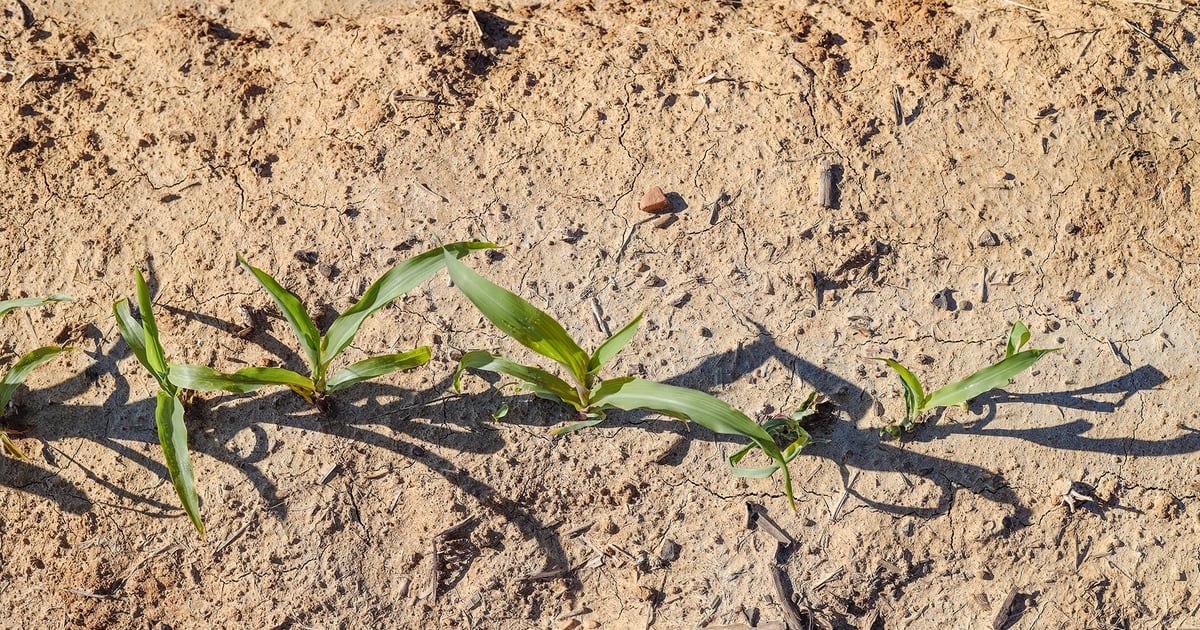
David L. Mongeau, 55, of Holcomb, owned a farming operation in western Kansas called Mongeau Enterprises when he obtained a policy from the federally-subsidized U.S. Department of Agriculture’s Federal Crop Insurance Program in 2019. The following year, in January 2020, Mongeau submitted an insurance claim, “indicating he lost a portion of his corn crop in Rooks County, Kansas, due to hail and excess wind,” a news release says.
But he didn’t disclose that he had sold more than 33,000 bushels of the same corn to agricultural commodity traders, prosecutors say.
“The sales included corn that he indicated as a loss when filing a crop insurance claim. As a result, Mongeau received an overpayment, causing $241,645 in losses for the FCIP,” the release says.
Mongeau also got a farm loan from a Kansas bank that he secured using crops and several pieces of farm equipment as collateral and then either traded in or sold those items without notifying the bank, according to the news release.
“As a result, the bank did not know the collateral was no longer available, and the bank suffered more than $300,000 in losses,” the release says.
“We all know that farming is a challenging profession with a litany of potential obstacles, so the Federal Crop Insurance Program serves as a safety net through difficult times,” U.S. Attorney Ryan A. Kriegshauser said in the release.
“Mr. Mongeau took what was supposed to be a helping hand and exploited that generosity for his own personal gain.”
Mongeau pleaded guilty to one count of making false statements related to crop insurance and one count of attempted bank fraud, court records show.
He is scheduled for sentencing on July 1. He faces up to 30 years in prison, a $1 million fine and up to five years of supervised release, according to his plea agreement.

Amy Renee Leiker has been reporting for The Wichita Eagle since 2010. She covers crime, courts and breaking news and updates the newspaper’s online databases. She’s a mom of three and loves to read in her non-work time. Reach her at 316-268-6644 or at aleiker@wichitaeagle.com.