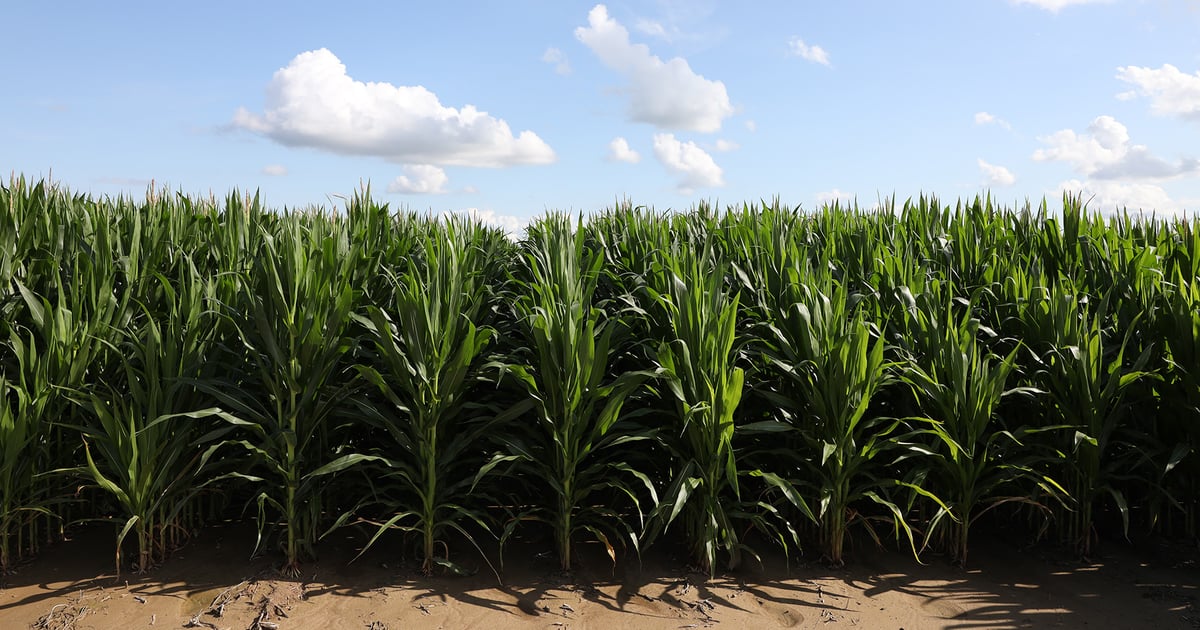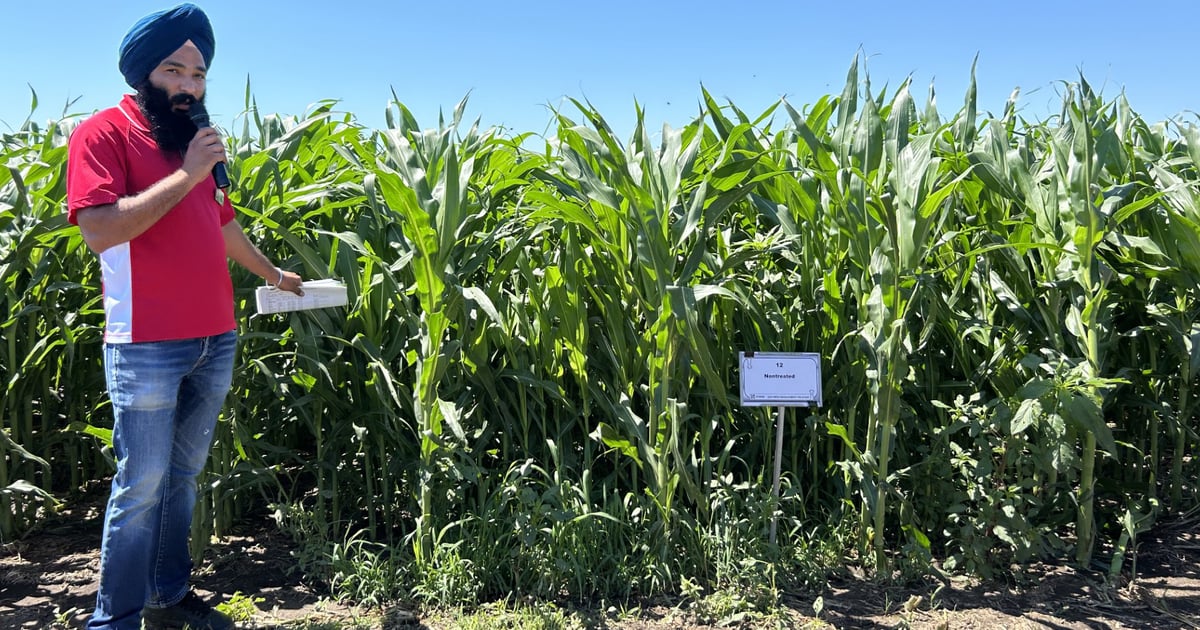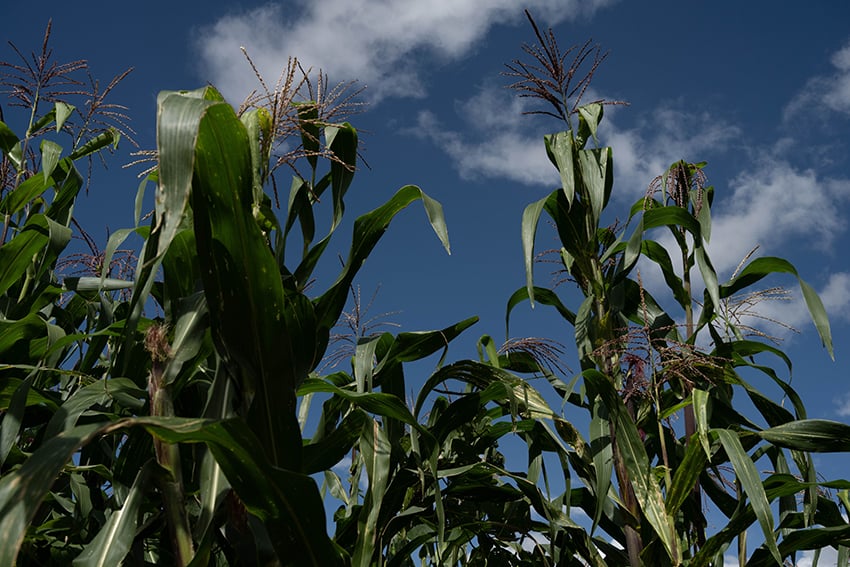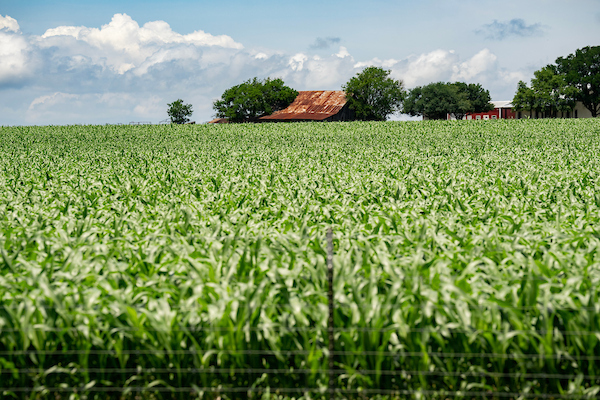
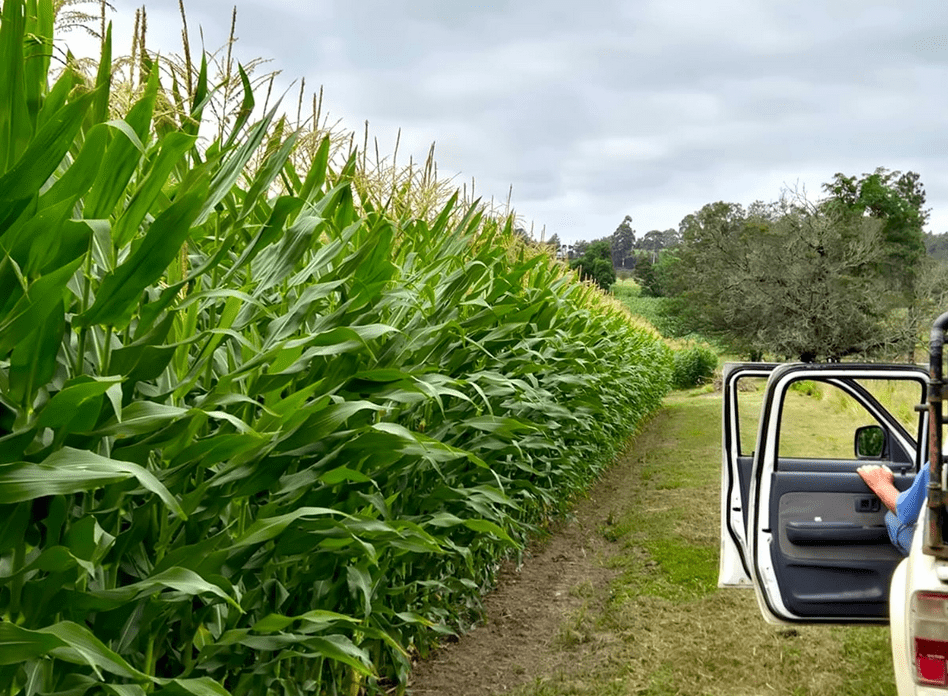
A corn crop growing in South Africa last month. Photo: Pannar Seed
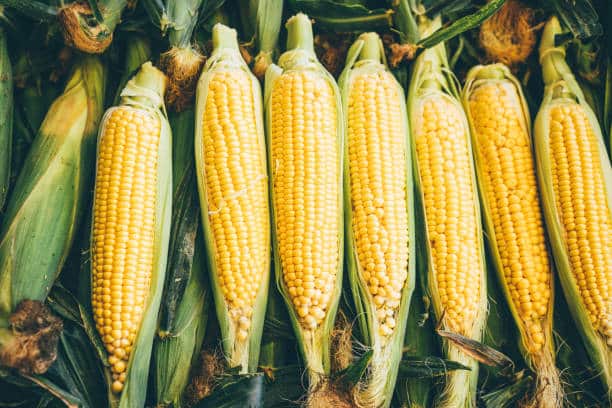
OUTPUT of corn, South Africa’s most important field crop and primary dietary staple, is expected to decline in the 2025-26 production cycle compared with the previous year, with weaker yields in some regions more than offsetting a substantial increase in the planted area, according to the nation’s first official summer crop estimate.
Released on February 26, the South African Government’s Crop Estimates Committee (CEC) report pegged total corn production at 16.1 million tonnes (Mt), down 3.1 percent on the 2025 harvest of 16.7Mt, which was the fourth-largest on record. The lower output forecast comes despite a 4.6pc increase in the planted area from just under 2.6 million hectares to just over 2.7Mha.
Planting rain plus stored-water confidence
Favourable La Niña weather conditions brought average to above-average rainfall to most regions during the planting period. This led to the increased area allocation and supported the development of the rain-fed plantings. Additionally, dam levels remain high after a wet 2024-25 summer season, ensuring sufficient water availability for irrigated crops.
The lower production outlook reflects highly variable yield potential across a number of key growing regions. Dry spells in several major producing provinces have put early yield pressure on crops, although the current output projection remains relatively strong compared with historical averages. Adequate rainfall during the critical reproductive and grain-filling stages, particularly in rain-fed regions, will be critical to stabilising the yield outlook.
The harvest forecast includes 8.5 Mt of white corn, primarily used for human consumption, and 7.6Mt of yellow corn, generally destined for the animal feed sector. The white corn estimate is 0.7pc higher than the 2025 harvest, while the yellow corn projection is 7.1pc lower season on season.
The province of Free State remains the top producer, accounting for 41.6pc of the nation’s total crop estimate, followed by Mpumalanga with 22.5pc and the North West province with 17.2pc. Collectively, these regions are expected to account for more than 13.1Mt, or 81.3pc of national production in 2025-26.
Domestic usage up: USDA
Domestic consumption of corn in South Africa is expected to increase by just 200,000t to 14.2Mt in the 2025-26 marketing year ending in April, according to the Pretoria-based bureau of the United States Department of Agriculture’s Foreign Agricultural Service. Persistently high unemployment and sluggish economic growth are expected to result in a plateauing of per-capita corn consumption relative to the previous year.
Food, seed and industrial (FSI) consumption is expected to increase by 100,000t in the current season to 7.1Mt, mirroring the stockfeed demand profile. The FSI use is made up of 6.4Mt of white corn and 700,000t of yellow corn, while the stockfeed sector is expected to use 600,000t of white corn and 6.5Mt of yellow corn. However, the record-high yellow corn crop in 2024-25 and relatively high stocks may lead to a further decline in the white corn inclusion rate in livestock rations, especially if export demand for white corn remains strong.
With a projected carry-in of 2Mt and an above-average production forecast, FAS forecasts exports of 2.2Mt in the 2025-26 marketing year, up from 1.8Mt in the previous marketing year. The export outlook has increased in recent months on the back of abundant domestic supply and increased regional demand, particularly from Zimbabwe.
In the first eight months of the current marketing year, South Africa exported 1.29Mt of corn, of which 676,000t was white, and 614,000t yellow. Neighbouring countries dominate sales with Zimbabwe the biggest destination on 430,000t, 59.1pc white corn, followed by Botswana with 173,000t, 78pc white corn, and Mozambique with 124,000t, 51.6pc white corn. Namibia, Eswatini and the landlocked nation of Lesotho are other buyers of note that border South Africa.
Asian consumers imported 226,000t of South African yellow corn from May to December 2025. Vietnam was the main purchaser with 109,000t, followed by Taiwan with 50,000t and South Korea with 48,000t. Venezuela is the only South American destination on the list, taking 66,000t of white corn, the first such trade since 2018. While a strong domestic currency has reduced competitiveness in global markets, a limited Asian flow is expected to continue for the balance of the marketing year.
Winter crop
Meanwhile, last week’s CEC crop update provided a final estimate of the country’s winter-crop production. Total output of cereals, oilseeds and pulses in the winter cycle is estimated to be 1.6pc lower than the previous season at 2.6Mt, off a harvested area that was 3.2pc higher at 850,000ha.
Wheat production is expected to be 1.8pc lower year on year at 1.9Mt off 520,000ha for an average yield of 3.67t/ha. There was a tough start to the 2025-26 season, with excessive rainfall and snail infestations in parts of the Western Cape leading to replanting of some fields. The Western Cape is the dominant wheat-producing province, accounting for 52pc of output, followed by the Northern Cape with 16pc and the Free State with 14pc.
The 2025 barley crop decreased by 1.2pc season on season to 350,000t, off a harvested area of just under 100,000ha, for an average yield of 3.57t/ha. Canola production of 310,000t is 0.9pc lower than the previous harvest, despite a small increase in the planted area to 175,000ha.