
The second full week of January brought about market disruptions no one saw coming.
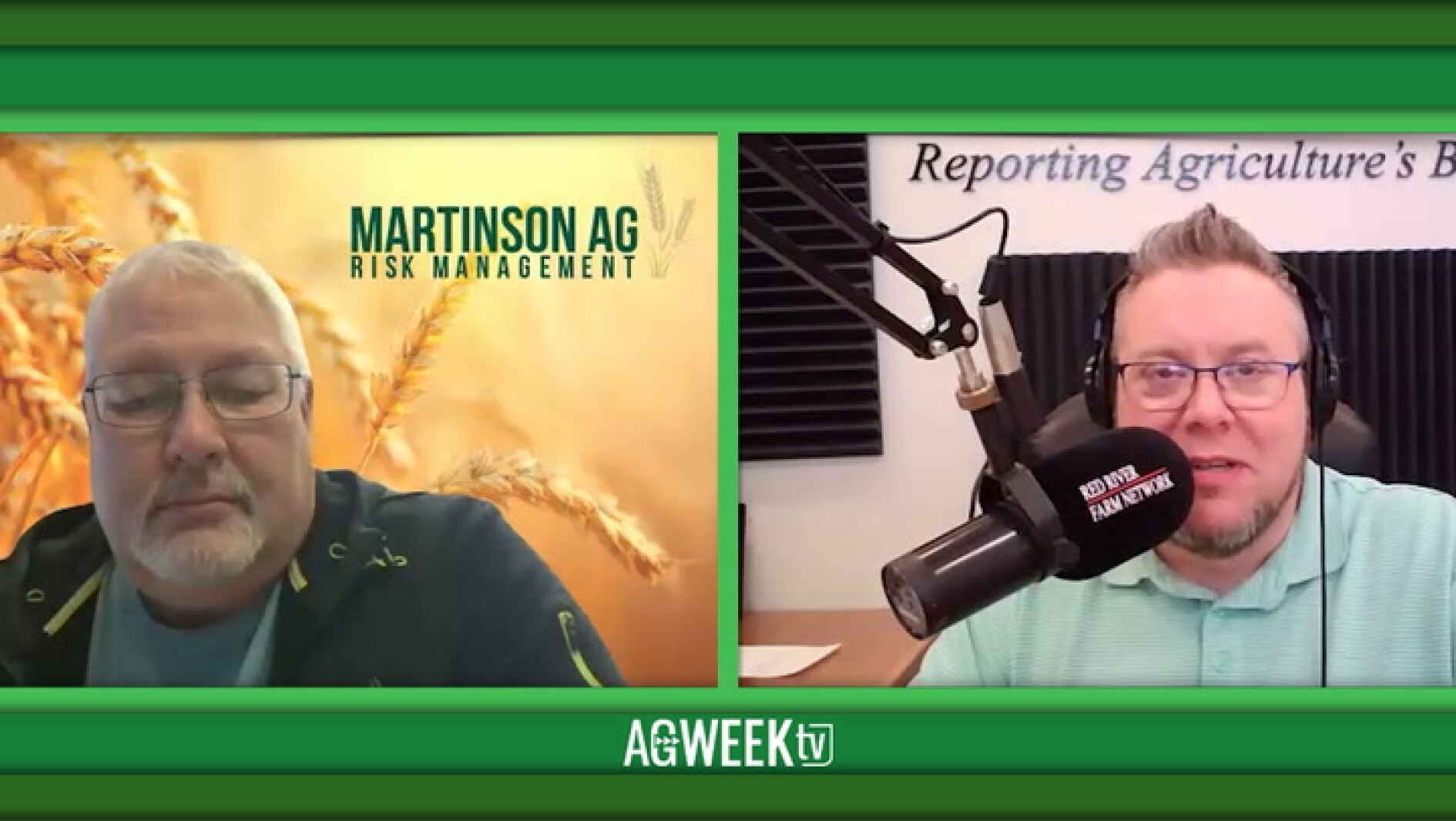
That includes Randy Martinson, president of Martinson Ag RIsk Management. He shared his thoughts on the report along with other market moves during the Agweek Market Wrap on Friday, January 16, with Jamie Dickerman of the Red River Farm Network.
Chief among the disruptions were
World Agriculture Supply and Demand Estimates
that increased corn yield estimates by a half bushel and harvested acres by more than 1.2 million acres across the U.S.
“That really stung the market, and it really put the corn market on the defense, and caused it to sell off hard,” Martinson said.
Martinson said that the harvested acres increase could be justifiable due to a decrease in corn going for silage. It was instead harvested for grain.
Other surprises included an increase in feed demand by 100 million bushels. It was expected that demand would decrease.
“So everything that we thought was going to happen in the report for corn, USDA did just the opposite,” Martinson said.
Aside from that report, actual exports have been going strong, perhaps stronger because of reduced prices for the commodities. Dickerman brought up that
China is getting closer to reaching their commitments
of 12 million metric tons.
“Exports have been phenomenal this week, you know. And then, with the drop on Monday, we’ve seen a tremendous amount of corn sold the last couple days as well,” Martinson said.
The positive of the WASDE report is that it brought down prices enough to ignite buying. Martinson likened the prices to a “blue light special.”
Oddly enough, Martinson shared that while corn supply is up, basis levels are improving. That says that there is a need for that supply and the supply of corn is not growing.
While grains had plenty of news to get things moving, the livestock market also had volatility this week. The cattle market saw gains throughout the week until Friday when news of
hit the market hard.
“Today now, news broke, of course, concerns about the New World Screwworm issue, especially getting closer to the U.S. Mexican border,” Martinson said. “And the Texas ag commissioner came out with warnings today about inspecting cattle herds and being diligent to report anything you see. So that, I think, is really starting to hit the market pretty hard right now.”
The hit to the market included feeder cattle dropping $9 an live cattle down $5 to $6.
Another highlight this week are hog prices sitting in a better position. A fair amount ofhogs are expected to hit market soon, but after that some lower numbers of hogs are expected to continue to be a support to that market.
Next week starts off with Martin Luther King Jr. Day keeping the stock markets closed. Beyond that eyes will be focused more on South American weather again. There are reports of dry weather causing issues in Argentina. Weather will and its effect on South American crops will have a large impact on U.S. demand. What develops out of the New World Screwworm news will be another factor to watch closely.
(The Agweek Market Wrap is sponsored by Gateway Building Systems.)

Michael Johnson is the news editor for Agweek. He lives in rural Deer Creek, Minn., where he is starting to homestead with his two children and wife.
You can reach Michael at mjohnson@agweek.com or 218-640-2312.