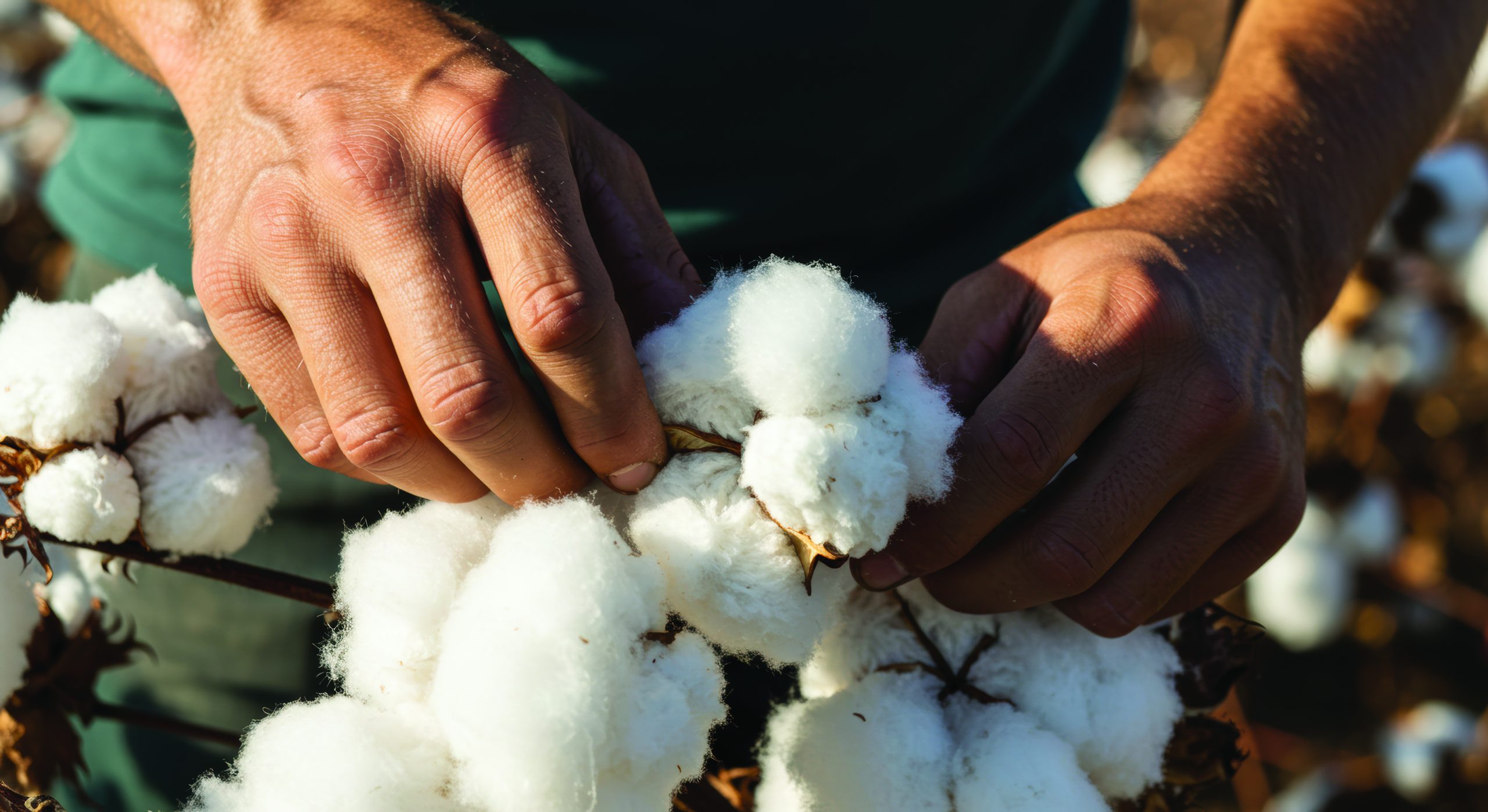
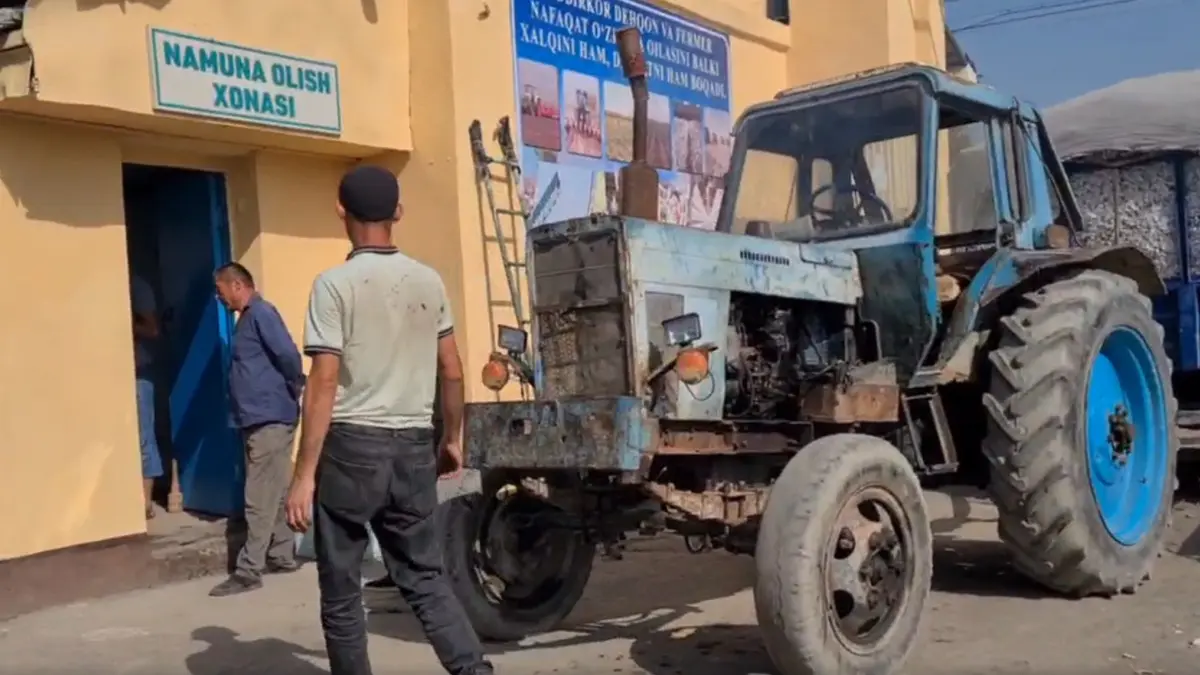
Farmers have no freedom. I want farmers to be given the freedom of what to plant, and of how and where to sell their produce.
–Farmer, Dustlik district
In recent years, the Uzbekistan government ended state-imposed forced labor in the cotton harvest and committed to undertake reforms of the agricultural sector more broadly. The government has adopted a 2020-2030 Agriculture Development Strategy, aimed at deepening ongoing agricultural sector reforms, as well as new laws and decrees to address various problems in the sector.
While there have been some noticeable improvements, the Uzbekistan government continues to exercise significant and coercive state control over the agricultural production of cotton and wheat, while failing to respect the labor and human rights of farmers who grow cotton and wheat. The current system of strategic crop cultivation and production in Uzbekistan requires farmers to grow agreed crops on land they lease from the government, in fixed amounts (quotas) to be sold at fixed price, and to incur significant financial burden whether or not they meet quotas, and whether or not the ability to meet quotas is under their control. Farmers are placed in a very vulnerable position, susceptible to threats, abuse and other forms of illegal coercion. Moreover, the system prevents them from operating independently or having control over their working conditions, and in practice makes them subservient to the state, akin to employees. A cotton farmer from Khorezm region described his situation in November 2025 in nearly those exact words: “It is as if we have become hired workers for someone, not landowners.” Another farmer from the Fergana region described it as having “a lot of bosses.” He explained, saying “Everyone interferes with the farmer’s work. Both the police and the prosecutor’s office.”
As has been recognized by the International Labour Organization (ILO), centrally set quotas can be conducive to the exaction of forced labor, and while Human Rights Watch and Uzbek Forum for Human Rights (“Uzbek Forum”)’s methodology for this report did not include any determination on whether the cases it documented in this report constitute forced labor, the vulnerability of cotton and wheat farmers in Uzbekistan and the conditions under which they work create a risk of forced labor.
This report documents different categories of rights violations in Uzbekistan’s highly controlled agricultural sector. There are rights violations stemming from the system of agricultural production imposed on farmers and the unlawful behavior by state officials against farmers such as the use of coercion, threats, physical abuse, and even arbitrary detention to ensure the production of cotton and wheat by farmers in amounts set by the state and at prices set by Uzbekistan’s Commodity Exchange, a trading platform for goods and products.
Violations of farmers’ right to an adequate standard of living, including a living wage, occur as a result of several factors including forcing farmers to grow cotton and wheat crops and prohibiting them from deciding what to grow on their land, the inability of farmers to sell the mandated crops at a price that covers their costs, and the failure to enforce court decisions about payments to the detriment of farmers. The persistent non-enforcement of court decisions is a violation of farmers’ right to a remedy, including access to court, that also leads to financial precarity or even bankruptcy. Finally, there are violations of farmers’ right to association, to organize, and to form and join cooperatives.
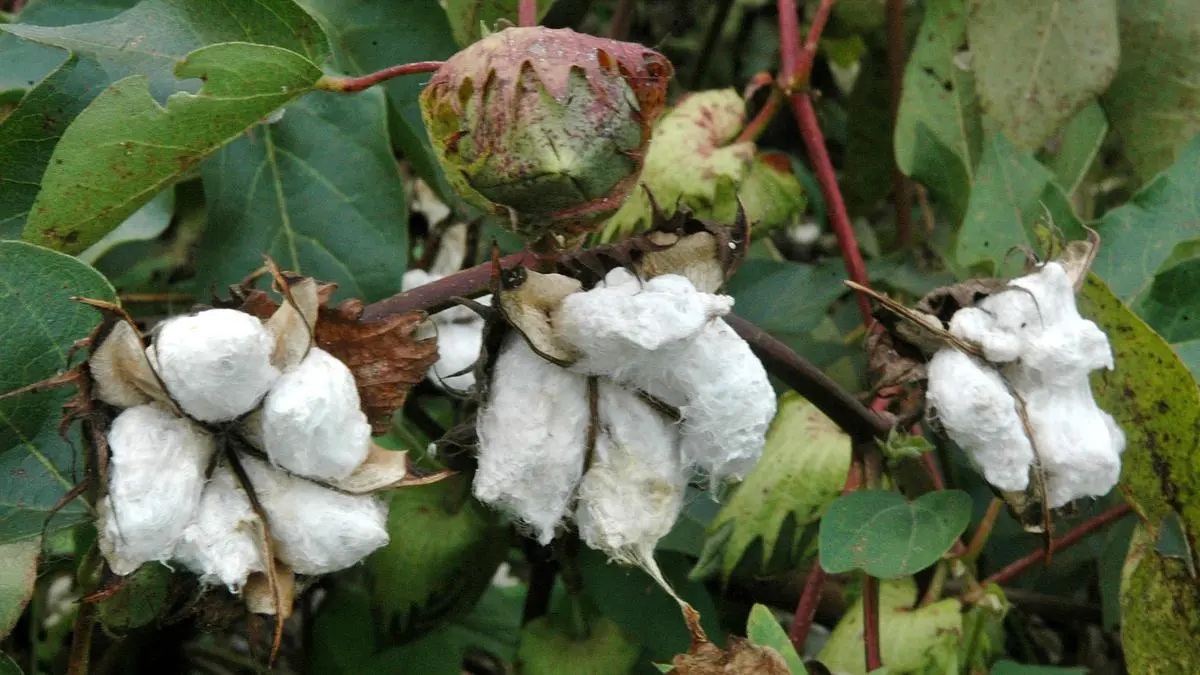
Cotton and wheat are commodities of strategic importance for the Uzbekistan government. Agriculture is one of the leading sectors of Uzbekistan’s economy, accounting for nearly a quarter of Uzbekistan’s gross domestic product. Cotton yarn is among Uzbekistan’s top five largest export commodities. Uzbekistan is among the top ten producers of cotton globally.
The state, which owns all agricultural land in Uzbekistan, leases out the land for cultivation, determining which land can be used to grow cotton and wheat, as well as how much of it must be produced annually. These crop “quotas” are based on land yield assessments that do not always reflect soil fertility or availability of water for irrigation. The government limits to whom farmers can sell their cotton and wheat and has on at least one occasion in recent years intervened to set prices that favor the interests of clusters – private cotton-textile and wheat processing and producing companies – over those of farmers. These measures make it difficult for farmers to meet their production quotas and may leave farmers in a precarious financial situation.
In recent years, clusters, which were ostensibly introduced to move Uzbekistan away from a state-controlled system to a market-based one, have delayed payment or have not paid farmers in full or at all for their raw cotton and wheat harvests. While courts have, at times, ruled in favor of farmers seeking to recover lost payments, the authorities have taken little to no action against clusters for delayed or non-payment to farmers.
Farmers who do not meet their quota or who face delays harvesting their crops can be subjected to insults, threats, and physical violence by state officials. Farmers’ property rights, including the lease they have purchased and crops they have cultivated, are poorly protected, and local officials have unlawfully and arbitrarily seized or have threatened to seize farmers’ agricultural land held under lease. Authorities and courts across Uzbekistan have also closed or interfered in independent farmers’ cooperatives and otherwise restricted farmers’ efforts to organize and advocate jointly for their rights, in violation of both domestic and international law.
Although the Uzbekistan government in 2020 announced the end of direct state purchases of cotton and grain from farmers, the state retains outsized and coercive control over the agriculture sector and cotton and wheat farmers in particular. The state continues to compel farmers to produce strategic commodities (cotton and wheat) but now supports private companies as buyers from the farmers, even if those companies do not pay farmers on time or in full for products delivered.
This report – based on dozens of interviews with farmers and experts between October 2023 and December 2025, as well as reviews of court materials, legislation, and other official documentation, articles in the media and social media posts, and statements by government officials – exposes gaps in the government’s implementation of reforms. It also underscores the continuation of a coercive agricultural system, including penalties for non-fulfillment of quotas, putting farmers at risk of being in a situation of forced labor, and points to the need for the Uzbekistan government urgently to recommit to agricultural sector reform.
This report also reflects the views of the Uzbekistan government, which responded in writing to questions about the rights groups’ research findings. Human Rights Watch and Uzbek Forum additionally reached out to eight clusters implicated in this report; two responded in writing. Their views are also reflected below.
Human Rights Watch and Uzbek Forum, a Berlin-based Uzbekistan-focused human rights organization, documented in this report how agricultural land lease agreements of 30 years (previously 49 years) do not protect farmers in Uzbekistan from illegal and arbitrary land confiscation by local authorities, and how local authorities regularly resort to threats of confiscating farmers’ land if farmers have not fulfilled their cotton or wheat quota on time or in advance. Farmers who have filed lawsuits to contest land seizure by the government seldom find redress in Uzbekistan courts. On the rare occasion when farmers successfully challenge land seizure, local government officials have not enforced decisions to return the land to the farmer in question.
Farmers also described to Human Rights Watch and Uzbek Forum how the private cotton-textile and wheat processing and producing companies referred to as clusters have delayed making payments they owed to farmers for raw cotton and wheat. Other farmers described how in the past two to three years, they have not received any payment at all from clusters for the delivery of cotton and/or wheat, causing them to incur tax fines, and in some cases, forcing them to declare bankruptcy and putting them in a dire financial situation. Authorities have failed to enforce contracts or require those companies to pay farmers, even when courts have ordered them to do so.
Farmers interviewed for this report who grew wheat in excess of the amount stipulated in future sales contracts – which they had planned to use to feed themselves or barter for farm workers – described how authorities illegally and arbitrarily seized and confiscated their wheat, in violation of national law.
Human Rights Watch and Uzbek Forum found that local authorities continue to threaten and be hostile to farmers during cotton and wheat harvests, with officials berating or insulting them for not having fulfilled quotas. Farmers described being slapped or beaten, or having items thrown at them during meetings with local officials. Officials have referred to farmers as “donkeys,” “scumbags,” or “pigs,” simply because they had not yet fulfilled their cotton or wheat quota. In a limited number of more extreme cases, police have arbitrarily detained farmers without charge as a consequence of not having fulfilled their quotas. Human Rights Watch and Uzbek Forum also documented multiple instances in which police arrested, and courts handed down short-term custodial sentences to, local bloggers who reported on farmers’ rights issues.
In correspondence with Human Rights Watch and Uzbek Forum, the Uzbekistan government largely rejected these findings, pointing to changes in legislation and new decrees that on paper provide better legal protection for farmers’ rights. The Uzbekistan government should ensure compliance with recently adopted laws and decrees that offer farmers better rights protections and recommit to implementing systemic reforms that will remedy the highly abusive and exploitative labor rights conditions in which farmers in Uzbekistan are forced to meet production quotas for cotton and wheat, and where local authorities can unlawfully and arbitrarily seize farmers’ agricultural land or property. The Uzbekistan government should engage farmers in policy discussions around agricultural reforms and give serious consideration to their feedback and recommendations.
The Uzbekistan government should fulfill its obligations under ILO Convention No. 87 on Freedom of Association and Protection of the Right to Organise and ensure that independent farmers’ cooperatives, which allow farmers to represent themselves and jointly advocate for their rights or bargain collectively, are allowed to work without government interference. The government should also immediately end compulsory membership of farmers in the state-backed Farmers Council.
Uzbekistan’s international partners and international financial institutions (IFIs) working in Uzbekistan should urge the government to bring an end to arbitrary and coercive interference by the government in the cotton and wheat sector, in particular with regard to pricing, contracts, and the obligation set by government officials for farmers to fulfill crop production forecasts or “quotas.” They should encourage Uzbekistan to commit to implementing systemic agriculture sector reforms, with a view toward addressing the kinds of rights violations documented in this report.
To the Government of Uzbekistan
-
Protect international human rights for those working in the agricultural sector, including the right to be free from forced labor, abuse and exploitation, the right to a living wage as part of an adequate standard of living, and the rights to work and fair and timely pay.
-
Remedy the abusive labor rights conditions for farmers in Uzbekistan which put them at risk of forced labor, including through being forced to meet production quotas for cotton and wheat; balance legitimate government interest in promoting the production of certain crops with the ability of farmers to control their land, what type of work they engage in, and how they earn an income to achieve an adequate standard of living.
-
Invite and engage farmers in policy discussions around agricultural reforms.
-
Fully implement ILO Convention No. 87 on Freedom of Association and Protection of the Right to Organise, which the government ratified in December 2016.
-
Amend the Law on Farming to ensure that membership in the Farmers Council is voluntary, in accordance with ILO Convention No. 87.
-
Create an enabling environment for the establishment of independent farmers associations, free from undue government interference.
-
Ensure the right to fair and timely pay for farmers is upheld in practice.
-
In cases where clusters fail to pay farmers on time or in full, ensure farmers have access to legal remedy and that court rulings compelling clusters to pay are enforced.
-
Take swift action to hold accountable those local authorities who pressure farmers to conclude future sales contracts with clusters who have outstanding debt to the farmer.
-
-
Amend tax law to ensure that farmers are not obliged to pay Value Added Tax on cotton or wheat sales when they have not received payment for such sales.
-
Ensure local authorities do not threaten to take away farmers’ land in violation of farmers’ leasing or other contractual agreements as a means to admonish or reprimand farmers. Ensure adequate oversight over district hokims (governors) to ensure that they can no longer compel or force farmers to “voluntarily” sign over their land.
-
With a view to ending local officials’ abusive behavior toward farmers, immediately hold accountable local officials who denigrate and insult farmers, or who physically abuse or arbitrarily detain farmers during the cotton and wheat harvests, including criminal prosecution where appropriate.
-
End the interference of law enforcement agencies in the legitimate activities of farmers and the agricultural sector in general.
-
Promptly implement a system to allow farmers to effectively report abuses by local government officials and protect complainants against retaliation for reporting such abuse. Investigate allegations of improper conduct by district officials, including, for example, farmers alleging being forced to relinquish their land.
-
Improve access to free or government-subsidized legal services for farmers for land lease and other cases.
-
Cease punitive measures against farmers for holding debt and not meeting production quotas for cotton and wheat.
-
Until farmers are given the freedom to decide what crop to plant on their land, task the Cadastre Agency, a state body responsible for assessing the quality of the land to determine its cotton or wheat yield potential, with conducting more frequent land quality assessments to ensure that yield estimates are accurate.
-
Ensure the ability of human rights activists, journalists, and bloggers to report freely on human rights and labor rights violations without fear of reprisal to encourage confidence among brands and retailers seeking to source from Uzbekistan.
-
End the arbitrary arrests of farmers and bloggers who report or speak out on farmer-related issues, in particular issues that have negative impacts on farmers.
To International Financial and Donor Institutions Operating in Uzbekistan
-
Conduct meaningful stakeholder engagement with project-affected parties and civil society organizations to identify, prevent, and mitigate human rights risks prior to loan approvals.
-
Take measures with respect to activities funded by international donors and international financial institutions to:
-
Undertake due diligence to identify the potential human rights impacts of all proposed activities and avoid or mitigate adverse impacts, and do not support activities that will contribute to or exacerbate human rights violations;
-
Provide relevant information in a timely and easily understood form to communities about proposed and ongoing activities;
-
Act to ensure full and open public participation without risk of retaliation for those expressing critical views; and
-
In activities that risk an adverse human rights impact, require independent monitoring and grievance mechanisms.
-
-
Support outside training programs for state and local level government land administration offices on practices aligned with human rights.
-
Ensure any transfers of agricultural land, in particular those that have occurred through so-called “voluntary” land lease terminations, were genuinely made voluntarily, without pressure or coercion.
To the European Union, United States, Germany and other international partners
-
Urge the Uzbek government to follow through on promised agricultural reforms, end undue interference in the cotton and wheat sector, in particular with regards to meeting production quotas for cotton and wheat and farmers’ ability to make decisions about the cultivation of their own land.
-
Urge the Uzbek government to immediately end the exploitation of farmers by addressing the multiple factors that contribute to their exploitation and risk of forced labor, including production quotas, abuse of power by officials, and threats of land confiscation.
-
Urge the Uzbek government to create an enabling environment for the establishment of independent farmers associations, free from undue government interference.
This research is the first comprehensive investigation into violations of internationally protected human rights, including labor rights, of farmers in Uzbekistan since the government succeeded in ending state-imposed forced labor in the country in 2022. The research was conducted also to scrutinize government claims of reform and expose limitations in the government’s reform agenda.
This report is based on research carried out by Human Rights Watch and Uzbek Forum between October 2023 and May 2025, with over a dozen additional interviews conducted in November and December 2025. Researchers from Uzbek Forum and Human Rights Watch jointly conducted remote interviews with farmers in Khorezm and Fergana regions and in Tashkent, Uzbekistan’s capital, in October 2023. The organizations conducted joint in-person interviews in Khorezm region, the Republic of Karakalpakstan, and Tashkent, in late November and early December 2023. In July and August 2024, Uzbek Forum monitors conducted in-person questionnaire-based interviews with farmers in Andijan, Fergana, Jizzakh, Kashkadaryo, and Khorezm regions. The questionnaires were developed jointly by Uzbek Forum and Human Rights Watch. An Uzbek Forum monitor conducted four in-person interviews with farmers in Andijan region in April 2025. In November and December 2025, Uzbek Forum monitors conducted 13 additional in-person interviews in Andijan, Fergana, Kashkadarya, and Khorezm regions.
Researchers and monitors interviewed a total of 75 farmers for this report. Human Rights Watch and Uzbek Forum also spoke with 11 lawyers, experts, journalists, economists, and human rights defenders about the experience of farmers in Uzbekistan. The rights groups reviewed relevant media articles, social media posts, and academic and expert papers on agriculture in Uzbekistan, as well as court documents pertaining to cases mentioned in this report.
Human Rights Watch and Uzbek Forum researchers fluent in Russian and/or Uzbek, and English conducted in-person interviews in Russian or in Uzbek, with interpretation into Russian or English. Questionnaire-based interviews were conducted in Uzbek, with translation into Russian or English.
Human Rights Watch and Uzbek Forum informed all interviewees of the purpose and voluntary nature of the interview. Participants gave oral informed consent to participate in interviews and in some cases agreed to the use of their real names. Most interviewees preferred to be interviewed anonymously, and their names have been changed to protect them from possible retaliation. No one interviewed for this report received any compensation or incentives for speaking to Human Rights Watch or Uzbek Forum.
In late June 2025, Human Rights Watch and Uzbek Forum sent a written summary of the research findings and a list of questions to Uzbekistan’s Foreign Affairs Ministry, requesting its assistance in coordinating a government response. On August 14, 2025 Human Rights Watch and Uzbek Forum received a written response. Information provided in that letter is reflected in the report below.
In early November 2025, Human Rights Watch and Uzbek Forum sent letters to eight wheat and cotton textile clusters, two of which are named in the report, requesting their views on allegations farmers put forward that implicate the cluster in rights abuses, such as delayed or nonpayment for cotton and wheat. In late November, the rights groups received a response via email from Indorama Agro and Fergana Global Textile. The content of their responses is also reflected below.
Cultivation of Cotton and Wheat in Uzbekistan’s Cluster System
Agriculture is one of the leading sectors of Uzbekistan’s economy, accounting for nearly a quarter of Uzbekistan’s gross domestic product (GDP). Half of the total population of Uzbekistan, or about 18 million people, live in rural areas, and over 25 percent of Uzbekistan’s workforce, or roughly 3.4 million people, are employed in Uzbekistan’s agriculture sector. Cotton yarn is among Uzbekistan’s top five largest export commodities.
All agricultural land in Uzbekistan is state-owned. The state leases out agricultural land designated for cotton and wheat cultivation either to individual farmers, who are contractually required to cultivate only cotton and wheat on their plots, or to cotton-textile clusters, or “vertically integrated cotton and textile producing companies that combine cotton production, processing, spinning, as well as, in some cases, the manufacture of finished garments.” Cotton and wheat account for approximately 70 percent of all cultivated land in Uzbekistan, with the other agricultural land designated for growing of fruit, legumes, and other produce, or animal husbandry.
Cotton and wheat are strategic crops for Uzbekistan – wheat for export and domestic food consumption and cotton to develop Uzbekistan’s textile industry. The latter is at the heart of President Shavkat Mirziyoyev’s plan for economic modernization, which includes “the creation of modern jobs and the reduction of poverty… [and] the introduction of market mechanisms in agriculture.”
In 2018, the state issued several decrees on the creation of large cotton-textile clusters, which are registered as small private enterprises, or limited liability companies (LLCs) in Uzbekistan. Since 2018, hundreds of clusters have opened in Uzbekistan. According to the Institute of Forecasting and Macroeconomic Research, 506 clusters were created between 2018 and 2022. Uzbekistan’s Ministry of Agriculture lists 134 cotton-textile clusters and 157 wheat clusters currently in operation.
The cluster system was ostensibly created to move Uzbekistan away from a state-controlled system to a market-based one. The government oversaw the creation of clusters, gave them tax incentives, made previously state-owned equipment available to them for purchase, including cotton ginning mills throughout the country, and land, all with a view of formally handing over to clusters the contracting and purchasing of raw cotton and wheat, as well as value-added production. However, not only is the transition incomplete, but this report shows that the government’s continued coercive control over the agricultural sector results in labor and human rights violations of cotton and wheat farmers and conditions that create a risk of forced labor.
Most clusters in Uzbekistan work with farmers by contracting individually with dozens, or even hundreds, of farmers to purchase farmers’ raw cotton or wheat. But about 10 percent of agricultural land is leased directly from the state to clusters, which uses hired labor to grow cotton and wheat for the benefit and profit of the cluster. The cluster may employ a farmer full-time (though the conclusion of a formal employment contract), or as an individually contracted “service provider.”
Farmers who lease land directly from the state were previously required to sell their raw cotton and wheat to an assigned cluster in the same district. In November 2021 and December 2023, Uzbekistan’s President Shavkat Mirziyoyev signed new presidential decrees granting farmers marginally more flexibility in choosing which cluster to sell their wheat and cotton, as long as the cluster is located in the same region. For some farmers, however, it makes no difference. In Yakkabog district in Kashkadarya region, for example, “there is only one cotton and one grain cluster in our district, there is nothing to choose from.” A farmer in Andijan region told Uzbek Forum, “It is voluntary in the documents, but in practice the system is structured in such a way that the farmer is forced to work with the specified cluster.”
Uzbekistan formally abolished the forced state procurement system of cotton and wheat in March 2020. In correspondence with Human Rights Watch and Uzbek Forum, the Uzbekistan government confirmed that the state procurement system had been abolished and noted that, “[a]ccording to the Regulation approved by the Resolution of the Cabinet of Ministers No. 505 of 24 August 2020, farms independently determine the placement of agricultural crops, and crop placement proposals are implemented through the “CropAgro” automated system without human involvement [emphasis in the original].”
However, this report shows that farmers who lease land allocated for cotton and wheat, and who grow cotton or wheat for clusters, are effectively still bound by a quota system regulating the amount of cotton and wheat they should produce in a given harvest. Local officials are unofficially tasked with ensuring that production yields are met. Because the land can only be used “for its intended purpose,” farmers are not allowed to grow anything else other than cotton and wheat. Until the 2026 harvest, farmers were not allowed to grow other crops even after production yields for those two crops were met. In this way, the state maintains coercive control over farmers.
The production “quota” of each individual farmer depends primarily on the amount of cotton or wheat the central government has planned for cultivation that year, as well as an assessment by the Institute of Soil Science and Agrochemical Research under the Ministry of Agriculture, that conducts an assessment of agricultural land once every 5 years to determine the land’s anticipated yield of cotton or wheat. Local authorities determine the “quota” of raw cotton or wheat the farmer must grow each harvest based on forecast indicators, that is a) how much land is allocated for cotton or wheat in each district and b) the farmer’s individual land productivity.
In answer to the rights groups’ question about whether farmers can request additional assessment of the quality of their land, the Uzbekistan government stated in its letter: “in cases where, as a result of natural disasters, technogenic impacts, or soil-reclamation works in the relevant territory, the level of soil fertility changes, soil bonitation in certain land plots may be repeated at the request of farms and other land users or in accordance with a decision of the district (city) council of farmers [emphasis in the original].”
The vast majority of farmers in Uzbekistan either take out low-interest state loans directly to cover initial production costs or conclude sales contracts with clusters, who provide financing for the initial production costs. Farmers who produce cotton and wheat without taking out government loans or financing from clusters are also obliged to produce a set amount of cotton or wheat by the end of the harvest as agreed upon with local authorities. According to some reports, no more than 10 percent of farmers have the means to grow cotton and grain without government credit.
As such, most cotton and wheat farmers are still effectively beholden to a state-controlled system. The state requires farmers to produce for the benefit of private companies, and while formally the farmer fulfills a sales contract with a cotton-textile or wheat cluster, it is the local authorities in that district who, with the assistance of law enforcement bodies, set and pressure farmers to fulfill and deliver their “quota” to the cluster. Yuliy Yusupov, a well-known economist in Uzbekistan, equates Uzbekistan’s cluster system to “serfdom,” in which “farmers are obliged to produce what is not profitable for them (in particular, cotton) and sell their products at reduced prices.”
When clusters fail to pay on time or in full, authorities in Uzbekistan have not enforced contracts, nor ensured that clusters pay the farmers what they are owed, even in cases when courts have ruled in farmers’ favor. If, however, farmers are unable to meet – or are behind on meeting – their quota, they are berated by local authorities and may be threatened with having their land seized. In addition, the state has on at least one occasion directly intervened in setting the price of cotton and wheat, after farmers had incurred initial production costs, thereby unilaterally changing the terms of the contractual agreement between farmers and clusters to privilege clusters. These issues are discussed in more detail below.
Although silk cultivation falls outside the scope of this report, it is important to note that farmers of cotton and wheat in Uzbekistan are also forced by the state to produce silk cocoons for the benefit of Uzbekistan’s now privatized silk industry. Uzbekistan is the third largest producer of silk globally. Hokims use coercive methods, including threats to terminate farmers’ land leases or outright beatings, to ensure fulfillment of state-imposed quotas for silkworm cocoon production. Silk cocoons from Uzbekistan are on the US Department of Labor’s list of goods produced with forced labor.
Eradication of State-Imposed Forced Labor?
Until the 2021 cotton harvest, the government exerted direct control over every aspect of Uzbekistan’s cotton sector, with officials at every level involved in implementing a forced labor system. Authorities forced students, and in some cases children, as well as teachers, doctors, nurses, people receiving social welfare, employees of government agencies, and private businesses to pick cotton from the cotton fields, against their will and under threat of penalty. All the while, the government used arbitrary arrest, threats, degrading ill-treatment, and other repressive means to try and prevent human rights monitors from conducting research and reporting on state-imposed forced labor.
In response to concerns over the use of forced labor in its supply chains, 331 international brands and retailers, united by the Cotton Campaign, an alliance of human rights nongovernmental (NGO) groups, trade unions, and business associations, declared a boycott of cotton products from Uzbekistan in 2011.
In 2017, a year after the death of Uzbekistan’s former president Islam Karimov, the Uzbekistan government began a dialogue with the Cotton Campaign on addressing the entrenched problem of state-imposed forced labor, leading to the development and adoption in June 2019 of a roadmap for reforms. Since then, the Uzbekistan government, with the assistance of the Cotton Campaign and the International Labor Organization (ILO), has undertaken significant reforms to end state-imposed forced labor in its agricultural sector.
On March 10, 2022, the Cotton Campaign announced that it would lift the boycott pledge after independent monitors found no evidence of systematic forced labor of cotton pickers in the 2021 cotton harvest.
Uzbekistan has not reverted to systemic use of forced labor in the cotton harvest in years since, but the risk of forced labor of cotton pickers and, as this report shows, of cotton and wheat farmers as well, persists. Independent monitors have documented cases of state-imposed forced labor during cotton harvests in recent years, including at state-owned enterprises, as well as the government’s interventions to address such cases.
Agricultural Sector Reforms
As part of its efforts to end systemic state-imposed forced labor, the Uzbekistan government has committed to reforming the agricultural sector more broadly and has implemented steps in this regard. The 2020-2030 Development and Reform of the Agricultural Sector Strategy, adopted in October 2019, lays out the government’s reform agenda and strategy. With the adoption of Presidential Decree 4633 in March 2020, Uzbekistan formally abolished the state procurement of cotton and wheat.
The agricultural reform process that began some years ago is still underway. The government has adopted new legislation or introduced amendments as recently as early 2026, that offer farmers a better legal framework of protections, if the framework is followed and enforced. Where abuses documented in this report occurred prior to new laws or executive orders, the information remains relevant as it highlights the serious and entrenched nature of the problems. New laws and executive orders, provided they are consistent with international human rights and labor rights law, need to be implemented by those in power, including at the local level, if they are to be effective. Uzbekistan’s judiciary is not sufficiently independent to provide recourse to farmers seeking to protect their rights as farmers.
Human Rights Watch and Uzbek Forum have documented numerous instances where officials have not complied with new laws or have failed to implement court rulings, and these laws have therefore yet to lead to greater protection in practice for farmers.
In December 2019, Uzbekistan ushered in a new Trade Union Law, which simplified registration procedures for trade unions and more closely aligned national legislation with ILO convention standards. In April 2023, Uzbekistan then ushered in a new Labor Code.
In November 2024, following some outcry over the unlawful closure of independent farmers’ cooperatives, Uzbekistan adopted a new Law on Agricultural Cooperatives. The law, which entered into force in February 2025, makes explicit that farmers have the right to form independent agricultural cooperatives, even in regions where clusters already exist.
Some of the farmers interviewed by Human Rights Watch and Uzbek Forum for this report acknowledged that the government is taking steps intended to improve the situation for farmers. But even those who acknowledge the government’s efforts drew attention to the distance between law and practice in Uzbekistan. A farmer in Rishton district said: “Now, if the farmer knows his rights, he will win in certain places. …the government is adopting new laws and decrees. However, in remote areas like ours, the enforcement of those laws is not guaranteed.”
While new laws and decrees have addressed problematic issues in the agricultural sector, Uzbekistan has still not created an enabling environment for much-needed structural reforms to take place in its agriculture sector, contrary even to its own 2020-2030 agricultural development strategy, which included clear indicators, such as abandoning the practice of state allocation of crops by the first quarter of 2023.[38]
International Support for Agricultural Sector Development
Concurrent to Uzbekistan’s efforts to reform its agricultural sector, multilateral development banks, such as the World Bank and the European Bank for Reconstruction and Development (EBRD), and other partners to Uzbekistan, such as the European Union (EU), have begun offering their support.
In 2020, the World Bank allocated US$500 million to the Government of Uzbekistan to use through 2026 for an Agriculture Modernization Project to “enhance productivity-supporting agricultural services” and “promote market-led agriculture value chains.” In September 2025, the World Bank granted the Government of Uzbekistan a policy development loan to help, among other policy measures, “advancing cotton sector reforms.”
In April 2024, the EU granted €6 million to the Uzbekistan government “as the country made progress with its agricultural reforms,” with more grants expected in 2025 and 2026 totaling €20 million.
The Asian Development Bank (ADB) is supporting the government’s efforts to modernize water supply, while the Deutsche Gesellschaft für Internationale Zusammenarbeit (GIZ) is supporting “the expansion of upstream and downstream agriculture-based sectors, such as fertilisers, agricultural machinery, and trade in grain.”
Multi-stakeholder organizations such as The Better Cotton Initiative (BCI), a global cotton sustainability program, and Better Work, a collaboration between the ILO and the International Finance Corporation (IFC), have also begun operations in Uzbekistan. Better Work Uzbekistan provides assessment and advisory services to 10 cotton-textile clusters in Uzbekistan.
International financial institution investment in companies in Uzbekistan has already been the subject of scrutiny as well as formal complaints. Indorama Agro, a Singapore-based company and one of Uzbekistan’s largest cotton producers, has received millions in development loans from EBRD, ADB, and the International Finance Corporation since it started operating in Uzbekistan in 2018. Over the years, Indorama Agro has been the subject of multiple complaints about worker mistreatment and retaliation.
In a November 21, 2025 email communication to Uzbek Forum and Human Rights Watch, Director General of Indorama Uzbekistan Deepak Raina stated that Indorama Agro “firmly rejects all allegations of labor abuses or union interference” and “supports collective bargaining and Trade Union activities.” Raina noted that Indorama Agro is committed to “international labor and human rights standards, including ILO Core Conventions” and to “protecting labor and human rights across all operations.”
International financial institutions and other institutional bodies, like the European Union, have a responsibility to closely monitor for rights abuses linked to their grants, investments, and projects in Uzbekistan, and ensure that any victims of rights abuses have access to effective remedy.
Responsible Sourcing Standards
While the government of Uzbekistan has the obligation to respect, protect, and fulfill human rights under international human rights law, businesses, including domestic and international apparel brands, have human rights responsibilities to respect human rights.
This principle has acquired widespread international recognition. The “Protect, Respect and Remedy” framework, articulated most notably in the UN Guiding Principles on Business and Human Rights, reflects the expectation that businesses should respect human rights, avoid complicity in abuses, and adequately remedy them when they occur. The Guiding Principles urge businesses to exercise due diligence to identify, prevent, mitigate, and account for and remedy the impact of their activities on human rights.
In recent years, countries have additionally passed laws mandating that companies carry out due diligence in their supply chains. Canada, the United States, the United Kingdom, France, the Netherlands, and Germany have all passed due diligence laws in recent years. In July 2024, the European Union adopted the EU Corporate Sustainability Due Diligence Directive (CSDDD), requiring large European companies to adhere to human rights and environmental standards in their own operations and their global value chains. As part of the due diligence obligation, the law includes not only an incentive to companies to map their supply chains, but also an obligation to identify and address occurrences and risks of human rights abuses, and look inward and ensure that their purchasing practices “contribute” to living incomes for “self-employed workers and smallholders,” or farmers. In December 2024, the EU also adopted a regulation on prohibiting products made with forced labor on the Union market (the Forced Labor Regulation-FLR), which will act in complementarity to the CSDDD.
Uzbek yarn is already one of Uzbekistan’s top export commodities, and the Uzbekistan government has stated its intent to develop a textile industry for export, which would put even more Uzbek cotton into global supply chains. As such, the violations of Uzbek and international law documented in this report have implications beyond businesses working in Uzbekistan. As Uzbekistan continues to develop its textile industry, both individual farmers and cotton-textile clusters will become key components of the value chains of global brands and retailers. Many of these brands and retailers are based in Europe and the United States, where their operations – up and down the supply chain – will have to comply with due diligence and forced labor laws.
Businesses looking to Uzbekistan for sourcing wheat and cotton should be aware of their due diligence obligations to identify, prevent, mitigate, and remedy human rights violations in their supply chains, such as the many documented in this report. Where forced labor occurs, products may be subject to a ban as per the terms of the FLR.
Farming is becoming more difficult day by day. Farmers have no freedom.
The International Covenant on Economic Social and Cultural Rights (ICESCR), in articles 6, 7, and 11, respectively, guarantees the right to work, the right to the enjoyment of just and favorable conditions of work, and the right to an adequate standard of living. The UN Committee on Economic, Social, and Cultural Rights, which provides authoritative interpretations and oversees implementation of the Covenant, in its General Comment No. 23 on the right to just and favorable conditions of work, stipulates that “[s]tates parties should enact laws and policies to ensure that agricultural workers enjoy treatment no less favourable than that enjoyed by other categories of workers.”
Article 42 of Uzbekistan’s Constitution stipulates that everyone has the right to decent work, to freely choose their profession and type of activity, to work under safe and hygienic conditions, to receive fair remuneration for their work without any discrimination and not less than the minimum wage established by law, and to be protected against unemployment in the manner prescribed by law.
An Adequate Standard of Living Including Fair Remuneration
The money from the grain was enough to repay the [AgroBank] loan and taxes. I had no income left.
The guarantee in article 7 of the ICESCR for everyone to the right to just and favorable conditions of work includes appropriate remuneration, which the Committee has confirmed is a right that applies to all workers in all settings including self-employed workers, such as farmers, and agricultural workers. The right to remuneration is to be of a level or quality that provides “a decent living,” and the Committee notes enjoyment of the right to just and favorable conditions of work is a prerequisite for, and result of, the enjoyment of other Covenant rights, for example, an adequate standard of living through decent remuneration.
Although Uzbekistan law permits farmers to negotiate the sale price of their cotton and wheat at a level above that set by Uzbekistan’s Commodity Exchange, in practice, farmers have no effective bargaining power to set the terms of sale of their crops, and the price follows that set by the commodity exchange, even when it means selling at a loss. In addition, interviews for this report, as well as local media reports and farmers’ Telegram channel posts issued in the last three years, point to an increasing number of cotton-textile and wheat clusters in Uzbekistan failing to make payments on time or at all to farmers for their raw cotton and wheat, in violation of government decrees and their contractual obligations to the farmer.
What I want to change is that farmers are seen as true partners; [for authorities] to work transparently, not hide documents and decisions from farmers; and for the farmer himself [to be able to] participate in any agreements. … All [crop] prices and conditions should be published on an open platform – so that farmers can compare. A simple “calculator” for farmers on payments and subsidies – how many tons, what quality, what price, when to pay – everything should be transparent.
– Farkhod, Andijan region, November 28, 2025
Government Interference Restricting Farmers’ Income from Cotton, Wheat Sales
Farmers interviewed for this report told Uzbek Forum and Human Rights Watch that due to the government’s expansive control over the cultivation of cotton and wheat on their land, they do not have bargaining power to negotiate the terms of sale of their product. As described above, farmers are obliged to sign contracts for a set quantity of cotton and wheat, or their “quota,” as determined by the nationwide forecast for cotton and wheat cultivation that year and the farmer’s estimated land yield.
A farmer from Oltinkol district explained: “The farmer must come to an agreement with the cluster and make a contract. We are forced by the municipal government. The farmer can’t put forward any conditions; he can’t state his demands… It’s like we sell our products to the cluster by begging for it. If [the cluster] wants it, it’ll give money, if it doesn’t, it won’t.”
Farmers interviewed for this report also described what was previously a long-standing and pervasive problem during the signing of future sales contracts between farmers and clusters, that is, farmers being presented with blank contracts that did not indicate the price of cotton or wheat for signature. In the last two years, the Uzbekistan government has taken steps to address this problem. As of 2024, future sales contracts, previously concluded by hand, were moved to an online system requiring the sales price of cotton and wheat to be indicated in the contract, effectively addressing the problem. Farmers can now access the electronic system with their own login and password, where they can download a copy of the future sales contract at any time.
Two farmers in Rishtan district, Fergana region told Uzbek Forum that although they had concluded futures contracts indicating one amount of cotton, halfway through the season, the authorities had increased the total amount of cotton they were required to grow by about 20 percent. “I did not fulfill the [cotton] plan, because when I signed the futures contract, the norm was 165 tons, and then they [officials at the hokimiyat] changed it to a spot contract and the norm indicated there was 190 tons,” a Fergana region farmer told Uzbek Forum.
As of the 2025 cotton and wheat harvests, it is the Republican Commodity Exchange, Uzbekistan’s stock exchange, that determines the minimum mean of raw cotton and wheat. Regulations on cotton pricing stipulate that “futures contracts are concluded between farms and processors [clusters] …at a price freely formed on the exchange, but not lower than the announced starting price.”
Amendments in 2024 to Uzbekistan’s Law on Farming mean that clusters cannot seek to buy at a price below the exchange rate, but also nominally means farmers have the right to set their own price for cotton and wheat. However, in practice, farmers do not have negotiating power to demand prices for their cotton and wheat higher than the price set on the exchange, even if that price does not cover the cost of production. In addition, the government has on at least one occasion intervened to unilaterally set the price of cotton that favors the clusters to the detriment of farmers. The lack of an independent judiciary and weak respect for rule of law in Uzbekistan means there are no effective checks on the government’s power to unilaterally intervene in this way.
On September 13, 2024, after the price of cotton had dropped on the global market, the government intervened to set a new, lower price for the purchase of cotton, adopting Resolution 574, which indicated the new minimum procurement price of cotton and subsidies per kilo of cotton. According to local media reports and farmers’ messages in open Telegram channels, police officers came to farmers’ homes to pressure them into signing new sales agreements at the lower price. Some farmers feared they would be unable to cover the cost of production with cotton price at the lower rate. Uzbek Forum and Human Rights Watch are aware of individual cases in which farmers declined to sign new sales agreements and went to court to compel the cluster to fulfill the terms of the original contract.
In other words, six months after the vast majority of cotton farmers in Uzbekistan had concluded their futures contracts with clusters, which usually takes place before planting in February each year, the Uzbekistan government unilaterally set a new price for cotton. By September, farmers had already paid cultivating and harvest-related expenses based on the price agreed to more than six months earlier and were already harvesting their cotton crops.
Not only were farmers pressured to accept a lower price than was set out in their futures contracts, at least one farmer in Pop district in Namangan region also reported to Uzbek Forum and Human Rights Watch that local authorities had pressured her and other farmers in early 2025 to conclude future sales contracts with a specific cluster, even though the cluster still owed them money for wheat and cotton from the 2024 harvest. “The hokimiyat is forcing 100 percent of all farmers in the Pop district to sign a contract with the Chust cluster (formerly Art Soft). [But] many farmers do not want to,” she noted.
Earlier, in June 2024, a wheat farmer from Chust district in Namangan region, reported to a local media outlet that he was under pressure from the same district hokim to hand over his grain to Art Soft cluster. In his appeal, the farmer says that the cluster is a chronic debtor, and that he does not believe he will receive payment. Human Rights Watch and Uzbek Forum reached out to Art Soft cluster about farmers’ claims that the cluster did not pay them on time or in full, but did not receive a response by the time of publication.
Delayed or Non-Payment for Cotton and Wheat Sales
My pay for last year’s wheat is still pending. They [the cluster] have left me in debt.
With the adoption of Presidential Decree 205 in December 2023, cotton-textile clusters are obliged to pay 80 percent of payments for raw cotton on the basis of a futures contract “no later than three working days from the date of acceptance of raw cotton, the remaining part – by December 31.” In the case of wheat, full payment should be made within two weeks of the date of delivery. If a cluster does not pay on time, farmers may sue the cluster in economic courts.
However, over the last two or three years, cotton-textile and wheat clusters in Uzbekistan have increasingly failed to pay farmers on time and in full for their cotton and wheat, violating their right to fair and timely remuneration. Farmers reported to Uzbek Forum and Human Rights Watch that even when they have sued clusters for delayed or non-payment and courts ruled in their favor, local authorities took little or no action to ensure compliance with the court ruling, violating their rights to an effective remedy, of access to court, and to enjoyment of their property.
Inaction by authorities to compel clusters to pay farmers starkly exposes the power imbalance in Uzbekistan’s agricultural sector. More importantly, it leaves farmers who do not receive full payment in a precarious financial situation, affecting their ability to pay taxes or make other payments on time or in full. According to Uzbekistan’s Foreign Affairs Ministry, 19 cotton-textile clusters have filed for bankruptcy since 2022. When clusters file for bankruptcy, it leaves farmers in limbo as to how to recover their lost remuneration.
Experts point to the rapid growth of clusters, high-interest loans with short repayment periods, a decline in global demand for cotton and textile products, corruption and poor management, and inconsistent government policies as being among the key reasons for cotton clusters in Uzbekistan going bankrupt. Other factors include having small margins in textiles, being unable to meet international standards for export, and facing logistical challenges (Uzbekistan is a double landlocked country).
A farmer from Khorezm region told Uzbek Forum and Human Rights Watch that he is struggling with debt, yet the cluster “claims that they are in debt and that they have no money” to pay him, he says. A farmer in Zarbdor district said that his cluster paid him several months late, and even then, he did “not see any profit from cotton. All profits were used to pay off debts from banks, taxes, and the cluster.”
A cotton farmer in Andijan region told Uzbek Forum in late 2025 that, as a result of not being paid in full for his cotton from the 2024 harvest, “the financial burden on my farm in 2025 increased,” and that he is now paying off his … debts with “the money my children have earned and even my mother’s pension.”
I have written to the cluster about the remaining balances for 2024, I also informed the district agricultural department, they are aware of them. So far, I have not gone to court or the prosecutor’s office, because I am hoping to resolve the case “by agreement.” Even if I do [go to court], it will be useless, the courts and the cluster have the same language.
Dilmurod, a farmer in Bulaqbashi district, Andijan region, told Uzbek Forum in late 2025 that in his case, “the delay in payment [for cotton] has had a huge impact on [my ability to pay] the pickers and permanent workers. Since I could not pay the harvest fee on time, I took a loan … and paid it. This debt has worsened my financial situation.”
When asked about the problem of clusters not paying farmers for their products, the Uzbekistan government answered that “relations between cotton-textile clusters and raw cotton producers are carried out on the basis of contracts concluded between them” and that “they have the right to file claims in court for the recovery of debts.”
The government also noted that “[i]n accordance with Resolution No. 145 of the Cabinet of Ministers dated March 6, 2025, it was established that clusters which fail to fully settle accounts with cotton producers for the raw cotton purchased from the 2024 harvest by March 10, 2025, shall not be granted extensions on the repayment period of concessional loans.” The letter further specified that “With respect to the repayment of debts owed by 117 clusters to 28,988 farmers, the Ministry of Agriculture, in cooperation with relevant organizations and regional departments, took appropriate measures to ensure that debts amounting to 11.5 trillion soums (100%) were fully paid [emphasis in the original].”
Several farmers told Human Rights Watch and Uzbek Forum that they had sued clusters in economic courts to compel clusters to pay them the money they owed. While some courts have ruled in farmers’ favor, clusters have not abided by the court rulings. “We sued the cluster, [but] there was no result from the trial,” a farmer from Oltinkol district in Andijan region said in August 2024. “The court decided ‘Let it be paid, let it be paid with interest,’ but [the cluster] is not paying.” A farmer growing cotton in the Fergana region told Uzbek Forum in November 2025: “A few years ago, the [cotton-textile] cluster owed me 230 million soums. I went to court, won the case, [but] a year passed, and the cluster still did not pay.”
Another farmer from Khorezm who grows cotton and wheat on his land told Uzbek Forum and Human Rights Watch that two years later, he still had not received payment in full for the 2021-2022 harvest. “I appealed to the court, and the court ordered [the cluster] to pay me compensation. But there is no implementation. The cluster says it has no money and is in debt.”
A farmer from Fergana region who has been growing cotton and wheat on his land for over 10 years told Uzbek Forum researchers that “I never received [pay] for my product at the time specified in the contract.” He described how he sued to get money owed for the 2023 wheat harvest from the wheat cluster and how the court dragged out consideration of the lawsuit, only for the district hokim to intervene and “reconcile us with the cluster,” promising the farmers that he would get them their money within three weeks. “But we still haven’t got it. The compensation to which I’m entitled is 90 million soums (US$6,930). There are also farmers who did not receive their compensation money worth 200, 150, 130 million soums,” the farmer said.
A farmer in the Yakkabog district of Kashkadarya who had not received payment for cotton harvested in the 2024 harvest sued the cluster for payment owed. He also asked the court to impose a fine on the cluster for late payment. According to the contract, the cluster owed the farmer a total of US$44,185, but as of December 31, 2024, it still owed the farmer US$7,036. In a court ruling dated February 18, 2025, the Yakkabog economic court ruled in the farmer’s favor, ordering the immediate payment for cotton. The court also imposed a US$70 fine for late payment. As of the end of September 2025, the cluster had paid the farmer only half of what it owed.
A farmer in Buvaida district in Fergana region told Uzbek Forum and Human Rights Watch in August 2024 that due to the nonpayment for her wheat, she could not pay her electricity payment on time, and so officers had seized her property.
I currently have a big problem. I have unpaid electricity bills in the amount of 176 million soums. At the same time, the grain cluster owes me money. But neither the bailiffs, nor the prosecutor’s office, nor the hokim tells the cluster to pay the farmer. …On the contrary, the bailiffs came and took away my water motor, cables, electrical equipment, stating that I owe money for electricity. If the grain cluster had given me my money on time, I would have irrigated and fertilized my cotton without going into debt.
Kun.uz, a local media outlet, reported in April 2025 that farmers in Bekabad district in Tashkent region had not been paid by a cotton-textile cluster, despite a court order. One of the farmers interviewed told Kun.uz that the cluster has not paid money owed in three years. “There was a court case, and a decision was issued. Out of the 1 billion 117 million UZS that I am owed, I was only able to recover 210 million UZS [through the court]. I have compulsory execution documents in my hands [but the cluster is not paying]. …When we appealed to the regional and district prosecutors, they said, ‘The cluster has gone bankrupt and is in debt; they cannot pay.’”
In May 2024, farmers in the Furkhat district of Fergana region sent an open appeal to President Shavkat Mirziyoyev on the Fermer.uz Telegram channel expressing concern about not being paid for the cotton they had delivered to clusters in their district. “For two years now, we have not been able to receive our 2022 payment,” the letter begins. “We have trusted the clusters established by the government and handed over our cotton. Will the government now provide any guarantees for the return of our payments to the farmers?” To date, the government has not provided farmers a response as to how they can recover the money they are owed by clusters.
In its letter to Human Rights Watch and Uzbek Forum, the Foreign Affairs Ministry stated that “[t]hrough the Bureau of Compulsory Enforcement, enforcement actions were carried out with respect to enforcement documents concerning the recovery of debts from defaulting clusters in favor of farming enterprises, totaling 939.8 billion soums, of which 843.5 billion soums have been executed. To recover the remaining debt, the bank accounts of the debtor clusters have been frozen and restrictions have been imposed on their property [emphasis in the original].” The letter provided no further details.
Human Rights Watch and Uzbek Forum sent letters to six clusters that farmers interviewed for this report said had not paid them for cotton and wheat deliveries, seeking their views. None had responded by the time of publication.
Farmers Face Tax Fines Despite Non-payment for Cotton, Wheat
It is not fair to [make farmers] pay tax on profit they have not been paid.
– Farmer, Khorezm region, December 2025
Farmers interviewed for this report told Uzbek Forum and Human Rights Watch that not only does the government fail to ensure that clusters pay farmers on time or enforce court rulings demanding clusters pay farmers the money owed them, tax authorities place an undue burden on the farmers by demanding value added tax (VAT) on farmers’ cotton and wheat sales, even though farmers have not received the payment for which they are being taxed.
“The tax inspectorate can demand income tax even if the payment has not yet been received. … This is one of the most difficult problems for farmers, because even if we have not received the money, we are forced to pay the tax,” a farmer in Andijan region explained to the rights groups in November 2025. Another described it saying, “The tax office is not interested in whether the cluster has paid the farmer or not. On a certain date, you need to send a report to the tax office, they charge taxes and immediately send it to the bank for calculation.”
Farmers also explained that if they delay paying their taxes, they may be fined. Ultimately, the tax office will sue farmers for nonpayment of taxes, resulting in courts issuing decisions to confiscate property. In such decisions against farmers, the court orders the Bureau for the Execution of Punishments (IIB) to evaluate the farmer’s property and seize it in lieu of requiring that back taxes be paid.
A farmer in the Fergana region who was owed payment for his cotton delivery explained:
If a farmer has debts, then the tax office immediately goes to court and makes a decision to withdraw the debts. The IIB will then put the property up for auction in order to sell it for debts. But if the cluster owes us [farmers], [and even if] you come to the IIB with a court decision on debt collection, there will be no practical actions. They act only in the interests of the hokimiyat.
A farmer from Payarik district in Samarkand region wrote a letter in the Republic of Farmers Telegram channel detailing how she successfully sued the cluster that owed her payment for her cotton, but IIB officers nonetheless auctioned off her car for overdue tax payments. “Due to the delay in the payment of VAT, a penalty (fine) is charged every day. The IIB put up my car for auction. …My complaints remain unheard.”
A farmer in Pop district of Andijan region who has been fighting the cluster to get paid in full for her cotton and wheat sales from the 2024 harvest, told the rights groups in December 2024 that she is worried about tax payments she cannot pay because she does not have the cash:
I made a small profit from cotton, but I will lose it because of the fines. …Every day the fine for late payment of VAT increases. If I can’t pay, then the IIB can confiscate my property. I wrote a letter to the tax office four times, explained the situation with the cluster, that the cluster did not pay me. … On the phone, the tax office employee said that everyone is in this situation, that they [the farmers] still need to pay taxes, and I must find money somewhere to pay the tax.
As of mid-February 2025, the cluster still had not paid the money owed the farmer for her cotton and wheat. As a result, she had accrued US$850 worth of fines for overdue tax payments.
The Farmers Council, a state-created association of farmers tasked with protecting their rights and interests, asked the General Prosecutor’s office in January 2023 to defer the VAT payments of over 30,000 farmers who, at the time, had not been paid for the cotton they had delivered to clusters in the previous months. On January 30, 2023, the president issued a decree that included the following provision: “To write off, as an exception, accrued and unpaid penalties for all taxes of farms growing cotton and grain, as of the date of entry into force of this resolution.”
In March 2025, the president again waived the fines levied on farmers who had not paid their taxes, in a tacit acknowledgement that the taxation system is putting an unjustified burden on farmers. “1 trillion soums of penalties that have accumulated so far for not paying farmer’s tax debts on time will be waived,” the president said.
The Foreign Ministry’s letter to Human Rights Watch and Uzbek Forum noted the write-off of 1 million soums in fines and further added that, according to paragraph 2 of the Cabinet of Ministers resolution “On Coordinating the Deadlines for Payment and Accounting of Value-Added Tax (VAT) for Raw Cotton Producers,” until April 1, 2026, …if cotton-textile clusters fail to make final settlements for the cotton harvest within the prescribed time, the farming enterprises, as VAT payers, are granted the right to pay the resulting tax arrears in equal installments over a period of three months [emphasis in the original].”
The decision to waive tax penalties and, previously, to temporarily provide an additional three months to pay taxes, were welcomed and necessary ad hoc measures to prevent farmers having to discharge an unfair and unjust burden in violation of their rights. However, as long as the system continues to require farmers to pay VAT on income that they have not received and fine them for failing to pay, and farmers have no effective way of enforcing payment from clusters, there will be systematic violations of farmers’ rights. The system needs to be reformed to consider taxpayers’ receivables and to ensure court decisions on payment are promptly implemented.
Farm Workers
Farmers interviewed for this report told Uzbek Forum and Human Rights Watch that they employed both formal and informal farm workers to assist them with the cultivation of their land. Some farmers interviewed for this report told Uzbek Forum and Human Rights Watch that when clusters fail to pay them on time or in full, this has a compound effect on their ability to formally hire and pay farm workers they employ to help harvest their cotton and wheat.
A farmer from Zarbdor district, in Fergana region, explained, “How can the farmers conclude a contract and pay wages to the workers when they themselves don’t have the opportunity and money. There is no monthly salary for the farmers themselves.” Another farmer from the same district noted the lack of cash on hand to pay workers: “We cannot pay a monthly salary because we have cash problems. We agreed with the workers verbally to pay them in kind [barter for goods] because the payments to the farmers are not made on time.”
Unlawful Land Seizure
All agricultural land in Uzbekistan is state-owned. Uzbekistan’s Land Code stipulates that land is a “national treasure” and “it is protected by the state as a base of life, activities and welfare of the population.” Under Uzbekistan’s Land Code, a farmer can conclude a long-term lease agreement with the district hokim for 30 years (under a previous version of the law, it was 49 years) for use of agricultural land. Uzbekistan’s Law on Farming stipulates that the farmer “undertakes to ensure the yield of agricultural crops not lower than the standard yield established by law,” commonly called quotas, which is “fixed in the land lease agreement.”
Uzbekistan’s Law on Farming states that the grounds for liquidating a farm are “using the land not for its intended purpose, and irrational use.” Uzbekistan’s Land Code stipulates that only a court can terminate a land lease agreement before the agreement end date. The land lease can also be terminated in the event a farmer voluntarily wants to relinquish his land back to the state.
Yet some farmers interviewed for this report described how local authorities routinely threatened to seize their land, which for many farmers is their only means to earn an income, in order to admonish or reprimand them for failing to meet their quota. Some farmers also reported that local authorities have forced them to “voluntarily” relinquish all or parts of their land. Local authorities have threatened to seize farmers’ land often without any evidence that the farmers have violated the terms of their lease agreement or had used it in ways other than for its intended purpose. Moreover, in many cases, despite the legal protections farmers have to their land, state officials’ decisions to terminate a lease agreement and seize a farmer’s land are not based on a court decision as required by Uzbek law. Such arbitrary and unlawful seizures of property and possessions and threats thereof, which have no or dubious basis in law, and are conducted without or in disregard of due process, violate the farmers’ rights to property and to private and home life.
Threats of Land Seizure
Farmers interviewed for this report consistently described how local authorities used the threat of land seizure to pressure them or others to fulfill cotton or wheat “quotas” (see above), although district hokims are not signatories to future sales contracts between farmers and clusters. Chorikhon Kodirov, a Farmers Council lawyer, concluded the same in a recent news interview saying, “We must admit that threats to take away land come from hokims and deputy hokims systematically and regularly throughout the country.”
A farmer in Ulugnor district told Uzbek Forum that the hokim threatened to take away her land at the end of 2024 claiming it was “on order of the president” and how this created a sense of fear and uncertainty for her future.
I didn’t know what to do. In our district, there is no other work besides land. The whole family is fed at the expense of the land. But then it seemed that they decided not to take away the land. But I am in constant fear of what will happen next year. Although the land is leased for 49 years, they can cancel the lease agreement at any time.
Another farmer from a neighboring district echoed this sentiment. “[The authorities] give land for 49 years, but then they say, the land is not yours, it is state-owned.” Hokimiyat officials threatened to seize land from a farmer in the Zarbdor district after he was unable to fulfill his wheat quota, he says, due to the lack of water.
Another farmer from Zarbdor district described how officials threatening to seize a farmer’s land is “the only way to keep the farmer under pressure.” He described the oppressive environment in which farmers there grow their crops, saying “If you demand your rights, if you can’t meet the quota, if you argue with the officials or challenge them, [then] the pressure will increase.”
In its annual report on the 2024 harvest, Uzbek Forum noted that “[d]edicated farmers’ Telegram channels such as Fermerga Madad (“Farmer Assistance”) published dozens of messages from farmers concerning threats from hokims and prosecutors to seize their land for failure to meet their quotas.”
Local media outlets in Uzbekistan have also reported threats of land seizure from local officials for non-compliance with other directives issued by local authorities, for example, for refusing to pave irrigation canals. On December 10, 2023, the local independent media agency Eltuz reported that farmers in Koshkopir district of Khorezm region were pressured to pave 100 meters of canal per the number of hectares of land they own, at their own expense, or risk having their land seized.
Forced “Voluntary” Land Seizure
The unlawful seizure of farmland by government officials and consequent loss of farmers’ livelihoods in Uzbekistan has been well documented by human rights organizations and the Uzbek media over the years. Farmers have reported that they have been coerced into “voluntarily” signing land lease terminations, leaving them without compensation or income. Over a dozen farmers interviewed for this report described to Uzbek Forum and Human Rights Watch how local authorities exerted pressure on them to “voluntarily” give up all or part of their land.
For the last five years, Nasiba Turdieva, a wheat farmer from the Yakkabog district in Kashkadarya region, southern Uzbekistan, has been fighting to keep agricultural land that authorities have sought to illegally seize from her, and which has been her family’s sole source of income. In 2019, the then-Yakkabog district hokim claimed she had signed a “voluntary” land lease termination, but Turdieva says the “voluntary” statement was fabricated, signed by someone else. Evidence is on her side. The impugned statement was signed by an “N. Tuychiev,” and Turdieva says no one related to her has that name, nor does she know anyone else by that name.
Turdieva only learned of the move to seize her land in late 2020, when it was put up for auction and the new owner tried to take possession. Turdieva refused and the new owner sued to have her evicted. In October 2023, a court ruled in the new tenant’s favor, so Turdieva appealed. On November 21, 2025, the Kashkadarya Regional Court rejected her appeal, stating that Turdieva had missed the 6-month deadline for filing a complaint in court, even though she received no official notice that her land had been seized.
A farmer in Takhiatash district in the Republic of Karakalpakstan told Human Rights Watch and Uzbek Forum that he was summoned to the hokimiyat in early 2019 to discuss the “optimization” of land in his district. “They collected all the farmers in one big hall. There were about 60 farmers there. The deputy head of police locked all the doors. And then they forced us to sign documents saying that we voluntarily give up our land.”
Human Rights Watch and Uzbek Forum interviewed two other farmers who were also present at that meeting, both of whom confirmed that the doors were locked and the farmers were only released after they agreed to sign over their land “voluntarily.”
A farmer in Zarbdor district in Jizzakh region described how 180 hectares of his land were taken from him during a similar 2019 “optimization” process.
In 2019, more than 100 farmers were gathered in the Zarbdor district hokimiyat, a meeting was held with the farmers under the leadership of the district hokim, the police, and the prosecutor. The farmers were forced to write a statement to return their land to the district land reserve. At that time, the officials did not consider whether the farmers, whose land was seized, had fulfilled the state quota or not.
In August 2022, a presidential decree was issued requiring any voluntary termination of a land lease agreement to be notarized for it to be considered valid, ostensibly to protect farmers from being coerced to give up their land. However, reports of coercion have persisted.
A Zarbdor district farmer in the Fergana region described to Uzbek Forum and Human Rights Watch in July 2024 how local authorities had forced him to give up his land after he had failed to fulfill the quota: “The district deputy hokim, the deputy hokim for agriculture, the district prosecutor, and the chief of the police stood in front of me and forced me to write a statement about the transfer of land.” He further explained: “If you signed the documents, they’d let you out, otherwise they wouldn’t.”
A farmer from Fergana region who “agreed” to return 65 hectares of his land to the district reserve noted: “It happened in a voluntary-compulsory manner …No one was ever blessed by talking back to the governor or other leaders. They can take away all of my land by finding fault out of nowhere.”
In October 2024, the Farmers Council, a state-created farmers’ association, issued a statement that “voluntary terminations” of farmers’ land leases in Dustlik district in Jizzakh region and Bagdad district in Fergana region were signed under pressure and were not valid, even if they were notarized. However, the statement did not appear to prompt authorities to take any action to hold local officials accountable.
Authorities have also succeeded in confiscating land from farmers, with the stated intention to redistribute to low-income families or young adults. In some cases, farmers said they were happy to donate several hectares of land for this purpose. Others made it clear that their “donations” were not voluntary. A Zarbdor district farmer in Jizzakh region said “representatives of the hokimiyat forced us to write a statement, put our land to tender and gave it to young people for entrepreneurship. They didn’t explain to us what the matter was. They took away the main part of our land.”
Another farmer from Dustlik district in Jizzakh region said that authorities “forcibly took” 5 hectares of his land. “My grievance is that 5 hectares of my land has been given to the youth. But the land is being neglected.”
A farmer who grows cotton and wheat in Fergana region described how he’s struggled to get a new lease agreement after he “donated” four-and-a-half hectares of his land. “I haven’t received the decision that my four-and-a-half hectares has been transferred to the reserve, nor the new lease agreement. When I ask for a [new] lease agreement, the employees of the district agriculture and water management department and employees of the Farmers Council tell me they will [issue it] again, but they have been delaying and still have not issued it.”
In its letter to Human Rights Watch and Uzbek Forum, the Foreign Affairs Ministry did not acknowledge the practice of asking farmers to give up part of their land for the purpose of redistribution, stating instead that “Leased land plots may not be the subject of sale, gift/donation, or exchange. Early termination of a land lease agreement may be carried out by agreement of the parties, and if such agreement cannot be reached, then by a court decision.” At the same time, the letter notes the practice of prioritizing the leasing of agricultural land to young people.
According to para 9 of the letter, “[a]ccording to Presidential Resolution No. PQ-153 of April 5, 2024, 60,000 hectares of land from the district hokimiyat reserve are to be put up for electronic online auction and leased, with priority given to young people for the establishment of dehkan farms [emphasis in the original].”
In late March 2025, Radio Ozodlik, the Uzbek branch of Radio Liberty/Radio Free Europe, published a video report about farmers in Andijan region who were forced to “voluntarily” give up their land. One of the farmers interviewed in the report, from Ulugnor district in Andijan region, told Radio Ozodlik, “The hokim told me to write a statement, handing over [my] land. I said I won’t write it. He said: “This is the president’s order, are you against the president? I’ll put you in jail if you don’t write it.” I had to write a statement under pressure.”
When the state arbitrarily expropriates all or part of a farmer’s land, the farmer sustains violations to their property rights including through losses such as the investments a farmer has made in their land. As mentioned above, all agricultural land in Uzbekistan is state-owned, but lease agreements for agricultural land are long-term (currently 30 years, previously 49 years). Farmers invest in their land, in irrigation systems, and greenhouses, for example. When the state expropriates land, it does so without due process and does not compensate farmers for their loss on these investments.
Lack of Redress
The judge does what the hokim says. The court cannot help in the matter of land.
Uzbekistan’s authoritarian political system has led to a lack of independence of the judiciary, undermining human rights more broadly. Farmers have sought to contest land confiscations in court as provided by the Law on Farming, but courts have often failed to provide redress. In cases where courts have ruled in farmers’ favor, local authorities have not enforced the court’s decision. In an October 2024 interview with a local media outlet, Chorikhon Kodirov, a lawyer for the Farmers Council, referred to a case from the Syrdarya region where the district hokim apparently misinterpreted a government resolution to justify the termination of a land lease agreement with a farmer. Kodirov said:
It must be said frankly that there are some dishonest judges who openly leave the illegal decisions of district governors in force. At such times, no matter how much we protect the rights of farmers, the interests of farmers remain unprotected due to the unfair decisions of some judges. …We are witnessing that [the courts] are openly…favoring the hokims and adopting groundless and unjust decisions in order to keep the hokims’ wrong decisions in force.
Human Rights Watch and Uzbek Forum also documented several land lease termination cases in which courts ruled in the farmers’ favor. However, in at least two instances, hokims did not comply with those court decisions.
A farmer in Takhiatash district in the Republic of Karakalpakstan described how she spent years fighting the termination of her land lease agreement after the district hokim alleged in January 2019 that she had failed to fulfill her cotton quota. The district hokim sued to have her lease agreement terminated, so she appealed the decision in court, she said. In August 2019, the court ruled in her favor, but by that time the district hokim had already assigned the land to the district cluster. The farmer continued to fight to get her land back, and in February 2021 the district hokim finally facilitated the return of her land.
Meirmankul Umrzakov, a farmer working in Yukori-Chirchik district, Tashkent region told the media outlet Kun.uz that she and her son contested the seizure of their land after local authorities had “illegally deprived” them of their land in 2019. Although the court ruled in their favor in 2019, she said, and the decision then went into force, “six years have passed, but [the court decision] has not been implemented to this day.”
Chorikhon Kodirov, a Farmers Council lawyer who represented the farmers’ interests in legal proceedings to retrieve their land, further noted in an interview for the same article that “the hokim of the district did not react in any way to this court decision. He did not overturn his decision, which the court called “invalid.”
The same Kun.uz article details the cases of two other farmers, in Honka district in Khorezm region and in Karakul district in Bukhara region, in which their agricultural land was illegally seized by the hokim. Although the farmers successfully sued in court, the hokim has apparently not implemented the court decisions.
A Pop district farmer concluded a lease for her 36 hectares of land in February 2018. Less than one year later, in January 2019, she became one of several hundred farmers whose land was unlawfully seized by the district hokim.
On the evening of January 18, 2019, about 300 farmers working land in the Pop district were summoned by the hokim to the Pop district Palace of Culture where authorities announced that the farmers would be permitted to leave only after they had written and signed a statement “voluntarily” giving up their land. The Pop district farmer who had concluded a land lease in 2018 told Uzbek Forum that, with the assistance of the Farmers Council, she sued the district hokim in May 2023, and that the court ruled in her favor. However, to date, her land has not been returned to her.
Other farmers described to Human Rights Watch and Uzbek Forum how, once their respective district hokim had made a decision about seizing land for redistribution, they felt they had no recourse and had to comply with the decision. “There is no point in appealing to the court if the hokim himself has made a decision on land expropriation.” A farmer from Fergana region worried that the authorities would turn the tables on him if he contested the local authorities’ seizure of part of his land. “If I appeal to the court or complain to higher authorities, they will immediately shift the blame to me, saying ‘Are you against the state policy?’”
The Farmers Council lawyer Chorikhon Kodirov has urged that disciplinary measures be taken against hokims who engage in such unlawful conduct.
It is necessary to stop this old practice; it is necessary to take measures against hokims and deputies who use such methods of pressure to seize land… There are legal procedures for the seizure of land; hokims should be told that if they violate legal procedures, then measures will be taken against them.
When asked what recourse farmers have against local officials who do not abide by court decisions, Uzbekistan’s Foreign Affairs Ministry specified in its letter to Human Rights Watch and Uzbek Forum that, according to Article 10 of the Law “On Courts,” “judicial acts that have entered into legal force are binding on all state bodies, public associations, enterprises, institutions and organizations, officials, and citizens, and must be executed throughout the entire territory of the Republic of Uzbekistan.” However, the letter did not include any examples of when or how local officials were compelled to abide by court decisions.
Authorities in Uzbekistan should end the arbitrary and unlawful seizure of agricultural land from farmers. When a court holds that a farmer’s land was unlawfully seized and should be returned, the authorities should immediately implement the decision in full. In addition, authorities should ensure that officials who do not comply with such court rulings are held accountable.
Illegal Crop Confiscation
We do the hard work, but we are not owners of our crop.
International human rights law protects the rights to food, property, and an adequate standard of living. These rights can be violated when authorities illegally seize or confiscate crops. Uzbekistan’s Foreign Affairs Ministry informed the rights groups in writing that “According to current legislation, the cultivation and delivery of wheat between farms and grain clusters is carried out on the basis of contracts concluded between them. Any product remaining beyond the volume specified in the contract is considered the property of the farm.” The letter further specified that according to Article 34 of the Law On Guarantees of the Freedom of Entrepreneurial Activity, “state bodies, other organizations, and their officials have no right to interfere in the activities of business entities carried out in accordance with the law.”
Nearly all of the farmers interviewed for this report said that they pay their workers with “natural product,” which includes wheat, and that they depend on the cultivation of excess wheat to be able to do so. Yet, multiple farmers described how local authorities, aided by law enforcement officers, have unlawfully confiscated their wheat in recent years.
A farmer in Andijan district told Uzbek Forum that after the 2025 harvest, authorities confiscated five tons of wheat he grew in excess of his quota. “They didn’t show me any papers, they didn’t even make me sign anything. A police officer, a representative from the prosecutor’s office, and a man from the regional [hokimiyat] came. I couldn’t give my workers a single handful of wheat.”
Another farmer who has repeatedly had his surplus wheat confiscated by authorities in the past in Zarbdor district told Uzbek Forum, “Even during the wheat harvest, the surplus wheat beyond the quota is always taken away by the police. If we take it home, they threaten to put us in jail. In fact, the surplus wheat is the farmer’s property. But the farmer who takes it is considered a thief.”
A June 2021 YouTube video posted by Kun.uz, a local media outlet, shows how Urgench district administration representatives and district police officers raided and seized 30 tons of wheat that was being stored by a farmer in Yukoribog. The report states that “government officials did not introduce themselves, did not show any documents confirming their identities, and were also unable to show any documents that would serve as a basis for taking the wheat, such as a court decision.”
Another farmer in Zarbdor district described how authorities tried illegally to confiscate his excess wheat in 2023.
Last year I fulfilled the wheat quota. Twenty tons of wheat remained beyond the quota. We wanted to distribute it to our farm employees and use it as salaries for them. But internal affairs and other [government] agencies came to the field and opposed us taking away the wheat. But I harvested the wheat and brought it to my house. After that, police officers came to my house non-stop and demanded [that I] hand over the wheat to the state. But since it is my wheat, I refused and turned to a human rights organization [for help]. With their help, the wheat remained with us. But after that, the pressure on me increased.
Since 2020, Uzbek authorities, to combat poverty, have maintained an “Iron Notebook,” or a list of unemployed citizens and low-income households who are eligible for state assistance to help alleviate poverty. While governments have the right to tax citizens and redistribute income and other goods to help people living in poverty, there is no provision in Uzbek law that provides for the lawful confiscation of wheat from farmers for this purpose.
Yet, several farmers interviewed for this report referred to the “Iron” or “Black” notebook as the authorities’ justification for the confiscation of their grain. “In addition to the wheat plan, or “quota,” I had to transfer another 20 tons of wheat for the Iron Book,” one farmer explained. “But I refused. It is unclear to us whose interests are being served. … But other farmers are forced to deliver [the grain].” In June 2024, Rasul Kusherbayev, a former deputy in parliament, in a Telegram post entitled “Extortion of farmers continues,” described this very problem:
During the grain harvest season, local officials take grain from farmers under various pretexts. …In the Nishon district of Kashkadarya, farmers are required to hand over grain grown in excess of the contract with the cluster for the “Iron Notebook.” Not a single regulatory document provides that farmers must hand over grain to an “Iron Notebook.”
Under Uzbek law, once farmers have fulfilled their contractual obligations for cotton and wheat production, per their land leases and future sales contracts, they determine what to do with any surplus amounts of wheat and cotton. In the case of excess cotton, farmers can sell directly on the exchange or to the cluster. In the case of excess wheat, farmers can keep it or sell it directly on the exchange.
The government should immediately take measures to ensure that local authorities, who are often aided and abetted by the police and the criminal justice system, cease confiscating farmers’ excess wheat. The government should also clarify the nature of the “Iron Notebook,” namely, whether a farmer has any legal obligation to contribute wheat to it, and ensure that any requirement to contribute wheat as a measure to address poverty complies with due process requirements.
Insults, Beatings, and Arbitrary Detention
They insult the farmers mercilessly. The district attorney and the head of the internal affairs department abuse the farmers a lot. They have no right to it. We know that. However, we endure their insults.
Under article 9 of the International Covenant on Civil and Political Rights, “everyone has the right to liberty and security of person.” According to the Human Rights Committee’s General Comment No. 35, security of person refers to “freedom from injury to the body and the mind, or bodily and mental integrity.” Yet, Uzbek Forum and Human Rights Watch found that, during the harvest, local authorities across Uzbekistan routinely belittle, pressure, and harass cotton and wheat farmers.
Farmers who are delayed or unable to fulfill their quota report that local authorities, including law enforcement officers and prosecutors, reprimand, denigrate, and insult them, and sometimes physically abuse them. As documented below, farmers in Uzbekistan face both insult and injury, and other forms of harassment by state officials, such as arbitrary detention, in cultivating their land.
Insults and Physical Abuse
There is a long history of government officials in Uzbekistan insulting and beating farmers. Local media reports regularly on such incidents, yet investigations into officials’ abusive conduct are rare, and officials often act with impunity.
A farmer from Zarbdor district in Fergana region told Uzbek Forum that the chief of police of his district slapped him at one of the meetings he was forced to attend in July 2024. “Physical violence against farmers has become commonplace,” he explained. “The head of the Zarbdor district Internal Affairs Department slapped me on the face in front of all the farmers and the district hokim at a meeting … in early July. It hurt me a lot.” The farmer speculated that the abuse he faced had to do with seeking out the assistance of a human rights group. “Last year I was treated badly because I contacted a human rights organization. Since then, I have been under pressure.”
Another farmer from the same district described how the deputy district hokim attacked him in June 2024, during a late-night meeting with all the farmers in the district to demand that the wheat quota be fulfilled.
He threw a full half-liter bottle of cola at me during a meeting with farmers, the bottle hit me hard, right near my heart. … I didn’t feel well for a long time; I had severe pain…. After throwing the bottle at me, he even tried to hit me. But he stopped, knowing that my health had deteriorated. But the deputy hokim shouted, “Lock him up, where is the prosecutor?”
Although he was not detained, he told Uzbek Forum that he was ill for some time after that due to high blood pressure.
A November 2024 article in the local news agency, Gazeta.uz, documents how Dilfuza Uralova, Bayavut district hokim in Syrdarya region, insulted a farmer calling him “bastard,” “donkey,” and “scoundrel,” before accosting him and ordering the police to detain him because he had not fulfilled his cotton quota yet. The farmer was apparently taken out of the room, but was not detained by police. According to the article, the Syrdarya regional hokimiyat ethics commission applied unspecified disciplinary measures.
A farmer in Oltinkol district in Andijan region told Uzbek Forum that the hokim in his district “gathers farmers and treats them disrespectfully” calling them “scumbags” and “beasts.” Another farmer from the Uchkopruk district in Fergana region noted that the former governor “insulted me and my brother … with very bad and vulgar words.”
According to a Kun.uz media report, the Bandikhon district prosecutor in Surkhondarya region insulted a farmer who arrived 10 minutes late to a July 7, 2023 meeting by calling him a “pig” and a “dog.” And then, in front of the other 5 dozen farmers who were in the room, the prosecutor proceeded to hit him with a boot and punched him in the shoulder several times. The farmer filed a complaint regarding the incident at the prosecutor’s office. Sometime later the prosecutor’s office informed the farmer that the district prosecutor had been subject to unspecified “disciplinary measures.”
The farmer in Takhiatash district in the Republic of Karakalpakstan whose land the district hokim unlawfully seized in 2019 described how local authorities attacked her and her son as they were trying to protect their harvest from illegal confiscation. “The police [and] the deputy hokim – they detained my son and me. They beat my son, broke his rib and arm,” the farmer told the rights groups. “There were 18 or 20 people. The deputy hokim and police. They came to steal my grain. … I ran over with a spade, here in the fields. …Five men threw me on the ground, grabbing me. My son came after me and saw what they did, so they beat him too, breaking his rib and hand. …It was the police. ‘Who are you going to complain to?’ he said.”
The farmer told the rights groups that the police held her for eight hours at the police station and only released her after her sister came and started filming them.
On August 30, 2025, Radio Ozodlik published a video interview with Jorabek Samanov, a farmer from Kokdala district in Kashkadarya region who described how on April 6, 2025, a police officer working at his mahalla (neighborhood) office had attacked him, leaving him hospitalized with a bruised face, a ruptured ear drum, a broken nose, and a fractured rib. According to the farmer’s testimony, earlier that day, Samanov’s 74-year-old mother objected when the former chair of the mahalla office told her he would take Samanov’s land for redistribution to someone else. The former chair apparently threatened to have her son arrested and to have her put into “an asylum” if they resisted. Samanov went to the mahalla to confront the official. When he asked the police officer on what authority he could seize his land, the officer began beating him.
Samanov told Radio Ozodlik that he filed a complaint against the police officer, but that the officer has faced no legal consequences to date.
When asked what measures the government is taking to ensure that local authorities do not threaten or engage in other unlawful conduct toward farmers, the Foreign Affairs Ministry informed Human Rights Watch and Uzbek Forum in its response that there are provisions in law that establish constitutional, criminal, and civil responsibility for authorities’ conduct. The letter also notes that the Farmers Council “has launched the Telegram group “Fermer minbari” (https://t.me/minbarfermer), through which an online platform has been established to communicate with farmers regarding issues and problems arising in their activities,” without specifying any further details. The letter contained no response to the rights groups’ question about whether any officials had been disciplined for threatening farmers.
Arbitrary Detention
Some farmers described how local authorities arbitrarily detained them in the context of land disputes or for not fulfilling their cotton or wheat quotas or for demanding payment owed them.
The letter from Uzbekistan’s Foreign Affairs Ministry stated clearly that “Article 27 of the Constitution prohibits anyone from being arrested, detained, taken into custody, kept in custody, or otherwise deprived of liberty except on the basis of law. Arrest, detention, and custody may only be permitted by a court decision.”
After his repeated efforts to sue the district hokim for illegally confiscating his land in 2019, police detained a Takhiatash farmer in retribution. “In August 2023 –…three police officers detained me at my home and took me to the police station. Only after my brother and my wife started to look for me did the police let me go.” The farmer noted that his legal counsel also came under pressure. “I’ve had to find new lawyers at least four times because they’re pressured and then they decline to represent me,” he said.
On November 29, 2024, the Jizzakh Regional Governor Ergash Soliev, the regional prosecutor, and other authorities held a meeting with farmers at the Zarbdor district administration building. According to one of the farmers who attended the meeting, as well as local media reports, authorities questioned the farmers one by one, threatening and insulting them for not having fulfilled the plan and for having outstanding debt. At the end of the meeting, “several farmers were taken out of the hall and arrested on the orders of the regional governor,” the farmer said. He described how his son was detained the following day when the police came to his house looking for him, but did not find him there.
The district police officers came to my house and took my 20-year-old son away. They didn’t [provide] a single document [e.g. warrant], nor a single summons. When they raided my house and couldn’t find me, they took my son away. They kept him in the district police department’s detention center from 9 a.m. to 9-10 p.m. According to my son, there were about 15 other farmers there.
The police confiscated the farmers’ phones and did not provide them with food or water, he said. The farmers were released on condition that they would repay their loans within three days or have their land lease agreements terminated. “There was no court order [to detain them], and they were not allowed to hire a lawyer,” he added. The farmer also told Uzbek Forum that police had detained other farmers and held them for two days in a neighboring district until they too promised to repay their loans.
A farmer in the Andijan region told Uzbek Forum that in December 2024, police detained farmers who had gathered at the district cotton-textile cluster to demand payment owed them for their cotton. He said that the farmers were held at the police station overnight. He explained:
People from the prosecutor’s office, the court, the interior ministry, and the local government came to the cotton factory. There was a fight. All of us farmers were men, and they took us all to the … police station and locked us in a cold cell, saying, “You stay inside until we figure this out.” … No one came until 10 a.m. the next day. They didn’t even give us food or water. There were some older farmers. We were afraid that something would happen [to them]. The cell was really cold.
On October 9, 2024, the head of the Buvayda district Department of Internal Affairs Sherzod Akhmedov demanded that a farmer in the same district deliver additional cotton, beyond the contractual amount owed to the cluster, and threatened to arrest him if he did not. When the farmer refused, authorities detained him and held him arbitrarily at the police station for several hours. While at the police station, the farmer became ill, and an ambulance was summoned. The farmer was then released. Several days after the incident, Akhmedov was given an award by the district hokim for ensuring the farmers in his sector were the first to fulfill their cotton quotas.
On January 4, 2024, the Payariq district court in Samarkand region found a local farmer guilty of organizing an unsanctioned meeting in front of the local JSCB Agrobank and sentenced him to 12 days’ detention. The court held that he had sent messages in a Telegram group for Payariq district farmers expressing discontent with the Payariq Cluster LLC and unlawfully organized a rally of farmers and workers while allegedly drunk.
Violations of Freedom of Association, Freedom of Expression, and the Right to Organize
Article 22 of the International Covenant on Civil and Political Rights (ICCPR) guarantees the right to freedom of association with others, including the right to form and join trade unions, while Article 8 of the ICESCR guarantees the right to form trade unions so that workers, and in this case farmers, can represent their own interests, advocate jointly for their rights, and bargain collectively. The International Labor Organization’s Freedom of Association and Protection of the Right to Organise Convention, ratified by Uzbekistan in December 2016, guarantees farmers in Uzbekistan the right to organize without undue interference by the authorities.
In Uzbekistan, farmers exercise the rights to freedom of association and organization by forming and joining independent cooperatives, under the auspices of which they grow cotton and wheat at their own expense, and process and sell their products on the domestic exchange.
The right to form such independent cooperatives is enshrined in Uzbekistan’s national law. Uzbekistan’s Strategy for the Development of Agriculture for 2020-2030 notes the importance of “support[ing] the development of cooperatives.”
The cases listed below however document state interference in independent cooperatives and court-ordered closures of independent cooperatives, in violation of both international and national laws. They underscore the power imbalance and inequality of the agricultural sector in Uzbekistan, in which the state and private companies are privileged over farmers.
Arbitrary Closures of Independent Farmers Cooperatives
The emergence of clusters in Uzbekistan, along with the issuance of Presidential Decrees No. 4633 and No. 4634 in March 2020, formally announcing the end of the government monopoly on the purchase of cotton and grain, respectively, opened the opportunity for cotton and wheat farmers to voluntarily unite into cooperatives. Starting in 2021, several independent farmers collectives emerged across Uzbekistan, in Karakalpakstan, Namangan, Andijan, and Fergana as an alternative to growing cotton and wheat for clusters.
Local authorities responded to the initial emergence of cotton cooperatives by quickly seeking to have them shut down by the courts. In three cases documented in this report, local hokimiyats or other government bodies applied to court to have the independent cooperatives closed. In each of the three cases, the courts granted the government petitioners’ request that the cooperative should be closed down, notwithstanding national and international human rights legal protections.
A fourth cooperative, in Fergana region, was effectively closed after local authorities forcibly seized the cooperative’s cotton and harassed its members. Local media additionally has reported on two other cooperative closures, in Jarkurgan district in Surkhandarya region and in Shakhrikhon district in Andijan region, that appear to fit the same pattern of harassment and interference. A more recently created cooperative, the “Hosildor Altintola” cooperative in Surkhandarya region, reported to Kun.uz in August 2025 that despite fulfilling the requirements to harvest their cotton, including purchasing government-approved equipment and renting land, the regional Agro Inspectorate said they had missed the deadline for registering their storage facility. As a result, the cooperative will likely have to sell their cotton to a cluster instead.
In their lawsuits seeking the closure of independent cooperatives, local authorities claimed that Presidential Decree 4633 prohibits farmers from forming cooperatives in districts where clusters are already operating, despite provisions in the then-Law on Cooperation, which “guarantees legal entities and individuals the right to voluntarily join a cooperative and freely leave it.”
Court rulings ordering the closures of cooperatives were not only unjustified and unlawful, but they also served to strengthen the dominant position of clusters, preserving their monopoly on the purchase of cotton and wheat produced by farmers in their respective districts.
In November 2024, the government adopted a new Law on Agricultural Cooperatives that once again made explicit that farmers have the right to form cooperatives even in districts where clusters are operating. In its August 2025 letter to Human Rights Watch and Uzbek Forum, the Foreign Affairs Ministry informed the groups that as a result of the new cooperatives law and a January decree granting “concessional loans for cotton production from the resources of the State Fund for Support of Agriculture” to members of a cooperative who can present to the bank 50 percent of the loan value in liquid collateral, there are currently 67 cooperatives operating in Uzbekistan’s cotton sector.
While three of the five cases detailed below deal with closures that occurred before the new law was adopted, the other two cases show the authorities’ ongoing efforts to close cooperatives and harass their members. These cases highlight that Uzbekistan continues to lack an enabling environment for farmers and that local authorities continue to exercise unchecked power over the agricultural sector and the lives of farmers.
Oltin Tola Boston Cooperative in Karakalpakstan
Over 40 farmers in the Ellikkala district of the Republic of Karakalpakstan organized into the Oltin Tola Boston cooperative and registered with Uzbekistan’s Justice Ministry in February 2022. The farmers created the cooperative to have greater control over the terms of sale of their raw cotton.
On September 8, 2023, the Karakalpakstan Agro-Industrial Complex Control Inspectorate under Uzbekistan’s Agriculture Ministry (the “Agro Inspectorate”) filed a lawsuit against the Oltin Tola Boston cooperative, seeking to terminate its activities. In the lawsuit the Agro Inspectorate alleged that the cooperative had violated Presidential Decree 4633 and had failed to register their raw cotton sales contracts with the state. On November 1, 2024, a court sided with the Agro Inspectorate’s interpretation of the law, ruling that because a cluster was in operation in the same district, the cooperative should be closed down.
Murot Rakhimov, a farmer from Ellikkala whose idea it was to form a cooperative, told Human Rights Watch and Uzbek Forum, “I thought of creating the cooperative. All my thoughts, resources, efforts went into it – I thought they would thank me! I consider [their efforts to shut us down] a humiliation and injustice. For the 32 years I’ve been working, I’ve always thought about how to advance independent Uzbekistan.”
Eco Zamin Oltin Tolasi Cooperative in Mingbuloq District, Namangan Region
The farmers’ cooperative “Eco Zamin Oltin Tolasi” – comprised of 17 farmers – was registered on January 10, 2023, at the Mingbuloq district Public Services Center in Namangan region. In a 2023 interview with the local media outlet Kun.uz, the head of the cooperative, Kosimjon Mamasoliev said that the 17 farmers pooled resources, grew cotton at their own expense, creating 70 jobs, and that they did so in accordance with the law.
Nonetheless, the Namangan Region Agro Inspectorate on September 14, 2023, filed a lawsuit with the Namangan City Inter-district Economic Court seeking to have the activities of the cooperative, in particular receiving and processing cotton, banned.
On September 27, 2023, the Namangan Interdistrict Economic Court ruled to terminate the “Eco Zamin Oltin Tolasi” cooperative on grounds that Presidential Decree No. 4633 prohibits the activities of cotton cooperatives in areas where cotton clusters operate. The court ignored a September 4, 2023, letter from the Ministry of Justice, which states that, in accordance with national law, farmers have the right to form and work in a cooperative.
The farmers appealed the court’s decision, but on November 2, 2023, the decision to close the cooperative was upheld. Mamasoliev told Uzbek Forum that “most of the farmers who had been members of the cooperative left the cooperative in 2024; they were tired of the constant legal battles, the uncertainty of their situation, and the lost funds.”
Khonqa Gold Fiber Cooperative in Khorezm Region
Khonqa Gold Fiber cooperative was established and registered in January 2022 by three farms in the Khonqa district of
region to produce cotton and fiber. Local authorities began harassing members of the cooperative soon after its formation.
Shokir Hujaniyazov, head of the Khonqa Gold Fiber cooperative, said in an interview with Kun.uz that his problems with the hokimiyat began in the spring of 2022, when the district hokim demanded that he provide 40 tons of wheat to the state in addition to the amount stipulated in his contract with the local wheat cluster. When Hujaniyazov refused, the hokimiyat filed to terminate his land lease agreement, which he had concluded in 2019 for a period of 49 years, on grounds that Hujaniyazov had failed to produce the stipulated amount of cotton.
On November 24, 2022, the Urgench City Economic Court ruled in the hokimiyat’s favor and terminated Hujaniyazov’s land lease agreement. This court decision not only deprived Hujaniyazov of his work, it also served as the basis for the Agro-Inspectorate to subsequently claim that Khonqa Gold Fiber cooperative was no longer composed of three farms, which is the legal minimum number of farms to form a cooperative.
Concurrently, in November 2022, officials seized 3.5 tons of cotton that the cooperative had produced and transported to a cotton ginning plant in the neighboring district. Khujaniyazov filed a complaint with the prosecutor’s office about the illegal seizure of the cooperative’s cotton. On December 23, 2022, the Khonka District Administrative Court held that seizure of the cooperative’s cotton violated the law and ordered that Uktambay Iskandarov, an Agro-Inspectorate official, be fined approximately US$350 (4,500,000 soums). The court also found Iskandarov guilty of violating “private property rights.” On the basis of the court ruling, officials returned the seized cotton to the cooperative farmers.
However, efforts to obstruct the cooperatives’ activities did not stop there. On December 6, 2022, the Urgench City Agro Inspectorate filed a lawsuit with the Urgench City Economic Court seeking the prohibition of cotton and fiber production by the cooperative, claiming that Presidential Decree No. 4633 prohibits farmers’ cooperatives from operating in the same districts where cotton clusters have been established. On January 18, 2023, the Khorezm Region Economic Court ruled against the cooperative, shutting down its operations.
Agro Oltin Tola Cooperative in Uchkuprik, Fergana Region
In February 2022, 20 farmers joined together in the Agro Oltin Tola Cooperative in Uchkuprik district in the Fergana region. However, during the harvest, the cooperative farmers came under direct pressure by the deputy hokim and district prosecutor to sell their cotton to the district cluster Fergana Global Textile. “There were many advantages [to working in a cooperative],” Islom told Uzbek Forum. “We wanted to sell the crop at the price we wanted, [and] we were thinking of making some concessions, but you see, no one gave us any peace.”
Islom went on to describe a raid on the cooperative’s cotton:
In 2022, under great pressure, they [the authorities] took our cotton from the cotton center and gave it to the cluster. The process of taking the cotton, which started at 7 or 8 p.m., lasted until 3:00 a.m. After that, the local municipality (hokim’s office) summoned the farmers who refused to give their cotton, and having brought a notary, forced [the farmers] to write an application on returning their land to the district reserve. It was terrible.
After their cotton was illegally seized, the cooperative sued Fergana Global Textile for material damages, but on March 23, 2023, an economic court in Margilan ruled against them. The decision was upheld on appeal on May 17, 2023. At the time of writing, the cooperative had filed its appeal at the Supreme Court and was awaiting a response. While the cooperative has been tied up in legal battles, many of the farmer members have left. “As a result of the pressure of the local municipality [hokim’s office], prosecutor’s office, and the police, I, along with many farmers, left the cooperative,” Islom told Uzbek Forum.
In a November 19, 2025 email communication to Human Rights Watch and Uzbek Forum, Marketing and Corporate Communications Director at Global Textile Group Guly Baltieva stated that “Fergana Global Textile has never worked with cooperatives.” Baltieva noted that there was a time when certain farmers chose not to sell cotton to their cluster, but later “approached us themselves, requesting that we purchase their cotton.” She also noted that Fergana Global Textile has “no outstanding claims or disputes” with “these farmers.”
Golden Tola Cooperative in Kumkurgan district, Surkhandarya Region
In January 2025, nearly a dozen farmers in Kumkurgan district formed a cooperative to be able to set a higher sales price for their cotton than the local cluster was offering them. In a February 14 video interview with the local news outlet Kun.uz, eight of the cooperative farmers described how local authorities began harassing and pressuring them to sign sales contracts with the local cluster. One of the farmers in the group said:
For 12 days now, we have not even been able to sleep peacefully in our homes. Four police officers came to our house; we do not know what to do. We are under tremendous pressure [to sign a sales contract with the cluster]. We want to work in accordance with the law signed by the president, but they do not give us this opportunity.
Another farmer noted: “We tell [the authorities] that we have created a cooperative, there is a law signed by the president on cooperation, we will work in accordance with this law, and they tell us – no, you will not work in cooperation, you must sell your cotton to the cluster.”
As of mid-May 2025, the Kumkurgan cooperative farmers had succeeded in not concluding sales agreements with the cluster. However, they remain under significant pressure from local officials. The Agro-Inspectorate has refused to give its approval to the members of the cooperative to store their cotton. The farmers have also been denied a preferential state loan, despite a recent presidential decree giving farmers working in cooperatives the opportunity to take out a preferential loan for growing cotton.
In July 2024, a presidential decree was adopted making explicit that cooperatives may be established in districts where clusters already operate. In September 2024, parliament adopted a new law on agricultural cooperatives, protecting the rights of farmers to join cooperatives of their choosing. The law went into effect on February 12, 2025. Local experts told Uzbek Forum and Human Rights Watch that the law is a positive development and can help to protect the rights of farmers who grow agricultural product to unite in cooperatives.
The right of farmers to join cooperatives had also been made explicit in January 2024 letters addressed to the Oltin Tola Boston cooperative and two other cooperatives in Shahrikhon and Uchkoprik districts, and signed by the deputy minister of justice, who clarified that according to Presidential Decree No. 205, farmers who grow their own cotton have the right to sell it on the domestic exchange.
The government of Uzbekistan should build on the adoption of the new Law on Agricultural Cooperatives and work with farmers to create an enabling environment for the establishment of independent farmers associations that are free from undue government interference. It should take steps to ensure that all government officials comply with laws guaranteeing the rights of farmers. Those who fail to uphold these laws or otherwise harass and attempt to intimidate farmers should be held accountable.
Obligatory Membership in the State-Created Farmers Council
In 2012, the Uzbekistan government approved the creation of a Farmers Council, a state-organized association of farmers with representative offices all over Uzbekistan, tasked with protecting farmers’ rights and interests. In April 2019, legislators in Uzbekistan adopted amendments to the Law on Farms and Dekhan Farms, or small-scale family plots, making membership in the Council of Farmers, Dekhan Farms, and Owners of Household Lands of Uzbekistan obligatory. On February 18, 2025, a presidential decree was adopted in which the “Council of Farmers, Dehkan Farms and Household Plots” was renamed the “Council of Farmers.” The decree also specified that “membership in the Farmers Council of Uzbekistan (hereinafter referred to as the Farmers Council) is mandatory for all farms and voluntary for other agricultural enterprises.” Farmers are required to pay dues calculated as a percentage of the value of the “annual purchase price of cotton raw materials.” Obligatory membership in a farmers council is a violation of freedom of association.
In its correspondence with the rights groups, Uzbekistan’s Foreign Affairs Ministry quoted article 25 of the Law on Farming Enterprises, which provides farmers the right to voluntarily join other associations and unions, but did not address the rights groups’ question as to why membership in the Farmers Council is mandatory for farmers in Uzbekistan.
Moreover, the Farmers Council has the right to assess whether farmers are making appropriate use of their land and issue conclusions, which, if negative, can serve as grounds for a court to terminate the farmers’ lease. In other words, an organization supposed to represent farmers’ interests, to which membership is mandatory, and to which farmers pay substantial dues, is also the body that can provide the basis to terminate their land rights.
The majority of farmers interviewed for this report described membership in the Farmers Council in negative terms. “The responsibility of the Council is to protect the rights of the farmer. But it is only busy with the task of the government,” a farmer from Khorezm said. Another farmer from Dustlik district in Jizzakh region told the groups:
Who is the council? It’s never defended our rights! But we pay them. If it were up to me, I would like this council to be terminated. Totally unnecessary organization. It did not help or protect us when there was not enough water to irrigate the cotton, when the grain was hit by a natural disaster, or when we could not get our money.
The independent Tashkent-based economist, Otabek Bakirov, shares this view. In his Telegram post from September 2024, Bakirov wrote: “Practice shows that the only function of the Farmers Council is to collect fees from farmers, not to raise the legitimate votes of farmers or to protect the interests of farmers before the government or the clusters.”
Farmers in Uzbekistan have appealed to President Mirziyoyev and the head of the Farmers Council, proposing reforms. In November 2021, a small group of farmers from different parts of the country traveled to Tashkent to meet with the head of the council. They wanted to ask him to reform the Farmers Council and allow district heads to be elected locally. However, he refused to meet the farmers, who met with a Council lawyer instead.
A letter addressed to President Shavkat Mirziyoyev dated November 11, 2024, sent by 28 farmers, asks for the president’s help to reform the Farmers Council. In the letter, they asked the president “to help us radically reorganize the activity of the Farmers Council, which supposedly represents the interests of farmers. This organization in practice protects the interests of local officials, not farmers. …This organization should be disbanded, cooperatives and voluntary farm associations should be established in its place, and their chairman and governing bodies should be freely elected by farmers.”
The Uzbekistan government should amend the Law on Farming to ensure that membership in the Farmers Council is voluntary, in accordance with the right to freedom of association and ILO Convention No. 87.
Government Interference with Reporting on Farmers’ Rights
Authorities in Uzbekistan have increasingly stifled freedom of expression in recent years, in some cases targeting bloggers and others with unfounded criminal charges. Human Rights Watch and Uzbek Forum have documented cases in which bloggers have been targeted by authorities for their critical reporting on farmers’ rights and the agricultural sector.
In late January 2025, farmers in Turakurgan district in Namangan region asked local Fergana region blogger and rights defender Sharifa Madrakhimova to report on the Turakurgan district hokim’s plans to destroy their strawberry crops. Her report, which included interviews with farmers, was widely shared on social media, and it garnered many critical comments regarding the hokim’s plans. After her report was published, police questioned the farmers and in mid-February summoned Madrakhimova to the station for questioning, saying that someone had written a complaint against her. The case was ultimately dropped, but in early May 2025, unknown individuals tampered with and destroyed Madrakhimova’s passport during its return delivery from Ireland by post, thus preventing her from traveling abroad to accept an award honoring her work defending human rights in Uzbekistan.
In May 2024, Elmurod Odil, a local blogger from Kashkadarya region, was sentenced to 15 days’ detention for “hooliganism” and “disobeying authorities” after he tried to film a meeting between farmers and local authorities regarding the cultivation of silk cocoons. The human rights organization Ezgulik, of which Odil is a member, believes that police arrested Odil to prevent him from reporting on how local authorities were pressuring farmers to deliver silk cocoons. Odil later told his lawyer that police had beat him in custody.
Police arrested Umid Miraliyev, another blogger from Kashkadarya region, on October 18, 2022, on charges of public misconduct and defamation after Miraliyev had published reports alleging that the district hokim was involved in financial misconduct, and Miraliyev had engaged in a physical altercation with him.
Miraliyev was held in pre-trial detention in the city of Karshi until January 9, 2023, when he was released for good behavior. On May 5, 2023, the Shakhrisabz Criminal Court found Miraliyev guilty and sentenced him to three years’ restricted liberty. As part of his sentence, he was required to observe a curfew and was prohibited from going to cafes or other public places and from using the internet.
The verdict states that Miraliyev had defamed Shakhrisabz district hokim by posting a farmer’s video appeal about local authorities stealing grain products from his farm; shared videos and posts on social media accusing the governor of corruption, coercion of farmers, and mismanagement of resources, including failure to supply water for government-funded potato fields; and accusing the district hokim of extorting $200 from farmers and forcibly bringing them to hokimiyat.
In January 2024, an Internal Affairs Ministry official in Tashkent threatened an Uzbek Forum monitor with unspecified criminal charges after the monitor spoke with farmworkers at the cotton-textile cluster Indorama Agro and reported on labor rights violations there. The official also said the monitor’s life would be in danger if they continued such reporting.
When asked what the government is doing to uphold freedom of expression and the rights of local bloggers who report on farmers’ rights issues, the Foreign Affairs Ministry quoted Uzbekistan’s Constitution and Uzbekistan’s mass media law, claiming that the “1500 [internet] users [in Uzbekistan] who identify as bloggers” are “able to freely express their opinions.”
Officials should cease harassing and threatening bloggers and monitors for reporting on issues of concern in the agricultural sector. Short-term administrative arrest, intimidation, and harassment of bloggers and rights monitors for reporting on farmers’ rights issues are violations of the right to freedom of expression.
Impact of Inadequate Access to Water for Agricultural Use
While the right to water in international law focuses primarily on access to water for domestic purposes, the UN Committee on Economic, Social, and Cultural Rights in its General Comment No. 15 on the right to water notes “the importance of ensuring sustainable access to water resources for agriculture to realize the right to adequate food.” In addition to access to water for agricultural purposes serving both the right to adequate food and a right to a livelihood, water resource management needs to be carried out in rights-compliant manner.
Uzbekistan is an arid country with very little annual rainfall. Precipitation in the western part of the country amounts, on average, to less than 100 millimeters (mm) per year, while in east and south-east Uzbekistan, the average rainfall is not more than 800-900 mm per year. Farmers in Uzbekistan thus rely on reservoirs fed by water from the Amu Darya and Syr Darya rivers, and on state irrigation systems, to cultivate cotton and wheat on their lands.
Uzbek law makes the government responsible for allocating water based on crop allotment and for its delivery. However, a complex and outdated irrigation system – a system of canals, ditches, and electrical pumps – is used to deliver water to agricultural lands in Uzbekistan. Water is disbursed locally by Water User Associations, or “non‐governmental organizations, introduced in 2000, made up of water users in a particular locality set up to manage infrastructure and water allocation in return for a fee from farmers.”
The outdated irrigation system presents several challenges to water supply such as seepage and evapotranspiration losses, poor on-farm efficiency, and reduced carrying capacity. As a result, many farmers interviewed for this report described serious difficulties securing sufficient water to irrigate their crops, which resulted in poor yields and challenges fulfilling crop quotas, and in some cases, being left at risk of bankruptcy.
The Uzbekistan government has acknowledged the problem of water wastage and has begun tackling this issue, including by paving canals and investing in drip irrigation systems. In October 2023, Uzbekistan’s president addressed the issue of water loss in agriculture, saying that “36 percent of the 39 billion cubic meters of water consumed [in 2022] was lost in earthen canals and ditches.” In November 2024, President Mirziyoyev acknowledged “that serious problems remain” with water management. He noted that US$1 billion “has been allocated for the modernization of large pumping stations,” and that “despite a 10-15 percent reduction in water losses due to paving canals, [water] losses are still high in 20 districts of Uzbekistan.”
On January 5, 2025, Uzbekistan’s President adopted Resolution No. PQ-5 “On measures to improve the system of water resources management at the grassroots level and increase the efficiency of water use,” establishing a state Water Supply Service institution in each district of Uzbekistan. The Foreign Affairs Ministry, in its letter to Human Rights Watch and Uzbek Forum, notes that the “Water Supply Services deliver water through 71,000 km of irrigation networks from major state-owned canals directly to farmers’ fields [emphasis in the original].”
A farmer from Turtkul district in the Republic of Karakalpakstan, explained to Human Rights Watch and Uzbek Forum that the reason he could not fulfill his wheat quota in 2023 was a lack of water. “The quota [assigned to me] was 37 tons. I cultivated 22 tons [of wheat] and bought the rest from another farmer to fulfill my obligation to the cluster. I even bought fertilizers with my own money (20 million soums – approximately US$1,500) because there was no water, but it didn’t help anyway.”
The farmer said he later learned that the authorities had not provided water because the canal to his field had not been paved. He said he requested that the authorities conduct a reassessment of the quality of his land so his quota could be adjusted, given the poor irrigation system and water limitation, but they had not done so. “For many years, no one has checked the quality of the land, even though I have requested [that they come] many times. Especially in our area, the land is very salty,” he added.
Another farmer from the same area also described how he and his wife were also facing bankruptcy as a result of not being able to fulfill their quota due to inadequate water supply. “The main problem is the lack of water. I planted wheat on 65 hectares of land – but was only able to irrigate the land twice. …The irrigation agency explained that there is just no water.”
The farmer told the rights groups that he filed a complaint with the local irrigation office, but officials also told him that no water was provided because the canal had not been paved. “I tried to get the Agro Inspectorate to come examine the land and the lack of water – but they didn’t come,” he said. “This year [2023], in early May, I [again] complained about the lack of water and asked for help, for them to create a commission to monitor. The head of the local irrigation office came, gave water to irrigate only 10 hectares of my land, and wrote up that water had been supplied.”
A farmer from Fergana region explained that she lost much of her crop in 2024 because of the lack of water supply to her land.
This year, my 8 hectares of land did not receive water until April. The irrigation canal from which the water comes was destroyed by a flood. Since the ditch was hit, I have submitted a petition to the vodkhoz [water administration], to the prosecutor’s office, to the local municipality, and even to the Ministry of Agriculture requesting them to fix the ditch. But there was no reaction until April. In April, I myself installed a motor in the nearby canal near us for 45 million soums from my own pocket and watered it.
Despite her efforts and additional expense to ensure enough water reached her land, she still was unable to fulfill the quota assigned to her, she said.
A farmer in Kashkadarya region told Uzbek Forum in November 2025 that he was unable to fulfill his quota due to the lack of water, and that it’s the “biggest problem” he faces in farming. He explained that he has been facing water shortages since 2020, saying “the reservoir is far from us and water is lost on the way as it travels to us. The water must pass three villages on the way… and our lands are in the very last place.”
In March 2024, residents of Bandikhon district in Surkhandaryo region appealed to President Mirziyoyev regarding the lack of water in their area, detailing how pumps had ceased to bring water to their area, how farmers went bankrupt because they could not pay electricity to power the pumps, and how they are obliged to purchase water for themselves and their livestock.
In July 2024, farmers from Zarbdor district in Jizzakh region sent an open appeal addressed to President Mirziyoyev to the independent news channel Eltuz describing a severe lack of water in their district resulting in farmers being unable to fulfill the wheat quota, as well as the pressure local authorities were subjecting them to, such as insults and physical assaults, and asking for assistance. A farmer from Zarbdor district explained that he was in debt due to water shortages. “Due to lack of water, we could not fulfill the quota… Water was given late, [but] because we could not irrigate the grain in time, the ground hardened. Now the bank is demanding that we completely close the loan we took for growing wheat this year.”
Another farmer in Zarbdor district told the rights groups that, like others in his district, he has struggled to receive adequate water for his crops.
All water costs are borne by the farmer. My farm is at the last point of water [supply]. That is why we suffer from water shortages. How many times have we asked the cluster for help in this matter? But they didn’t solve it. The price of the pump also doubled. In general, neither the hokimiyat nor the leaders of the sector want to interfere …. But they demand a good harvest.
A farmer in Takhiatash district in the Republic of Karakalpakstan told the rights groups that in 2021, local authorities had delayed dispersing water to her land, which she believed was punishment for her legal battle to prevent the hokim from confiscating her land. “I planted cotton in April, but they didn’t give me water until August 5. I’m supposed to water the cotton two months later [after planting]. They were trying to get me to relinquish my land.”
A more recent case in the Shahrisabz district from spring 2025 highlights another instance of local authorities punitively withholding water from a farmer. Shukhrat Kudratov, a farmer, told Uzbek Forum that after he wrote critical posts about the district hokim, the latter cut off water supply to the farmer’s land. “This year, by order of the hokim, I did not receive a single drop of water to irrigate my wheat, resulting in a failed crop. I received water for irrigating cotton only once, and now I don’t know if I will be able to meet the cotton quota [stipulated in land leases].”
In autumn 2020, in some parts of the country, the authorities began urging farmers to invest in drip irrigation systems. Some agreed to install the irrigation system on parts of their land and told Uzbek Forum and Human Rights Watch they were satisfied with it. Other farmers have complained that promises of preferential subsidies to install the systems mainly proved to be false, or that the irrigation system was not effective.
One farmer in Zarbdor district who wanted to install a drip irrigation system said he tried to get a loan, but that the local bank declined.
In the spring of 2024, I submitted all my documents to the Republican Agrobank and asked them to grant a subsidy of about 450 million soums for sprinkler irrigation technology. Although the republican and regional Agrobanks made a decision to satisfy my application, the head of Agrobank in Zarbdor district refused.
Uzbek-language media agencies have also issued reports on this issue over the years, about how local authorities’ control over the production system extends to pressuring farmers into using drip irrigation systems supplied to them by particular companies. On February 7, 2025, the local YouTube channel Aspekt24 issued a report on farmers in Bekabad district, one of whom raised the issue of drip irrigation systems. “In our district,” he said, “18 farmers entered into an agreement on the installation of a drip irrigation system, took loans, but the company did not install [the hoses], even though the bank has already withdrawn 50 percent of the prepayment and transferred it to the company’s account.” The farmer said he tried to take up the issue with the hokim, but that the hokim offered no assistance.
In a July 2021 report issued by Radio Ozodlik, Radio Free Europe/Radio Liberty’s Uzbek branch, farmers in Bukhara reported that the Peshku district administration pushed them into signing a contract with a company to supply and install drip irrigation systems, only to discover later that the hoses were of poor quality and did not work. The same report notes that local officials forced “farmers in the Urgench, Yangibazar, and Shovot districts of the Khorezm region” to buy drip irrigation systems.
In a January 2026 interview for Kun.uz, Kuchkarali Usmonov, a farmer in Fergana region, explained that, although state irrigation departments are legally obliged to study the water supply levels of each land contour, “…one of the most serious problems is that the water supply level in an area is not fully taken into account when placing agricultural crops.”
Authorities abusing their control over water supply to punish or control farmers, coercing and otherwise putting undue pressure on farmers to enter into contracts for drip irrigation systems, and punishing farmers for the consequences of government failure to ensure adequate supplies of water demonstrate how Uzbekistan authorities not only fail to take a human rights approach to water resource management, but exacerbate an exploitative labor system.
Local authorities should cease weaponizing access to water as means to control or punish farmers and work with them to improve reliable and equitable access to water, whether through providing drip irrigation systems or otherwise, ensure that land quality reassessments occur on a regular basis, taking into account the impact of a lack of water, and adjust land yield estimates accordingly, particularly in districts with low water supply.
Governments have an obligation to respect, protect and fulfill the human rights of farmers, including their labor rights. Farmers in Uzbekistan should not face any violence, intimidation, or arbitrary arrest by state officials in the cultivation of cotton and wheat, and they are entitled to fair and timely remuneration. Farmers also have the right to form and join cooperatives and to choose whether to join the Farmers Council or other state-sponsored associations, without fear of retaliation.
Uzbekistan is party to the International Covenant on Economic, Social, and Cultural Rights (ICESCR). Article 6 of the ICESCR protects the right of everyone to work, “which includes the right of everyone to the opportunity to gain his living by work which he freely chooses or accepts.” Article 7 guarantees “the enjoyment of just and favorable conditions of work” and “fair wages and equal remuneration for work of equal value without distinction of any kind.” Article 8 of the ICESCR protects the right of everyone to “form trade unions and join the trade union of his choice, subject only to the rules of the organization concerned, for the promotion and protection of his economic and social interests.”
The International Labor Organization’s Freedom of Association and Protection of the Right to Organize Convention, or International Labour Convention 87, ratified by Uzbekistan in December 2016, guarantees farmers in Uzbekistan the right to organize cooperatives without undue interference by the authorities. These rights are also protected under article 22 of the ICCPR, to which Uzbekistan is party.
Article 11 of the ICESCR requires states to ensure the right of everyone to “an adequate standard of living for himself and his family, including adequate food, clothing and housing, and to the continuous improvement of living conditions,” and includes the right to water.
The Committee on Economic Social and Cultural Rights that oversees implementation of and compliance with the ICESCR issued authoritative guidance on the right to water in its General Comment No. 15. In this guidance the Committee “notes the importance of ensuring sustainable access to water resources for agriculture to realize the right to adequate food (see General Comment No.12 (1999)). Attention should be given to ensuring that disadvantaged and marginalized farmers, including women farmers, have equitable access to water and water management systems, including sustainable rain harvesting and irrigation technology.”
Uzbekistan is also party to the International Covenant on Civil and Political Rights (ICCPR). Article 9 of the ICCPR protects the right of everyone to “liberty and security” and freedom from “arbitrary arrest or detention.” The impunity with which local authorities harass, insult, physically assault farmers who struggle to fulfill the state-set quota for cotton and grain violates this right, as does subjecting farmers to arbitrary detention or arrest. Article 19 protects the right of farmers to “freedom of expression,” including the right of farmers to speak out publicly or through the media on matters of concern to them, such as non-payment of wages or harassment by local authorities.
The UN Food and Agriculture Organization’s Voluntary Guidelines on the Responsible Governance of Tenure of Land, Fisheries and Forests in the Context of National Food Security reflect international good practices in relation to land tenure security. The guidelines specify that relevant political authorities should engage and seek:
The support of those who, having legitimate tenure rights, could be affected by decisions, prior to decisions being taken, and responding to their contributions; taking into consideration existing power imbalances between different parties and ensuring active, free, effective, meaningful and informed participation of individuals and groups in associated decision-making processes.
The guidelines urge governments to encourage “mechanisms for monitoring and analysis of tenure governance in order to develop evidence-based programs and secure on-going improvements” in land tenure programs, “to prevent corruption through transparent processes and decision-making,” and that beneficiaries are “selected through open processes” in which there is no political or other discrimination in order to promote social equality.
The guidelines recommend that to achieve all this, authorities should “set up multi-stakeholder platforms and frameworks at local, national and regional levels” to monitor and evaluate the implementation of land tenure policies and programs, including with technical support from international bodies.
The United Nations Declaration on the Rights of Peasants and Other People Working in Rural Areas (UNDROP) which was adopted in 2018 with 121 countries in favor, including Uzbekistan, provides that states shall respect, protect and fulfill the rights of peasants and other people working in rural areas related to life, liberty, and security of person; freedom of thought, opinion, and expression; freedom of association; participation in decision-making; information; access to justice; safe and healthy work environment; decent income and livelihood and the means of production.
It affirms that farmers “shall not be subjected to arbitrary arrest or detention, …or be held in slavery or servitude” (Art. 6) and have the right “individually and/or collectively, in association with others or as a community, to participate in peaceful activities against violations of human rights and fundamental freedoms” with protection by the state from “violence, threat, retaliation or discrimination” (Art. 8). Farmers also have the right “to form and join organizations, trade unions, cooperatives… for the protection of their interests, and to bargain collectively,” free from interference, while states should support such organizations and ensure fair conditions (Art. 9). States should ensure and monitor non-state actors for compliance with labor protections, prohibit forced or bonded labor, and protect against exploitation (Art. 13). Finally, states should “prohibit arbitrary and unlawful forced eviction, the destruction of agricultural areas and the confiscation or expropriation of land” (Art. 17).
Forced labor is prohibited under international law, and Uzbekistan is a party to both core ILO treaties prohibiting forced labor: ILO Convention No. 29 (Forced Labour Convention) and Convention No. 105 (Abolition of Forced Labour Convention). Convention No. 29 defines forced or compulsory labor as “all work or service which is exacted from any person under the menace of any penalty and for which the said person has not offered himself voluntarily.”
The ILO has set out a list of indicators to be considered in determining whether a situation constitutes forced labor, including abuse of workers’ vulnerability and the use of intimidation and threats. Vulnerability includes circumstantial dependency where a worker is highly reliant on their job with little perceived choice to leave or seek alternative work, and is therefore easily susceptible to control. In observations adopted in 2024 on the application of ILO Convention No. 105 in Uzbekistan, the Committee of Experts noted that there were still a considerable number of cases of forced labour among cotton pickers “mainly because the legacy of the centrally planned agriculture and economy (centrally set quotas) was still conducive to the exaction of forced labour…” Again referring to cotton pickers, the Committee also called on “the Government to take the necessary measures .. to address the root causes leading to the coercion of pickers to pick cotton, including the issues created by the cluster system and the pressure exercised by local authorities.” (emphasis added).
This report is based on research by Mihra Rittmann, Central Asia adviser in the Europe and Central Asia division; Umida Niyazova, executive director of the Uzbek Forum for Human Rights; and by Uzbek Forum monitors who wish to remain unnamed for their security. The report was written by Mihra Rittmann and reviewed and edited by Umida Niyazova.
The report was reviewed by Hugh Williamson, director of the Europe and Central Asia division, and Iskra Kirova, advocacy director in the Europe and Central Asia division. Hélène de Rengervé, senior advocate in the EU Advocacy department, Juliana Nnoko-Mewanu, senior researcher in the Women’s Rights division, and Sylvain Aubry, deputy director in the Economic Justice and Rights division, provided specialist review. Allison Gill, legal director at Global Labor Justice, and Raluca Dumitrescu, Senior Cotton Campaign Coordinator, provided external specialist review. Aisling Reidy, senior legal advisor, provided legal review. Holly Cartner, deputy program director, provided program review. Astrid Massart and Elida Vikic, associate and senior coordinator in the Europe and Central Asia division, respectively, provided editorial assistance. Travis Carr, publications manager, and Fitzroy Hepkins, senior manager, produced the report.
Human Rights Watch and Uzbek Forum for Human Rights would like to thank all the farmers in Uzbekistan who shared their time and experiences with us.