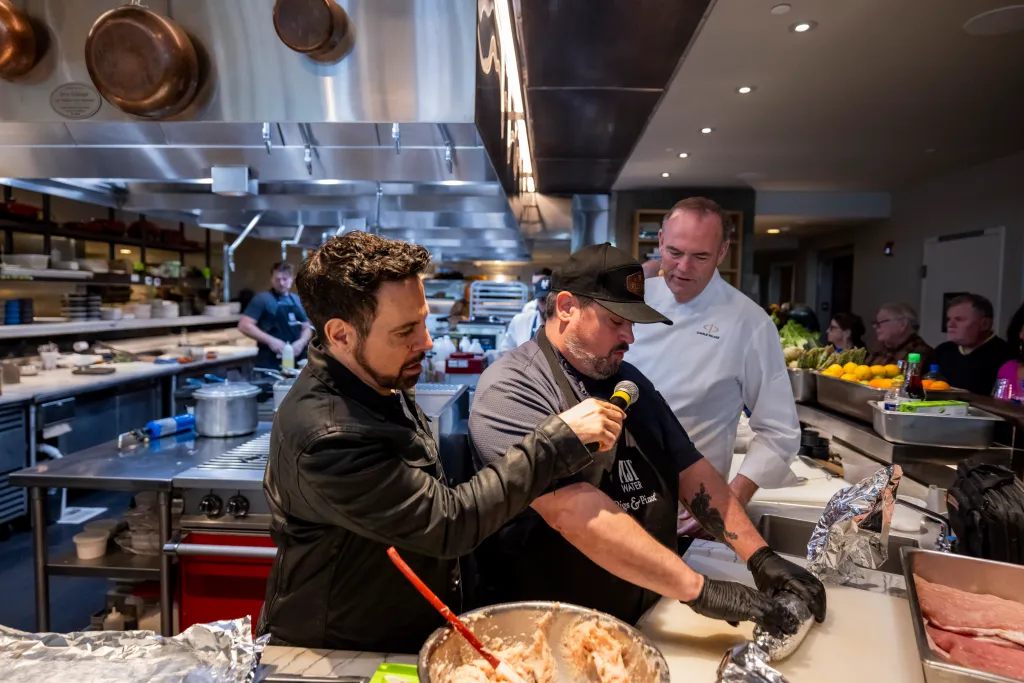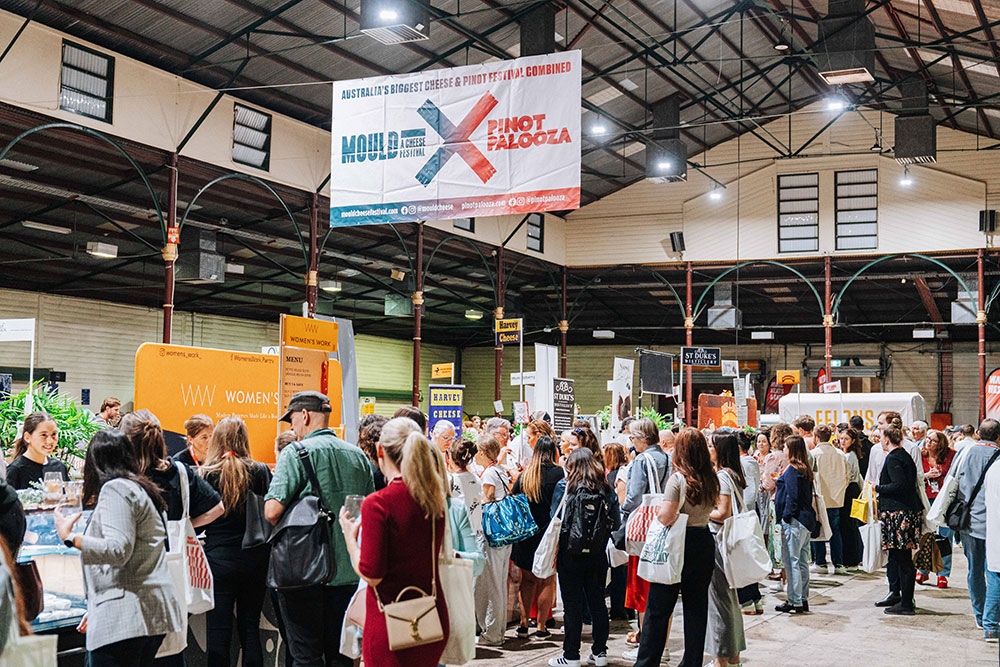

Wine Paris 2026 saw more than 65,000 trade visitors and 6,500 exhibitors over three days.
© Philippe Labeguerie / Wine Paris 2026
Fifty years after a blind tasting shocked the wine world, the industry once again finds itself at a defining crossroads.
In 1976, the Judgement of Paris upended assumptions about hierarchy, geography and legitimacy. The blind tasting, in which California wines triumphed over Bordeaux and Burgundy, did more than elevate Napa onto the world stage. It proved that excellence could emerge outside established power centers—and that wine, as an industry, is capable of reinvention when conditions demand it.
Wine Paris 2026 arrived at another such inflection point. Global wine consumption has slipped to its lowest level since the early 1960s, and red wine’s long-standing dominance is eroding. Younger drinkers are approaching alcohol with greater ambivalence. Climate instability and geopolitical volatility are altering vineyard economics and cascading through margins and shelf prices. And the once-assumed narrative of steady generational handoffs and automatic trade-ups no longer holds.
It’s a lot to comprehend, and seemingly happening all at once. And yet, walking the halls in Paris this week with more than 65,000 trade visitors and 6,500 exhibitors, what stood out was not anxiety, but rather adaptation. It was clear that the industry understands the scale of its structural shifts, and is actively designing around them.
The 50th anniversary of the Judgement of Paris offered a useful frame. In 1976, disruption came from the margins. In 2026, recalibration is unfolding across the ecosystem—from data-driven consumer research to vineyard experimentation, sustainability frameworks, and entirely new beverage categories. The most striking development is not a single breakthrough, but a collective willingness to adjust.
The show featured 239 sessions over three days, comprising panels, round tables, and masterclasses.
© Philippe Labeguerie / Wine Paris 2026
Shifting Consumption Patterns—And How To Adapt
Perhaps the most sobering session at Wine Paris was the global consumption update from Giorgio Delgrosso, head of statistics and digital transformation at the International Organization of Vine and Wine. Global wine consumption fell to 214 million hectoliters in 2024, the lowest level since 1961. That decline is not a short-term, post-Covid aberration, as some have claimed. Instead, it reflects a structural drift that has existed for decades.
The United States remains the world’s largest wine market by volume, at 33.3 million hectoliters in 2024. But compared with 2019, U.S. consumption is down roughly 2.2 million hectoliters. That contraction reflects a range of challenges, from sustained inflationary pressure and generational moderation to intensified competition from other beverage categories.
Stylistically, the shift is equally visible. In 2000, red accounted for roughly 51% of global wine consumption. By 2024, that share had fallen to 46%. White has climbed to 44%, up from about 40% two decades ago. Rosé now represents nearly 10% of global consumption. Sparkling remains the category’s most resilient performer, with global consumption at approximately 19 million hectoliters and steady growth over the past two decades.
These movements signal changes in occasion, taste preference, and lifestyle. For producers and distributors, the implication is clear: Pay attention to where demand is migrating, not where it once resided. The data shows contraction, yes—but it also shows evolution and pockets of resilience.
Where the OIV presentation mapped the macro shifts, Areni Global examined their implications for fine wine. Pauline Vicard, co-founder and executive director, presented new consumer research, alongside Felicity Carter, acclaimed journalist and editorial director.
Areni’s research, conducted in fall 2025, examined how consumers under 40 enter the fine wine category. The study included 308 respondents—209 of whom were active fine wine buyers—along with interviews and focus groups across London, Paris, New York, Hong Kong, Singapore, and Shanghai.
The study’s conclusion, according to Vicard: “The traditional pipeline that created fine wine buyers—professional advancement, aspirational spending, gradual upgrading—is collapsing.”
For decades, the industry relied on a predictable progression. Career advancement led to higher disposable income, which led to trading up, which led to collecting. That model now rests on shakier ground, with uneven income growth and more concentrated pockets of wealth.
Interestingly, Areni’s study found that consumers’ entry into fine wine is increasingly social. “Fine wine only becomes part of someone’s life once curiosity has been socially licensed through friendship and peer networks,” she said, underscoring that visibility within communities, rather than heritage or inheritance, is what drives fine wine engagement.
Education plays a different role than expected, as well. “Younger drinkers undergo education so they can make their own decisions, not so they can become better customers,” Vicard said, explaining that they’re not passively ascending a ladder. Instead, they’re actively interrogating wine’s value and access points, and seeking clarity and agency.
That extends to how access itself is structured. “Access isn’t simply about finding a wine merchant and having the money to shop there. It’s also about visibility, fairness, and rules that people can understand,” Vicard said. According to Areni’s research, factors like allocation mechanics and transparency matter to younger consumers.
One of the most consequential findings concerns gender. Among fine wine buyers aged 25 and under, women represent roughly 44% of participants. Yet by ages 41 to 55, that share dropped to just 17%. The issue is not initial interest—it’s retention.
If nearly half of the youngest cohort is female, but participation declines sharply later in life, the industry faces a structural opportunity. Are pricing structures, allocation norms, and event formats unintentionally filtering women out as their careers and family dynamics evolve? Vicard argues that if fine wine wants to alter its downward trajectory, it must redesign pathways to keep women engaged over time.
The macro data and consumer research both suggest that volumes are unlikely to rebound simply through patience. The U.S. market has softened, red is no longer the automatic growth engine it once was, and premium entry points are more socially dependent. Renewal will require strategic clarity–clearer pathways, smarter positioning, and products aligned with shifting demand.
The show featured Be No, a dedicated section for non-alcoholic products, which spanned across the entire floor of a conference hall.
Frederic SPEZIALE / Wine Paris 2026
Innovation Everywhere: Product, Sustainability And New Categories
If the consumption data underscored the challenge, the exhibition halls revealed the response. On the eve of the show, V d’Or—The Vinexposium Business Awards—recognized initiatives advancing innovation, sustainability, and education. This year’s Best Sustainability Initiative award went to the California Sustainable Winegrowing Alliance for its Climate Action Toolkit.
The Toolkit provides structured guidance to help winegrowers identify climate risks, prioritize climate-smart practices, and track measurable progress. “This award reflects decades of collaboration across California’s wine community, grounded in planning and science, and focused on preparedness and enduring stewardship,” said CSWA executive director Allison Jordan.
Category innovation was equally visible. For the first time, Wine Paris dedicated an entire floor to non-alcoholic beverages under its Be No banner. The section was sold out, with a waiting list of exhibitors, according to Camille Vidal, ambassador for the Be No platform, and plans are already underway to expand it next year.
The exhibitors spanned non-alcoholic wine, functional drinks, and cocktails, drawing participation from legacy producers and startups alike. Laura Willoughby, co-founder of Club Soda, a mindful drinking advocacy and retail platform, emphasized that the growth in non-alcoholic and functional beverages reflects a broader recalibration of drinking culture. Consumers are increasingly choosing beverages based on how they want to feel—relaxed, focused, celebratory—rather than defaulting to alcohol content. For wine, that shift presents both competition and creative stimulus.
One of the most notable crossovers came from Berlin-based Kolonne Null, which partnered with Schloss Johannisberg to produce a de-alcoholized Riesling “XO” blended from reserve wines spanning 1951 through 2014. Priced at around $100, the wine challenges the assumption that non-alcoholic products belong only in entry tiers. This, and several other standout products, showed how far the NA category has come in a relatively short time.
At the vineyard level, innovation was equally present. Pierre et Antonin, based near Limoux in southern France, have built their brand around resistant hybrid grape varieties, certified organic farming, and lightweight packaging. As co-founder Antonin Bonnet shared, resistant vines can reduce copper and sulfur sprays dramatically—in some cases cutting applications from 15 or 20 per season to just one or two.
In regions facing mildew pressure and rising labor costs, that reduction isn’t just good for the environment, it’s good for the bottom line. As Bonnet explained, sustainability must make financial sense to scale. The company produces around 30,000 9-liter cases annually, and is growing double digits. Pierre et Antonin wines are sold domestically and in export markets, including the U.S., where Whole Foods and Trader Joe’s carry their products.
Placed in a broader context, the week’s innovations felt less like isolated breakthroughs and more like part of a longer cycle of reinvention. Elaine Chukan Brown’s masterclass on the legacy of the Paris Tasting underscored that perspective. Reflecting on 1976, she said, “It was important because it told people in California they should have the confidence to keep going.” The message feels quite timely. In this era of climate volatility, shifting consumption, and tighter margins, producers need the same conviction, not just to endure, but to build and evolve.
Fifty years after the Judgement of Paris disrupted established hierarchies, Wine Paris 2026 suggested that the next transformation will hinge less on geography and more on adaptability. As history has shown, the producers who keep going are often the ones who define what comes next.