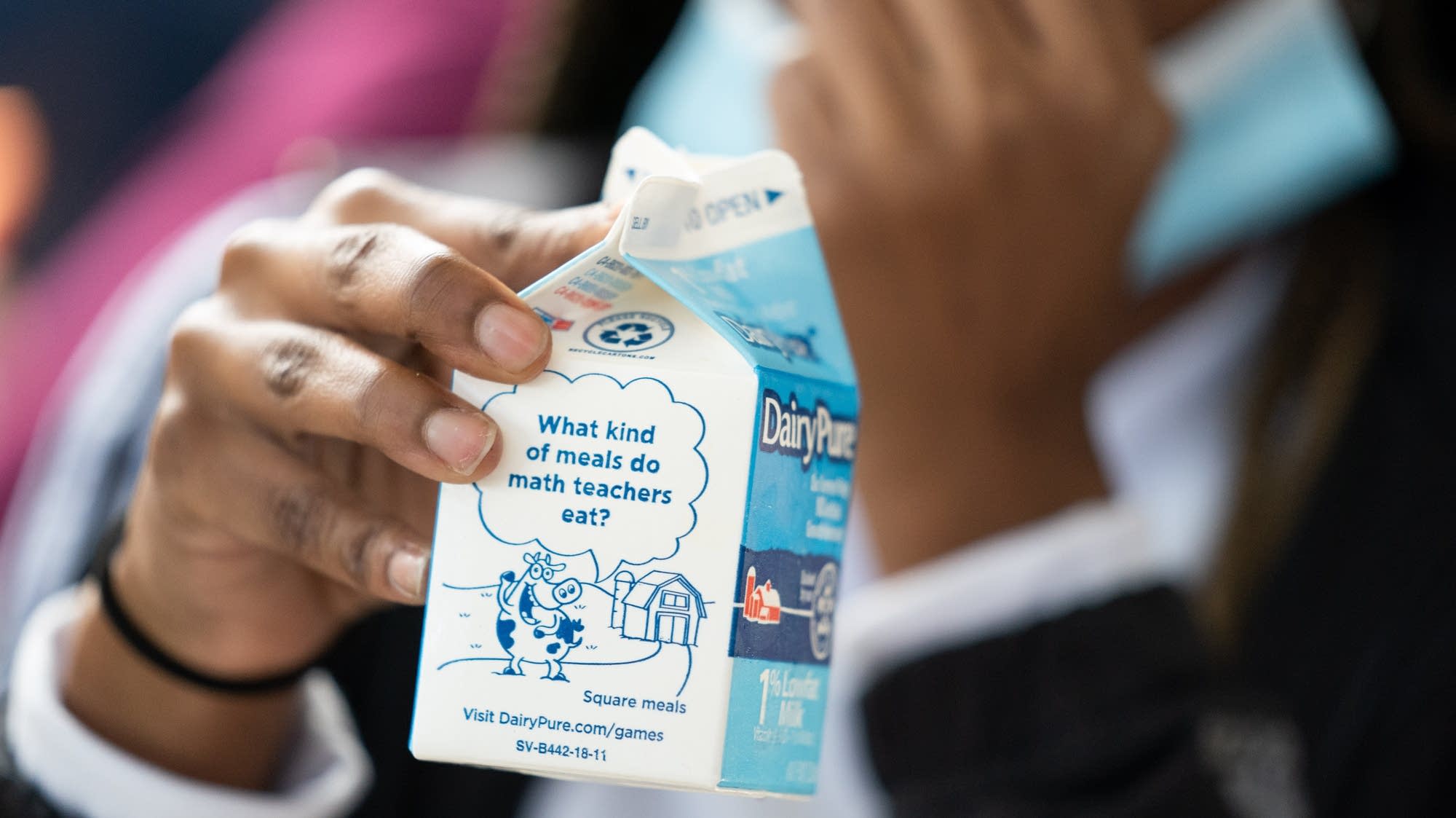
For more than a decade, when students at most elementary, middle, and high schools headed to the cafeteria for lunch, whole milk was not on the menu.
If a school participated in the National School Lunch Program, which the vast majority of public schools do, it could only serve reduced-fat milks.
But a new law that President Donald Trump signed in January, the Whole Milk for Healthy Kids Act, has now put whole milk back on the table.
Milk has been a staple of school meals for a long time.
“For schools that were looking for ways to provide cheap and nutritious meals for school children, one of the easiest ways to do that was just to provide milk, even before they were able to provide meals,” explained Andrew Ruis, research scientist in the Wisconsin Center for Education Research at the University of Wisconsin-Madison and author of the book “Eating to Learn, Learning to Eat: The Origins of School Lunch in the United States.”
Whole milk’s reputation started to take some damage when researchers questioned how much saturated fat Americans were eating. Then, the Obama administration pushed to make kids healthier.
“You see kind of the increased push for reduced-fat milks, like 2%, 1%, or even skim milk,” Ruis said.
Starting in 2012, schools in the lunch program could no longer serve whole milk.
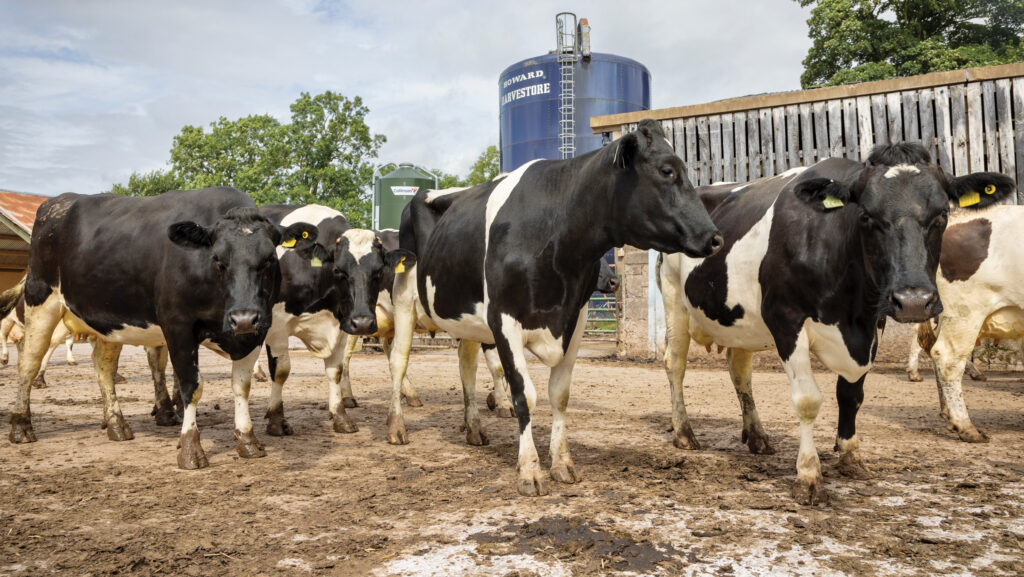
That was a problem for dairy farmers because schools account for more than 7% of all dairy consumption in the U.S., American Farm Bureau Federation economist Danny Munch explained.
“The major impact for dairy farmers, their bottom line, is butterfat demand,” Munch said.
Butterfat is exactly what it sounds like. It’s the component of milk used to make butter. It’s also in ice creams and cheeses.
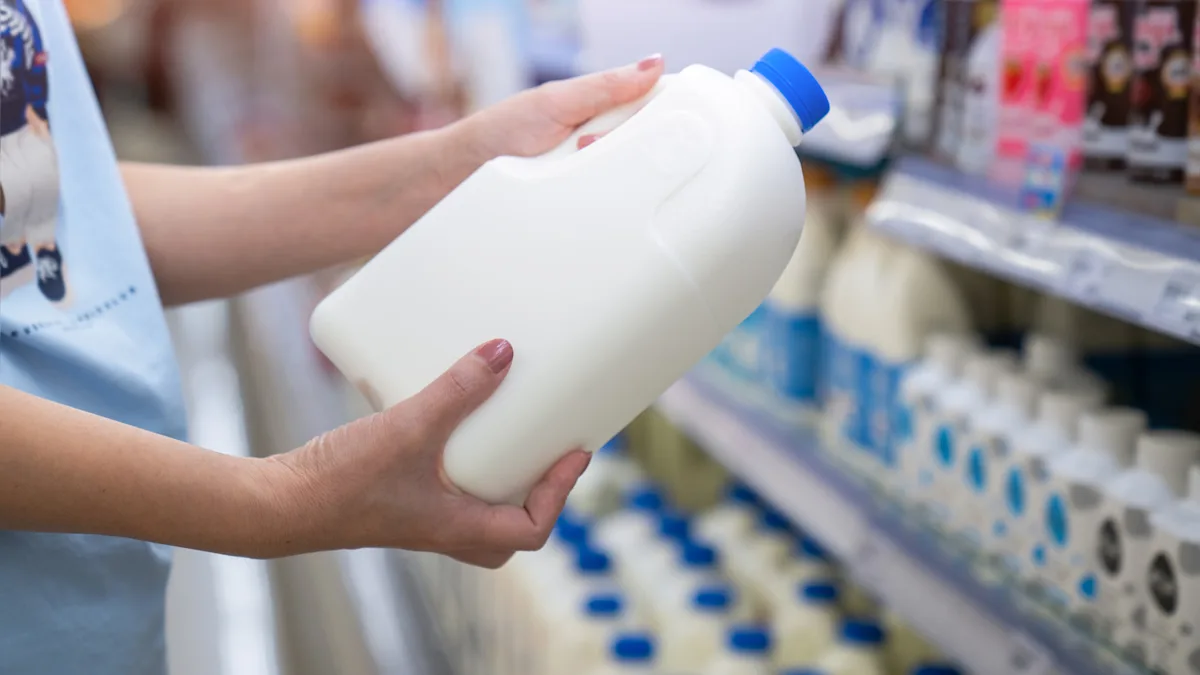
To make low-fat milk, producers take butterfat out. That generates a big supply and pushes down the price farmers get for that butterfat. But, selling less low-fat milk and more whole milk keeps the butterfat in the milk, meaning there’ll be less butterfat around.
“And supply demand dynamics push that price up, because now there’s more buyers for less amount of product than there was before,” Munch explained.
Higher prices are good news for the dairy industry.
Farmers and producers have another reason for wanting whole milk back in schools: building up more milk drinkers.
“I think there is a belief that if whole milk was in school, kids would drink more of it because it would taste better,” said Texas A&M professor and extension economist David Anderson.
That’s true not only in schools, but outside of them too, explained Cornell University agricultural economics professor emeritus Andrew Novaković.
“It’s about future milk drinkers, and you know, what you buy in your home consumption, and that starts to result in some bigger numbers,” he said.
Now, it’s important to note that the new law doesn’t require schools to offer kids whole milk for now. It just allows them the option.
If the dairy industry is going to see the higher butterfat prices and more lifelong whole milk drinkers they’ve been advocating for, schools will have to actually start buying whole milk.
That could ultimately come down to price, as school nutrition programs have tight budgets to begin with.
And regional variations can be a big factor in whole milk prices.
“Fluid milk products tend to be a bit more local, and these things all have some implications for pricing,” Novaković said. “There’s quite a range in geographic pricing depending on the relative balance of supply and demand and what the relative product composition is and so on.”
At the Union City Area School District in northwest Pennsylvania, for example, food service director and chef Krista Byler doesn’t see a huge difference in price between the milk she had been serving, and the whole milk she wants to offer students.
“Whole milk currently is a third of a penny more expensive,” Byler said. “So in my mind, that’s really not a hurdle.”
Byler, who comes from a dairy family and testified before a U.S. Senate committee in support of serving whole milk, is looking forward to offering it again to the 900 or so students in her district.
On the other hand, at the Douglas County School District, just south of Denver, director of nutrition services Jen Peifer is seeing a much bigger difference in price.
“The whole milk, for the same product, just in whole milk form, was coming in seven cents per carton higher, which is pretty significant,” Peifer explained.
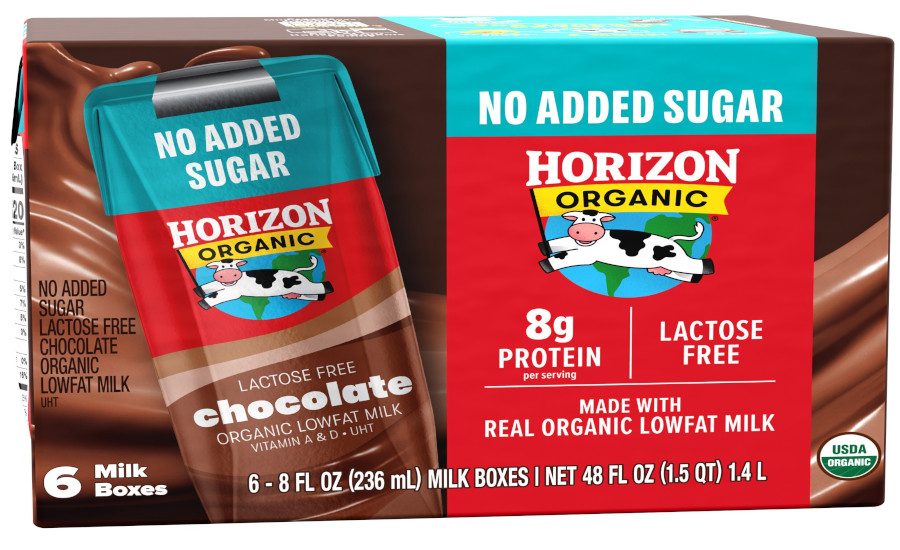
At her district, students go through about 30,000 cartons of shelf-stable, 1% milk and skim chocolate milk every day.
Peifer said she appreciates the option the new law gives her, but worries that the price could be prohibitive for now. She has about $2 per meal that she can spend on the food itself.
And there are still more changes coming to school meals.
The Department of Health and Human Services released a new Dietary Guidelines for Americans report. The USDA decides how schools will be required to reflect those guidelines in their offerings.
For example, the new guidelines prioritize protein. Peifer said increasing protein portions would squeeze her budget even more, so she’s hesitant to take on the cost of whole milk just yet.
“Because if in a year or two, I need to save money, because I need to put that money towards … for example, additional protein servings, I don’t want to flip flop on my students and give them something they like better, and then take it away again in two years if I have to save money,” she said.
At a Feb. 11 event, U.S. Secretary of Agriculture Brooke Rollins said a proposed rule on implementation of the new dietary guidelines could come as early as mid-spring. In a memo, the USDA said the “multi-year effort” will also include stakeholder feedback on the changes.