Jan. 7, 2026, 11:42 a.m. ET
Oversupply and weakening consumer demand have been causing milk, butter and cheese prices on the wholesale market and at the grocery store to fall slightly.
The lower prices on the dairy staples are good news for shoppers, who have been struggling with rising grocery prices amid inflation and tariff increases.
“We just have a lot of milk here in the U.S. right now,” Stephen Cain, vice president of economic policy and market analysis for the National Milk Producers Federation, told USA TODAY. “Farmers are cranking out a lot of milk and that’s translating into a lot of dairy product production and domestic demand has been somewhat soft this year.”

What is happening with dairy wholesale markets?
Wholesale market prices for milk, cheese and butter have been lower than normal for about a year, but had more of a significant decline in the past six months, Cain said.
There has been a significant easing of prices, especially for butterand cheese, he said. That has been largely driven by the milk supply.
Milk production is up nearly 4% this year when the average is usually 1½% to 2% growth, he said.
That oversupply and softening demand translates to downward pressure on prices, Cain said.
But wholesale market prices don’t always get reflected at the retail store for shoppers or there may be a lag, he said.
“We’ll likely start to see retail prices ease some, but it’ll take a little bit of time for those to move down with the market,” he said.
Sometimes retailers aren’t as quick to lower prices when wholesale or commodity prices fall, he said.
Additionally, thedairy wholesale markets have had more volatility in the last 18 months and it is often cyclical, said Phil Plourd, head of insights for Ever.Ag, an agricultural commodity market and risk management firm with a concentration on dairy. For instance, the wholesale price of butter was above $3 a pound for nearly two years and now it is about half that price, Plourd told USA TODAY.
One of the challenges with dairy is that it’s not like factory production, where you can add or take away a shift, Plourd said.
“Dairy farmers will be getting the signal to slow down milk production because prices are under pressure, but they don’t just lay off the cows,” he said, adding that the production cycle is very intricate having to do with biology and the weather.

What is happening with store prices for milk, butter and cheese?
According to the latest consumer price index figures from the Bureau of Labor Statistics, the prices for milk, butter and cheese are down.
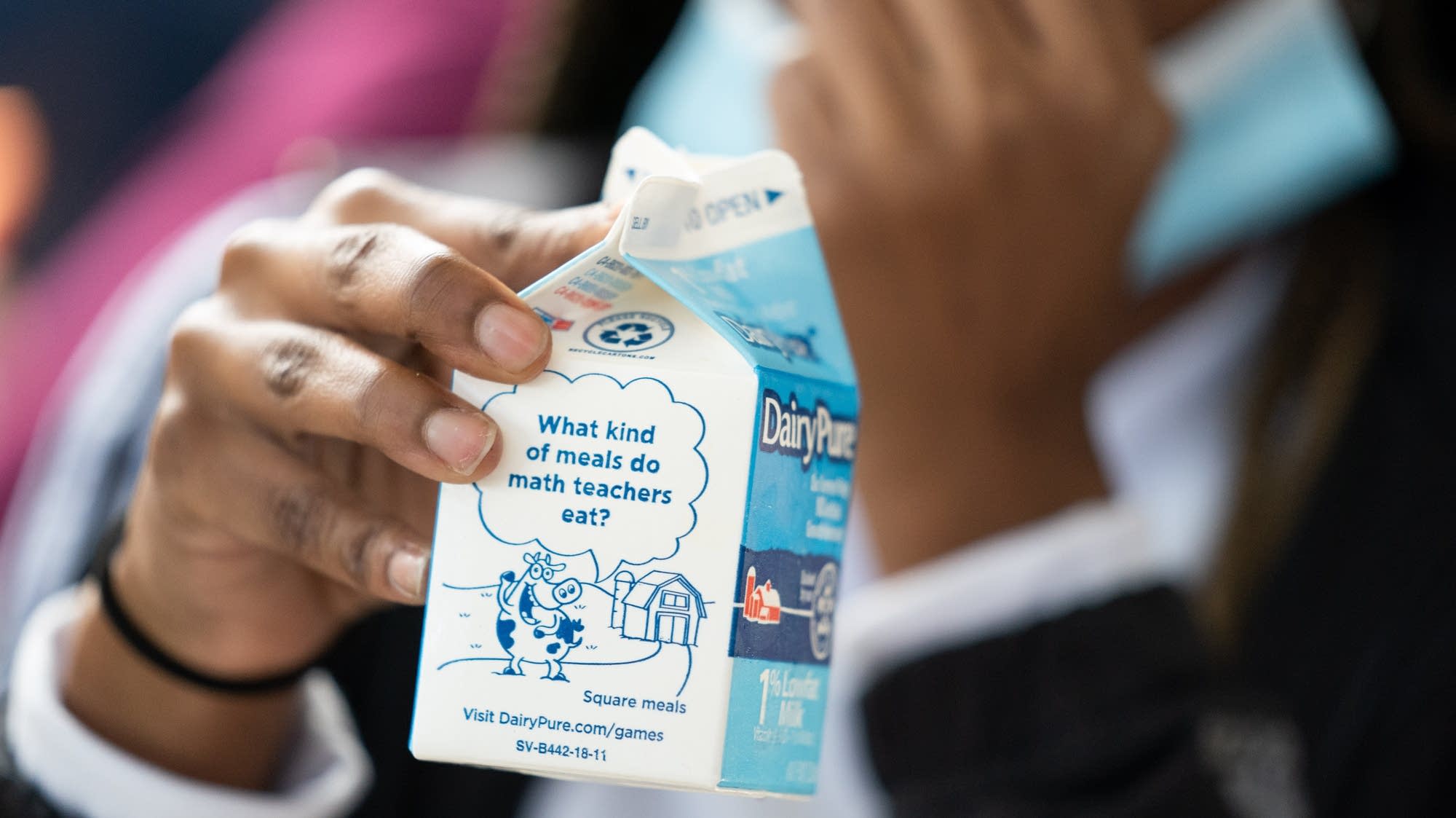
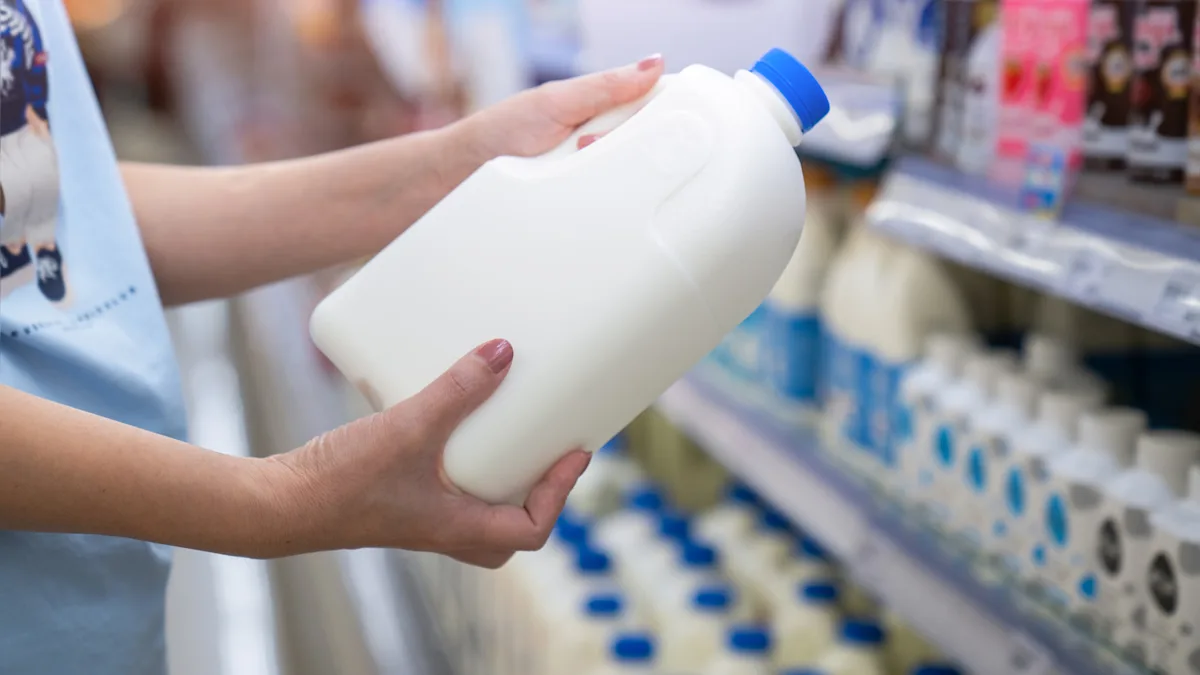
A gallon of milk in November was $4 (rounded from $3.997), compared to $4.17 in August, a 4.2% decline. The milk price was a 3.4% decline from November 2024, when the price was $4.14.
A pound of stick butter in November was $4.31, down 10.7% from August’s price of $4.83 and 10.1% lower than the November 2024 price of $4.79.
A pound of cheddar cheese was $5.64 in November. That was 8.0% lower than the August price of $6.12 and 0.7% lower than the November 2024 price of $5.658.
Why is there reduced consumer demand for milk, butter and cheese?
Consumer demand at the retail or grocery store for milk, butter and cheese has mostly been strong, Cain said, but the food service industry, such as fast food, has seen reduced consumer demand, he said. In particular, cheese consumption is down 2% in the last year, when it normally sees a 2% to 3% growth domestically, he said.
“Whenever consumers pull back, they pull back the most from food service first and then retail (groceries),” Cain said.
That decline in demand could continue in 2026, especially among lower-income consumers who are pulling back on their discretionary spending, he said.
Affordability: Here’s how many shoppers say they’re struggling with rising grocery costs
The global market for dairy also has an oversupply, which is affecting prices, even though import and export activity for U.S. dairy is relatively low, said Cain.
Plourd said it is unusual that globally “everybody is clicking on all cylinders all at the same time.”
Additionally, while milk consumption continues to go down, demand for other dairy products, such as whey, yogurt, ultra-filtered milk and other protein drinks has created tailwinds for dairy farmers, processors and brands, said Garth Boyd, a principal in the food & agriculture practice of Kearney, a global strategy and management consulting firm.
There are more than 53 dairy processing plants either being built or adding capacity in the United States, representing some $10 billion of capital expenditure, Boyd said.
Betty Lin-Fisher is a consumer reporter for USA TODAY. Reach her at blinfisher@USATODAY.com or follow her on X, Facebook, or Instagram @blinfisher and @blinfisher.bsky.social on Bluesky. Sign up for our free The Daily Money newsletter, which breaks down complex consumer and financial news. Subscribe here.