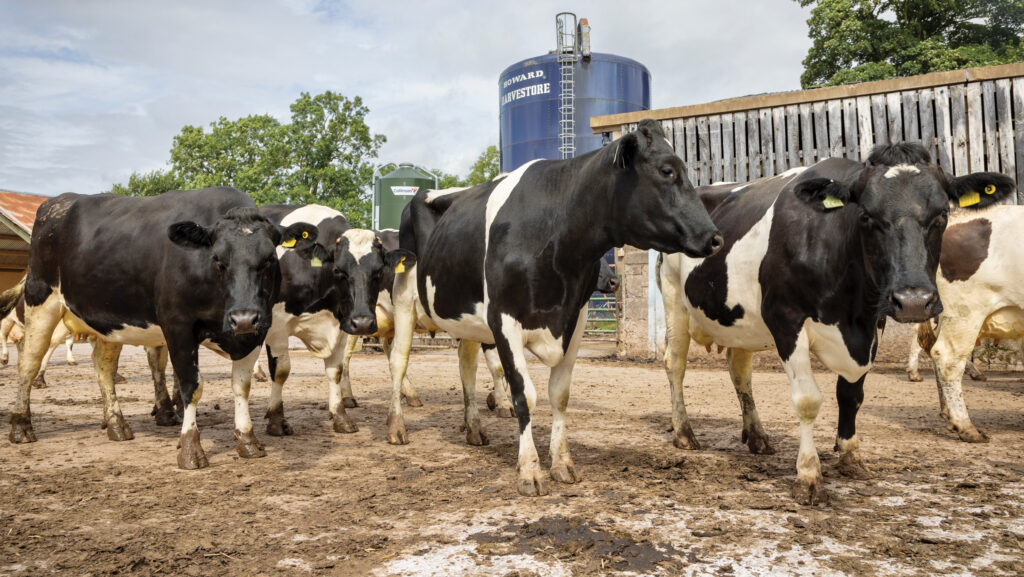

Local farmer Jessica Peters is something of a dairy influencer, using Facebook to share what all goes on at Spruce Row Farm in Meadville, where her herd of 400 cows includes 190 milking cows. So it wasn’t surprising to her when she started fielding messages from concerned parents.
“I get a lot of messages from parents who say their kids love milk but won’t drink it at school,” Peters explained. “Part of the problem is it’s a generational thing. You know, growing up, the food pyramid told us there’s too much fat in our diets, but we’ve learned that it’s not always a fat problem.”
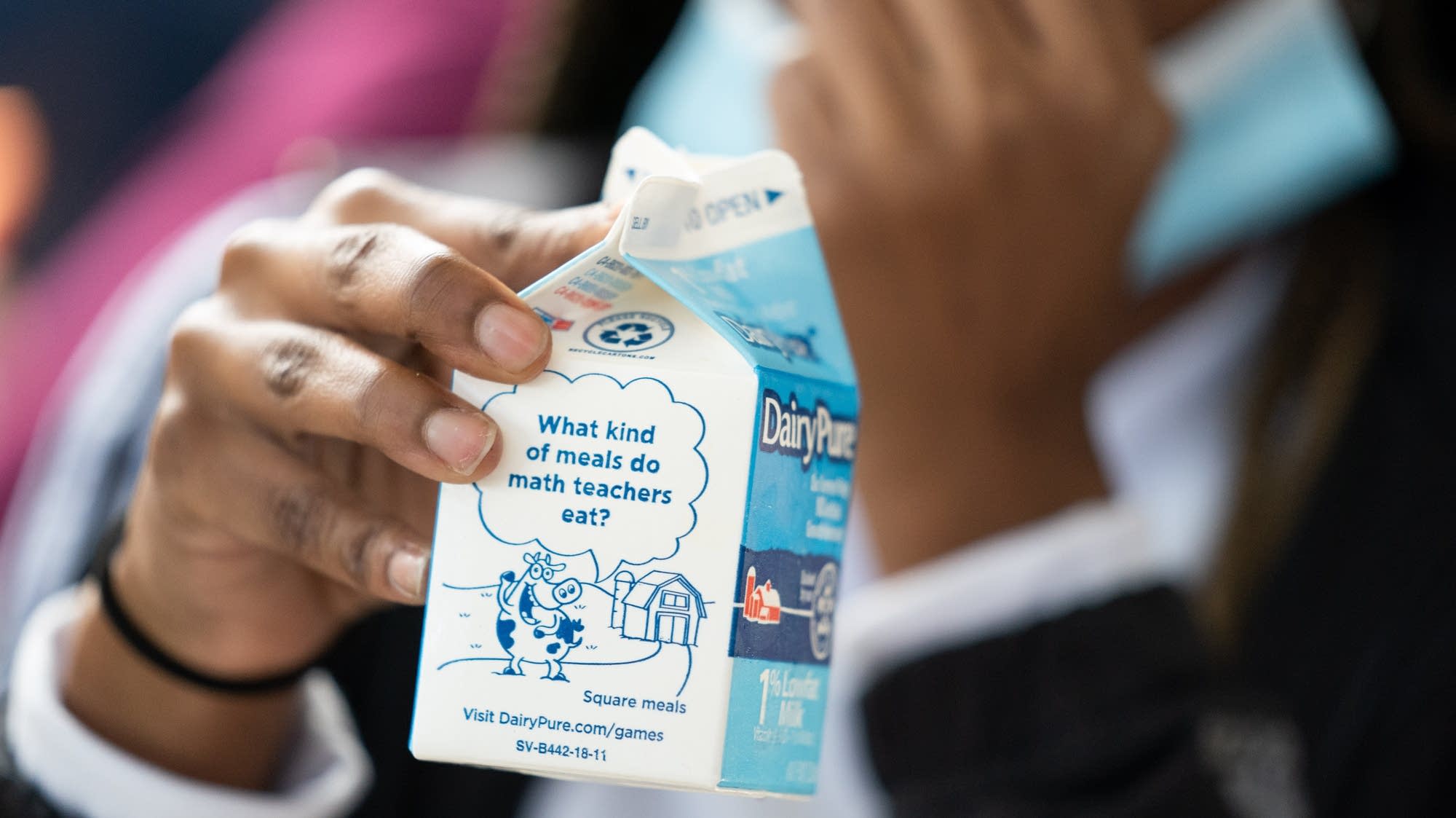
In fact, that notion permeated so much of the national agenda that in 2012, the United States Department of Agriculture implemented the Healthy, Hunger-Free Kids Act regulations. Those regulations restricted milk in schools to fat-free or 1 percent low-fat milk. The rules were aimed to align with dietary guidelines.
Milk consumption dropped sharply after the change, as the American Farm Bureau Federation found that from 2008 to 2018, weekly servings per student fell 15 percent with the decline accelerating 77 percent after the restrictions.
Milk still contains needed nutrition in a student’s lunch, though, and the fallout seemed to not only hurt students but also the dairy farmers who previously had a higher demand for milk.
That’s where the Whole Milk for Healthy Kids Act of 2025 comes into play. The act, signed into law by President Donald Trump this year, modified the restrictions and permits schools to offer whole, reduced-fat (2 percent), low-fat (1 percent) and fat-free milk as well as lactose-free milk and nondairy beverages that are nutritionally equivalent to fluid milk.
Although schools participating in the National School Lunch Program are only required to offer two different milk options at lunch daily, the change creates an opportunity that impacts students, dairy farmers and schools.
Rethinking what ‘healthy’ looks like
There are numerous considerations when creating a formula for school lunch nutrition – fat, protein, calories, vitamins, etc.
The issue with whole milk was that it had a higher fat content, but Peters said that in reality, it’s not as high as people might think.
“I think the name whole milk catches people off guard because they think it’s 100 percent milk fat,” she said.
Whole milk contains about 3.5 percent milk fat as opposed to the 1 percent in low-fat milk. The average dairy cow gives milk that measures at 3.5 percent milk fat, which is how it got the name “whole” milk, because it doesn’t have to be filtered out.
“We’ve learned it was apparently a very stupid thing to call milk,” Peters said, noting the misconceptions that have followed.
Although the difference in fat isn’t very much, comparing whole and 2 percent to 1 percent milk, Peters said it makes the taste completely different. It’s something that is clear from the families who contact her, which she says leads to children not drinking the milk at school.
“The fact that I’m hearing that so many moms are saying that they’ll go through two gallons of milk a week at home but won’t drink it at school tells me they’re pretty closely related,” she remarked.
In addition to taste, research is emerging that shows dairy fat is more nutritious than any sort of refined fats and may even be beneficial for weight outcomes or cardiovascular health.
The Current Developments in Nutrition journal published a study in 2023 that found full-fat dairy foods can increase health outcomes, directly challenging dietary guidance on low-fat and fat-free dairy products.
Although the fat is higher, whole and 2 percent milks typically contain natural nutrients that the body, especially a growing body, needs to develop.
Milk’s unique compounds and structures affect how bodies process and use its dairy nutrients, and similar studies have shown that full-fat dairy nutrients can be beneficial for things like weight loss, heart health and boosted immunity.
Peters said a growth in what she calls “nut juices,” nondairy alternatives, points people toward manufactured products rather than naturally occurring ones, like in whole milk.
“It doesn’t get more natural than when you look at the label of a product, and the ingredient is that product,” she said.
While health varies for each child, the growing body of research indicates that milk fat may not be as harmful as previously thought.
Impact on the dairy market
Americans are drinking far less milk than they used to. In fact, the American Farm Bureau Federation found that the amount of fluid milk consumption (meaning drinkable dairy) is down 50 percent since 1975 and 28 percent since 2010.
At the same time, butterfat or milk fat consumption and sales have leapt 13 percent over the past decade, which is six times higher than in the European Union or New Zealand, the two largest dairy exporters. This indicates higher sales of ice cream, yogurt and cheese.
That’s why the change in fluid milk options in schools provides an opportunity to bring fluid milk sales back up to par — good news for dairy farmers like Rob Waddell, owner of Apple Shamrock Dairy Farm in Townville.
With about 1,200 dairy cows on his farm, Waddell is well-equipped to take on the spike in demand. He explained that bringing whole and reduced-fat milk back into schools would increase butterfat demand, and in turn, widen sales margins for farmers.
The National School Lunch Program plays a key role in the farm market, serving around 5 billion meals with about 85 percent selecting milk as an option. That’s nearly 4.13 billion milk cartons. If even 25 percent of schools adopt whole milk, the annual butterfat demand for farmers would increase up to 18 million pounds, which is a game-changer in a state where total milk production has been decreasing for four years and there are increasingly fewer dairy farms.
The Center for Dairy Excellence estimates that every $1 spent on a Pennsylvania dairy farm generates $2.50 in economic revenue, which makes the decrease especially alarming for the state’s economic landscape. Bringing whole milk back into schools could help stabilize the dairy economy.
The real-world challenge
Putting more money into the dairy economy while meeting nutritional goals sounds like a win-win, but Waddell said the real concern isn’t over nutrition but over cost.
Because higher milk fat/butterfat is more valuable, switching to products with more fat would increase the cost to school districts.
“Two cents per carton adds up pretty quickly when stretched across the entire school population,” he said.
That’s why the farmers have taken it upon themselves to advocate for why the change is worth the price point. Waddell is on the Pennsylvania Dairy Promotion Program’s board of directors, which is managed by the American Dairy Association North East (ADANE) and develops and implements programs to drive milk and dairy sales.
“We’re not permitted to lobby, so we work to help educate and support school districts,” Waddell said.
A way that they do that is through the checkoff program. Funded by America’s 26,000-plus dairy farm families and dairy importers, the dairy checkoff aims to build trust and demand for dairy products. For every 100 pounds of milk sold, dairy farmers pay 15 cents toward the checkoff program to fund promotion and research efforts. Of that money, 10 cents goes to the local dairy checkoff — in this region, that’s ADANE— and the remaining 5 cents goes toward the national checkoff.
“We work with the nutritionists in schools and try to promote whole milk,” Waddell said. “Checkoff dollars fund critical research on the health benefits of full-fat dairy and help ensure that the science supports the policy changes.”
Already, one local school is putting the option of whole milk back on the table.
Jennifer Galdon, superintendent of Crawford Central School District, said that their contracted supplier, The Nutrition Group, “aims to provide the students with a variety of high-quality nutritious meals that meet the federal regulations and students’ preferences.”
She said that they have not started serving whole milk cartons yet due to some carton shortages with their dairy supplier, but they expect to replace 1 percent milk with whole milk by the end of March.
Although Peters is happy that she may receive fewer messages about children not drinking the milk at school, she said children may already be conditioned to not like that milk and will be less likely to put it on their lunch or breakfast tray. In her mind, there’s still a lot of work to go to re-engage people with whole milk, but this is a start.
“It’s kind of nice to feel like you’ve been heard,” she said. “It’s nice to know we’ve taken a step in the right direction.”