
Image source: The Motley Fool.
DATE
Thursday, March 12, 2026 at 11 a.m. ET
CALL PARTICIPANTS
- Chief Executive Officer — Rajat Marwah
- Chief Financial Officer — Mike Moraca
- Vice President, Human Resources and Corporate Affairs — Laura Devoni
TAKEAWAYS
- Adjusted EBITDA — Loss of $95.2 million in the fiscal fourth quarter ended Dec. 31, 2025, with a margin of minus 20.9% due to lower shipments and elevated costs.
- Cash flow from operations — $3 million used in the quarter, a significant improvement compared to $77 million used in the prior-year period, largely from working capital release.
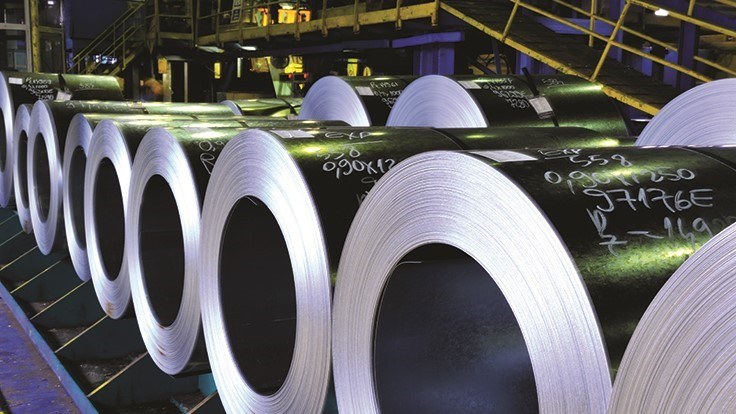
- Steel shipments — 378,000 net tons, down 31% from the prior-year quarter, attributed to the impact of US tariffs and exit from the US market.
- Average net sales realization — $1,077 per ton for the quarter, up from $976 per ton in the prior-year period, reflecting stronger value-add product mix partially offset by weaker market demand.
- Cost per ton of steel products sold — $1,332 per ton versus $1,032 per ton a year ago, primarily due to direct tariff costs and worse fixed cost absorption.
- Inventories — Ended the quarter at $569 million, down $221 million from third quarter, reflecting wind-down of blast furnace inventories and continued shipment of finished goods.
- Liquidity position — $77 million cash, $195 million available on the revolving credit facility, and $417 million available under the large enterprise tariff loan facility.
- Cumulative EAF project investment — $920 million invested as of Dec. 31, 2025; final expected aggregate cost approximately $987 million.
- US Section 232 tariff impact — $225 million in direct tariff cost absorbed over the year, with US shipments approximately 30% lower than the previous three-quarter average.
- Product mix shift — Plate segment positioned as a competitive advantage, with plate pricing holding a premium over hot-rolled coil and expected increase in production sequentially.
- Hanwha Ocean MOU — Binding memorandum of understanding with Hanwha Ocean Company Limited for a potential $250 million US-dollar strategic arrangement, including $200 million contribution to develop a structural steel beam mill and up to $50 million in expected product purchases.
- 2026 shipment guidance — Expected full-year shipments of 1 million to 1.2 million tons with a roughly 50/50 split between plate and sheet; first quarter shipments will be sequentially lower, ramping up through the year.
- Sustaining CapEx guidance — Anticipated to be “close to around $80 million a year” following exit from blast furnace and coke-making operations.
- Power and energy costs — Operations use a mix of self-generated natural-gas-fired power and grid-supplied power; company receives a C$20 per megawatt Northern Electricity Advantage Program benefit; winter months typically hedged for natural gas price volatility.
- Scrap supply JV — Joint venture for scrap sourcing operating effectively, supporting EAF ramp-up.
- Plate and sheet market pricing — Plate prices in Canada are holding up better than sheet, with sheet at “roughly 40% lower” than the index, while plate is discounted “anywhere between 15% to 20%.”
- Workforce changes — Approximately 1,000 layoff notices issued due to accelerated wind-down of blast furnace and coke oven operations; mitigation efforts in place with unions and government partners.
Need a quote from a Motley Fool analyst? Email [email protected]
RISKS
- CEO Marwah highlighted that “The 50% US Section 232 tariff dismantled the cross-border business model,” resulting in a $225 million direct tariff cost and compressing Canadian market prices by up to 40% below US levels.
- Rajat Marwah indicated “adjusted EBITDA that was a loss of,” driven by “lower shipments, elevated costs, and continued pressure on realized pricing as the Canadian market absorbed excess supply.”
- CEO Marwah confirmed that the company “issuing layoff notices to approximately a thousand of our colleagues, effective later this month,” reflecting the significant human cost of accelerated plant closures.
- Moraca stated that “Due to persistently weak market demand, we expect shipments this quarter to be sequentially lower than the fourth quarter,” which may indicate continued pressure on near-term operating results.
SUMMARY
Algoma Steel Group (ASTL 11.43%) reported a sharp contraction in fiscal fourth quarter shipments and continued operating losses, driven by the direct impact of US tariffs, structural market changes, and the winding-down of blast furnace production. Management outlined a strategic shift to focus exclusively on the Canadian market, emphasizing competitive strengths in plate products, accelerated deployment of electric arc furnace (EAF) assets, and supported liquidity through $500 million in new government-backed funding. The company announced a binding MOU with Hanwha Ocean Company Limited for a $250 million strategic initiative tied to Canada’s defense sector and a proposed structural steel beam mill. Large workforce reductions were disclosed, with around 1,000 layoffs tied to rapid operational transformation. Shareholder guidance indicates plate production is expected to rise sequentially, sustaining CapEx will materially decline, and near-term shipments will be seasonally lower but are targeted to ramp to between 1 million and 1.2 million tons for the year.
- The company’s self-generation of power and the Northern Electricity Advantage Program mitigate exposure to Ontario spot energy pricing and support cost stability.
- Scrap procurement through a joint venture is supporting the EAF ramp-up effectively, with availability and ramp speed described as favorable.
- Adjusted EBITDA margin of minus 20.9% for the quarter marks a significant deterioration from prior periods, explicitly linked to weaker volume, lower realized prices, and higher per-ton costs.
- The company expects further working capital release and cash benefits in 2026 as inventory normalization progresses and income taxes receivable are recovered.
- Pending litigation related to a US Steel iron ore supply contract was acknowledged, though management refrained from comment due to ongoing legal proceedings.
INDUSTRY GLOSSARY
- Discrete plate: Steel plate that is rolled as a single piece, not coiled, and generally used for infrastructure, construction, and shipbuilding applications.
- Electric arc furnace (EAF): Steelmaking furnace that melts scrap or direct reduced iron using electrical energy, providing operational flexibility and lower emissions than traditional blast furnaces.
- Northern Electricity Advantage Program: Ontario government program granting electricity rate discounts to eligible Northern Ontario-based industrial users, providing cost-competitive power for manufacturers like Algoma Steel Group.
Full Conference Call Transcript
Operator: Greetings, and welcome to the Algoma Steel Group Inc. Fourth Quarter 2025 Earnings Call. At this time, all participants are in a listen-only mode. If anyone should require operator assistance, as a reminder, this conference is being recorded. It is now my pleasure to introduce Laura Devoni, vice president of human resources and corporate affairs. Please go ahead.
Laura Devoni: Good morning, everyone, and welcome to Algoma Steel Group Inc. Fourth Quarter 2025 Earnings Conference Call. My name is Laura Devoni, vice president of human resources and corporate affairs, and I will be moderating today’s call. The prepared remarks are Rajat Marwah, chief executive officer, and Mike Moraca, our chief financial officer. As a reminder, this call is being recorded and will be made available for replay later today in the Investors section of Algoma Steel Group Inc.’s corporate website at www.algoma.com. I would like to remind you that comments made on today’s call may contain forward-looking statements within the meaning of applicable securities laws, which involve assumptions and inherent risks and uncertainties.
Actual results may differ materially from statements made today. In addition, our financial statements are prepared in accordance with IFRS, which differs from US GAAP, and our discussion today includes references to certain non-IFRS financial measures. Last evening, we posted an earnings presentation to accompany today’s prepared remarks. The slides for today’s call can be found in the Investors section of our corporate website. With that in mind, I would ask everyone on today’s call to read the legal disclaimers on slide two of the accompanying earnings presentation and to also refer to the risks and assumptions outlined in Algoma Steel Group Inc.’s fourth quarter 2025 management’s discussion and analysis.
Please note that our financial statements are prepared using the US dollar as our functional currency and the Canadian dollar as our presentation currency. As a reminder, the company changed its fiscal year end from March 31 to December 31, resulting in a nine-month fiscal reporting period ending 12/31/2024. For ease of comparison, we will focus our comments today on the three- and twelve-month periods ending 12/31/2025 and 2024. Please also note that amounts referred to on today’s call are in Canadian dollars unless otherwise noted. Following our prepared remarks, we will conduct a question and answer session. I will now turn the call over to our chief executive officer. Rajat?
Rajat Marwah: Thank you, Laura. And good morning, everyone. Thank you for joining us to discuss our fourth quarter and full year 2025 performance. Before I get into our results, I want to acknowledge this is Mike’s and my first earnings call as CFO and CEO, respectively, roles we formally assumed on January 1. I also want to recognize Michael Garcia, who led this company through one of its most consequential transformations and who left Algoma Steel Group Inc. in a fundamentally strong position. Employee safety remains our top priority and a core value.
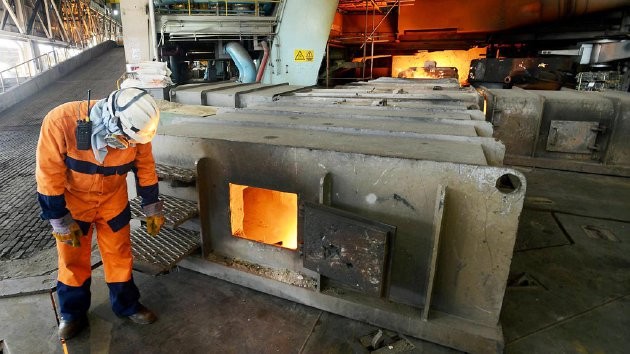
The scale of activity on our site today with the end of blast furnace operations and our EAF running around the clock demands an unwavering focus on safe execution, and I am proud of the discipline our teams have demonstrated throughout this transition. Every milestone we achieved in our transformation must be earned with the same commitment to sending every employee home safely, every day. Before I get into the details of the quarter, I want to highlight three key themes. First, the 50% US Section 232 tariff has permanently altered the landscape for Canadian steel producers.
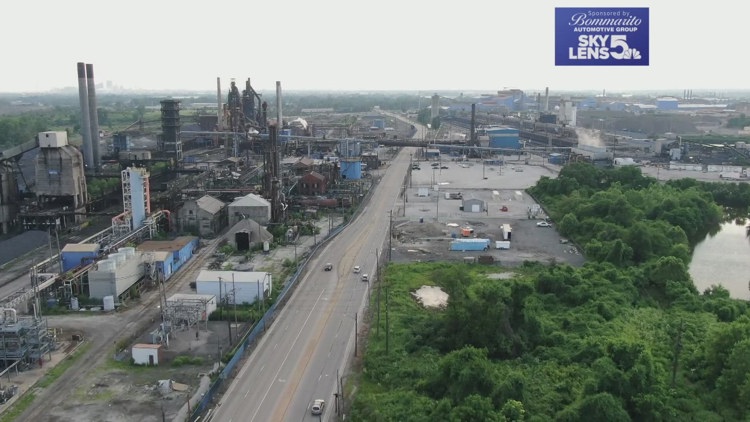
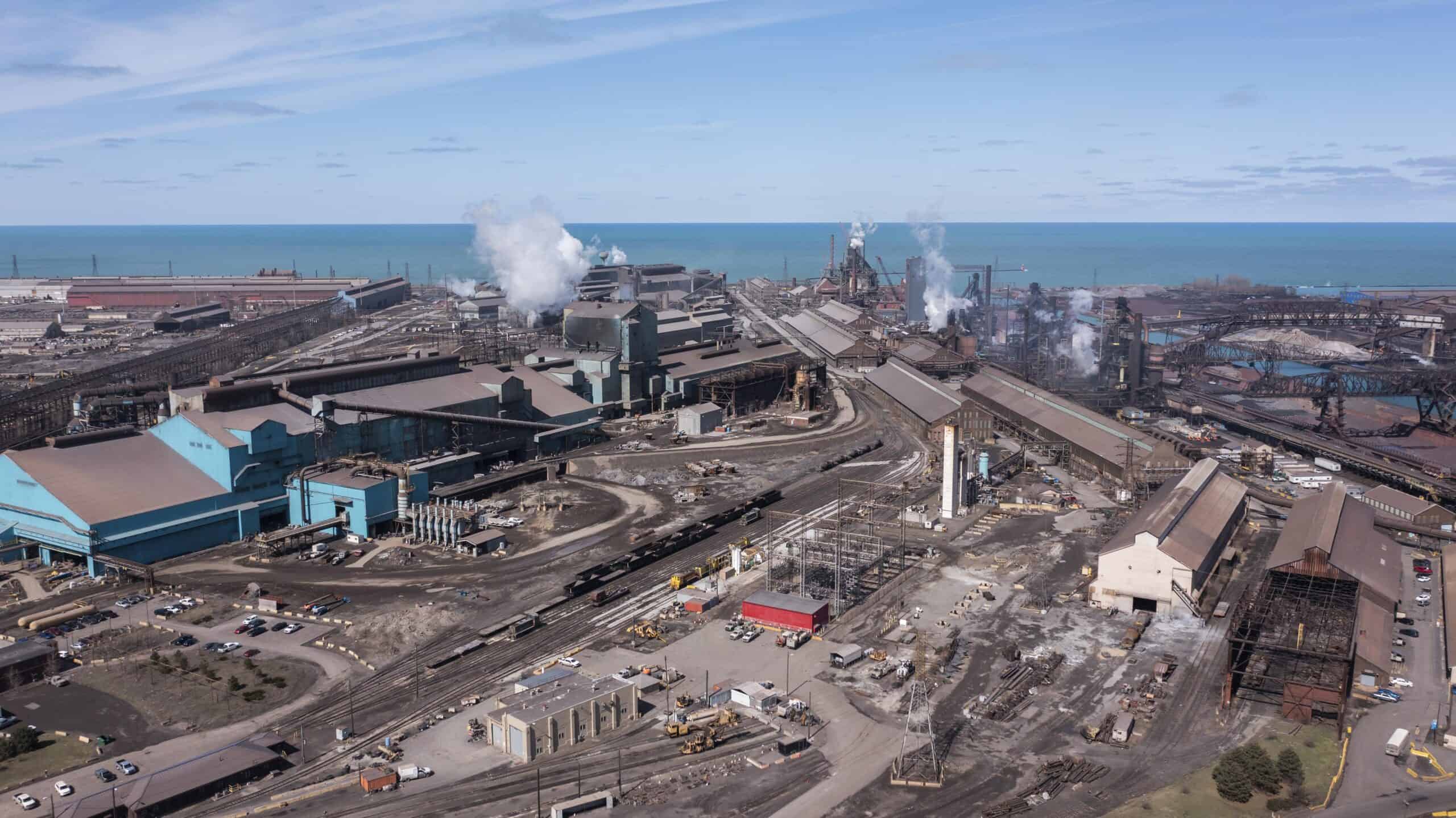
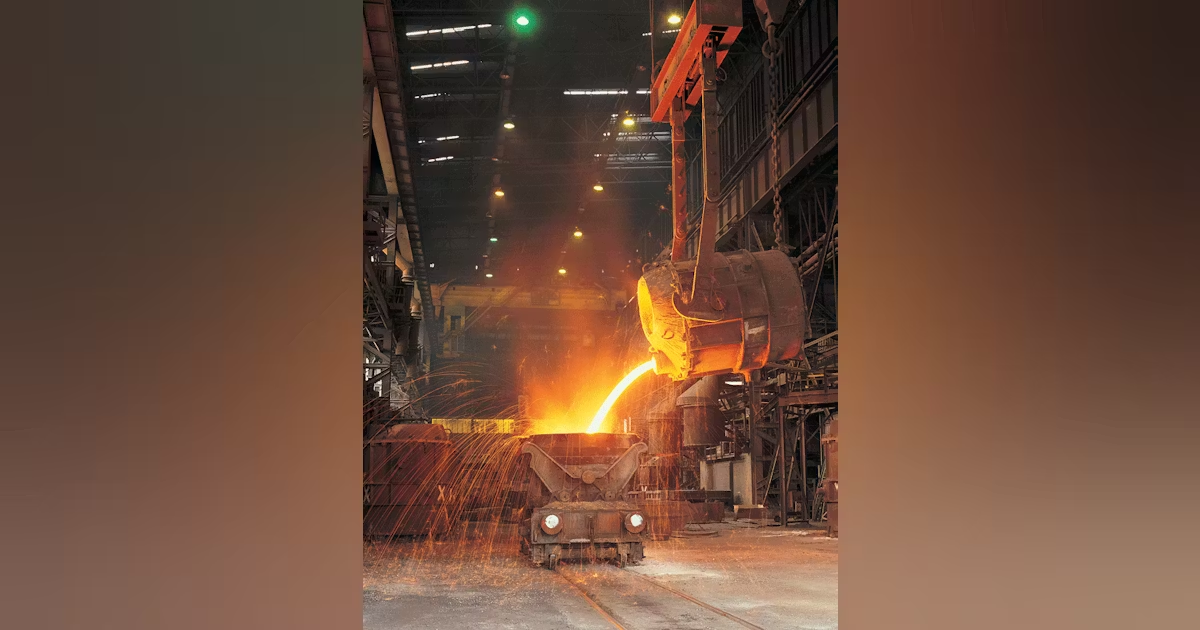
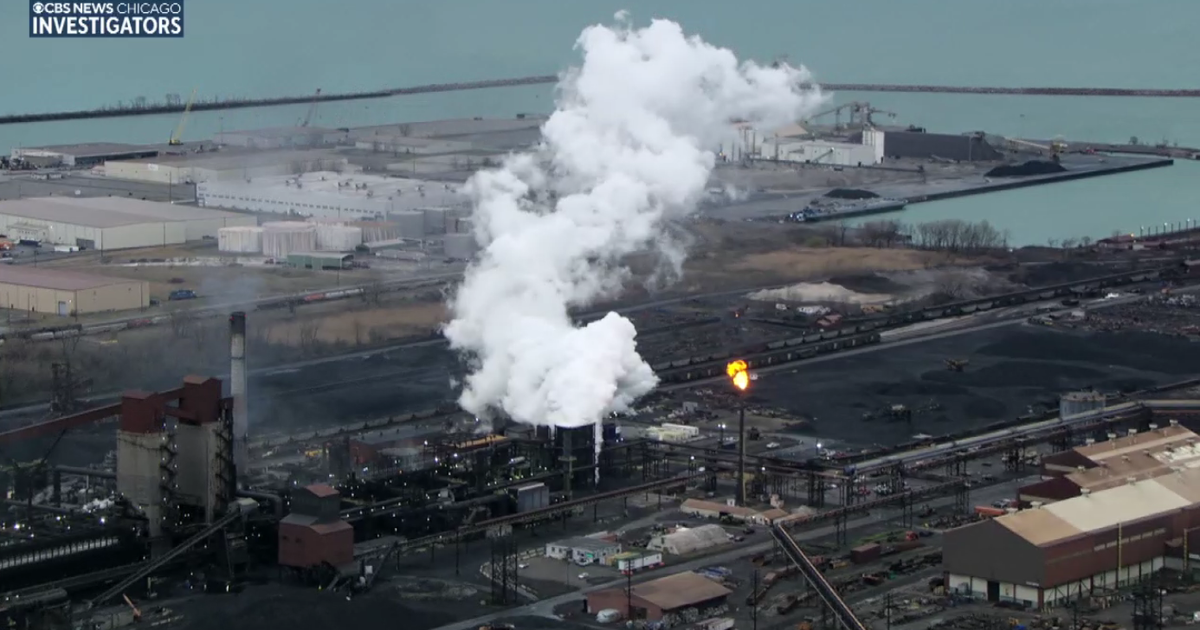
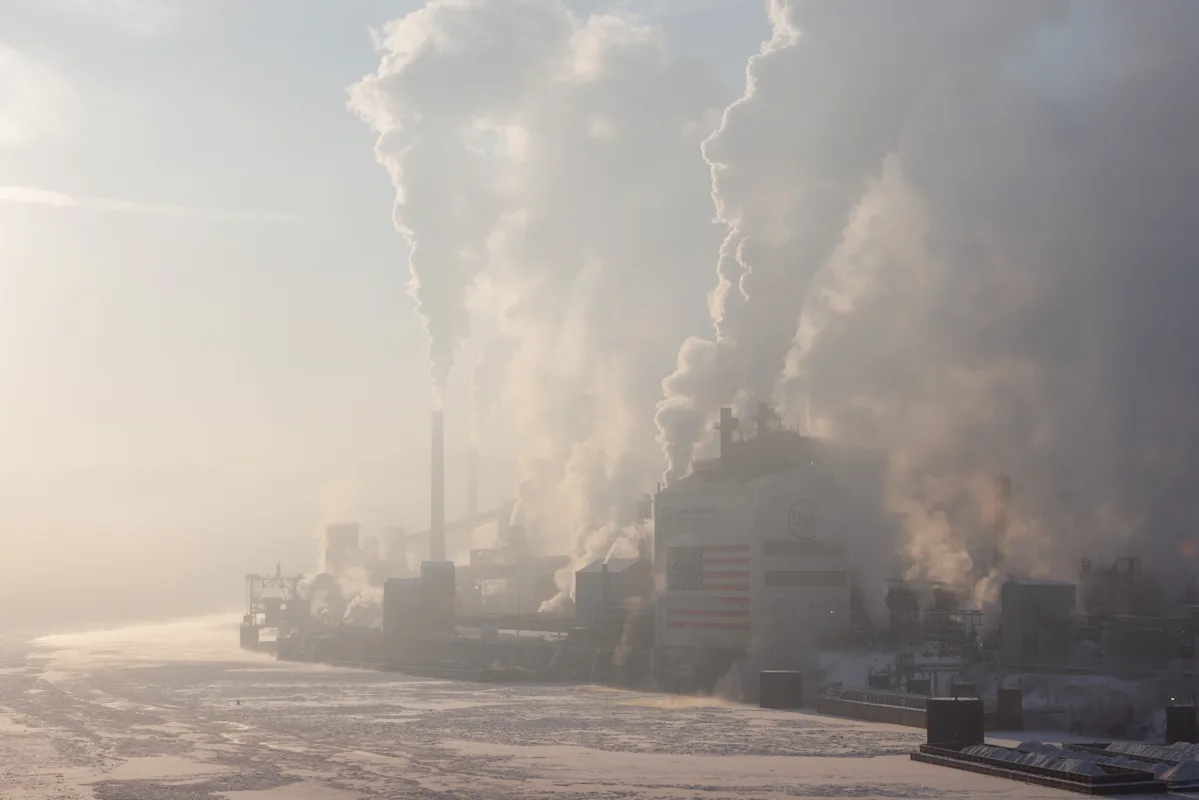
With the American market effectively closed to us, we have responded accordingly, exiting our primary blast furnace and coke oven operations, pivoting our entire commercial strategy towards the Canadian market, restructuring our cost base, and accelerating our transformation that positions Algoma Steel Group Inc. for the realities of this new trade environment. Second, we have the financial foundation to execute. The Canadian $500,000,000 in government-backed liquidity support combined with our ABL facility provides the runway we need to advance our transformation, reduce cash burn, and pursue new opportunities to diversify the business. Third, our operational pivot is not a plan. It is underway. Blast furnace and coke oven operations have been wound down.
Our first EAF unit is running on a full 24-hour schedule, and our second unit remains on schedule. Our strategic focus is now squarely on delivering high-value products for the Canadian market. Let me expand on each of these. The extreme tariff environment on steel imports and derivative products from Canada remains the defining challenge for our industry. The unprecedented 50% tariff implemented in June fundamentally broke the cost structure and broader business model that Canadian producers, including Algoma Steel Group Inc., had built over decades. The consequences extended well beyond the US border, creating an oversupply of coil in Canada and driving domestic transactional price as much as 40% below comparable US levels across many categories.
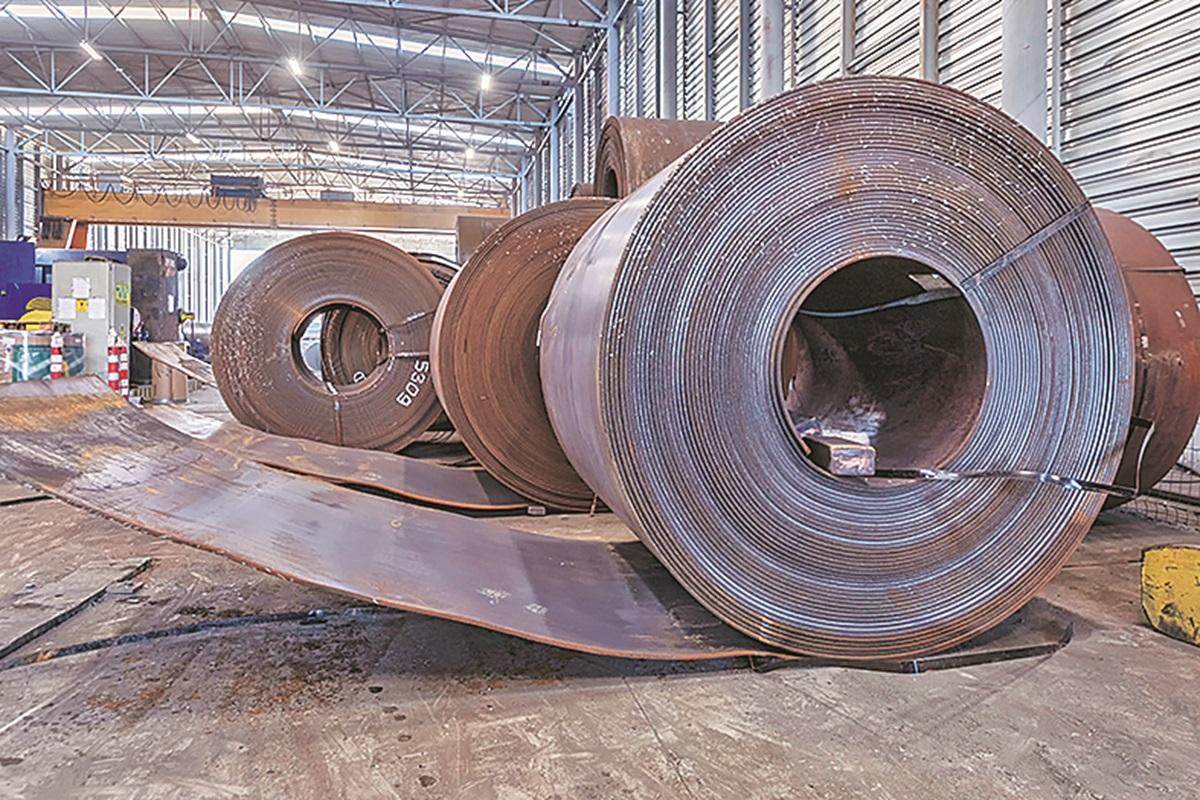
For the full year, besides the impact of lower pricing, we absorbed $225,000,000 in direct tariff cost. These are not cyclical headwinds. They represent an unprecedented structural shift that required a structural response. Our fourth quarter financial results reflect that reality: lower shipments, elevated costs, and continued pressure on realized pricing as the Canadian market absorbed excess supply. Shipments to the US were approximately 30% lower than the average US sales over the previous three quarters as we began our exit from the US market. Against that backdrop, our plate mill stands out as a genuine competitive advantage. As Canada’s only producer of discrete plate, we are not subject to the same oversupply dynamics that are compressing coil pricing.
Demand for plate products across infrastructure, construction, and defense remains healthy, and we expect plate production to increase sequentially as our year ramps through 2026. This is exactly the market position we are leaning into. Next, let me talk about our EAF, the heart of our transformation and the foundation of Algoma Steel Group Inc.’s future. Ramp-up activities are progressing in line with expectations. The furnace and melt shop assets are performing as designed, with stable metallurgical quality and process control demonstrated across a broad range of plate and hot-rolled coil grades. The Q1 power system and other critical process components are operating reliably on a full 24-hour-per-day schedule, a significant milestone from where we were just one quarter ago.
As of 12/31/2025, cumulative investment in the project stood at $920,000,000, and we continue to expect a final aggregate cost of approximately $987,000,000. Alongside this operational progress, we have taken deliberate steps to strengthen our strategic and financial position. Mike will walk you through the details of our liquidity actions later in the call. But I do want to highlight one development that speaks directly to where this company is headed.
In January 2026, we announced a binding MOU with Hanwha Ocean Company Limited, a long-term strategic arrangement with an aggregate potential value of $250,000,000 US dollars, including a $200,000,000 US dollar contribution towards the potential development of a structural steel beam mill and up to $50,000,000 US dollars in anticipated product purchases connected to the Canadian Patrol Submarine Program. This is a meaningful signal of Algoma Steel Group Inc.’s emerging role as a critical partner in Canada’s defense and industrial supply chain. Taken together, these actions reflect a deliberate strategic repositioning. We are moving away from our historical model as a cross-border commodity producer and towards something more focused, more resilient, and more aligned with Canada’s long-term industrial priorities.
By concentrating on as-rolled and heat-treat plate products, along with selected coil products for the domestic market, we are optimizing for margin quality rather than volume, deepening customer partnerships, and reducing our exposure to tariff-distorted global markets. Repositioning achieves three things. We supply Canadian industry with the high-quality plate products needed for infrastructure, manufacturing, and defense. We create operational stability that supports continued investment in our transformation. And we reinforce Algoma Steel Group Inc.’s role as a critical supplier in Canada’s industrial future. In short, we are evolving from a cross-border commodity producer to a Canadian-focused steel supplier with lower cost, lower emissions, and greater long-term resilience.
The work is not finished, but the direction is clear, and the foundation is in place. Thank you. I will now turn the call over to Mike for a deeper dive into our financials. Mike?
Mike Moraca: Thanks, Rajat. Good morning, and thank you all for joining the call. Before I get into the details, I want to remind listeners that our functional currency is the US dollar; we present our results in Canadian dollars. The Canadian dollar strengthened approximately 5% over the course of 2025, moving from roughly C$1.44 per US dollar at year-end 2024 to approximately C$1.37 at 12/31/2025. I would encourage you to keep that currency backdrop in mind as we go through the numbers. Our fourth quarter results included adjusted EBITDA that was a loss of $95,200,000, which reflects an adjusted EBITDA margin of minus 20.9%, and cash used in operating activities of $3,000,000.
We finished the quarter with a strong balance sheet including $77,000,000 of cash, availability of $195,000,000 under our revolving credit facility, and $417,000,000 available under the large enterprise tariff loan facility. Now let me dive into key drivers of our performance. We shipped 378,000 net tons in the quarter, down 31% versus the prior-year quarter. The decrease in shipments was largely attributable to the impact of US tariffs, which, as Rajat said, effectively closed that market to our products. Net sales realizations averaged $1,077 per ton compared to $976 per ton in the prior-year period. The increase versus prior-year level reflects improvements in value-add product mix as a proportion of sales, partially offset by weaker market conditions.
Plate pricing continued to enjoy a significant premium relative to hot-rolled coil during the quarter, driven by resilient demand. That resulted in steel revenue of $408,000,000, down 23.9% versus the prior-year period as the lower shipment volumes more than offset higher realized prices. On the cost side, Algoma Steel Group Inc.’s cost per ton of steel products sold averaged $1,332 per ton in the quarter compared to $1,032 per ton in the prior-year period, which was primarily due to tariff costs and worse fixed cost absorption due to lower steel production volumes.
It is important to note that during the quarter, accelerated depreciation of blast furnace and basic oxygen steelmaking assets and stranded inventory related to the accelerated closing of the blast furnace was captured in cost of steel revenue. Cash used in operations totaled $3,000,000 in the quarter compared to a use of $77,000,000 in the prior-year period. The significant improvement was driven in large part by a meaningful release of working capital. Inventories at fiscal year end were $569,000,000 compared to $790,000,000 at the end of the third quarter, a reduction of approximately $221,000,000 in the quarter.
That reduction reflects the deliberate wind-down of blast furnace raw material inventories as we exited that steelmaking route, as well as continued shipments of finished goods. We also saw a decrease in accounts receivable consistent with lower revenue levels. Taken together, working capital was a significant source of cash in the quarter, largely offsetting the operating losses, and we expect to see further working capital benefits in 2026 as work-in-process inventories are normalized and we recover significant income taxes receivable. Now let me run through the full year comparisons. We shipped 1,700,000 net tonnes for the full year 2025 compared to 2,000,000 net tons in calendar 2024.
Net sales realizations averaged $1,080 per tonne compared to $1,107 per ton in the prior year, reflective of softer market conditions on average across the year, partially offset by improvements in value-added product mix as a portion of steel sales. This resulted in steel revenue of $1,900,000,000 compared to $2,200,000,000 in the prior year. On the cost side, Algoma Steel Group Inc.’s cost of steel products sold averaged $1,216 per ton for the year, compared to $1,054 in the prior year, primarily due to tariff costs and worse fixed cost absorption due to lower steel production volumes.
Adjusted EBITDA for the full year was a loss of $261,400,000, representing an adjusted EBITDA margin of minus 12.5%, compared to an adjusted EBITDA gain of $22,400,000 and an adjusted EBITDA margin of 0.9% in calendar 2024. The decrease was primarily attributable to lower shipments. Cash flow used in operating activities for 2025 was $66,000,000 compared to cash generated of $82,000,000 in calendar 2024. The decrease year over year was primarily due to factors previously discussed. As mentioned earlier, inventories at fiscal year end were $569,000,000. That compares to $879,000,000 in 2024, a reduction of $310,000,000 over the year.
Before I turn it back to Rajat, let me make a few comments on our calendar first quarter 2026 results so far. Due to persistently weak market demand, we expect shipments this quarter to be sequentially lower than the fourth quarter. We expect to see better pricing and cost performance, which should result in adjusted EBITDA that is directionally better as compared to calendar fourth quarter 2025. I also want to briefly note that we are aware of the pending litigation with US Steel in Ontario and arbitration in the USA regarding an iron ore supply agreement. As that matter is now in litigation, we are not in a position to comment further on it today.
I would like to now turn the call back over to our CEO, Rajat Marwah, for closing comments. Rajat?
Rajat Marwah: Thanks, Mike. Let me close with this. 2025 was the most challenging year in recent memory for Canadian steel producers. The 50% US Section 232 tariff dismantled the cross-border business model that had defined this industry for decades, flooded the Canadian market with excess supply, and forced every producer to fundamentally adjust how they operate. We were not immune to those pressures, and our financial results this year reflect that reality. But what I am most proud of is how this organization responded. We did not wait for conditions to improve.
We were compelled to make difficult decisions, accelerating the wind-down of our blast furnace and coke oven operations ahead of our original timeline, pivoting our commercial strategy towards the Canadian market, and securing the financial resources to execute our transformation without compromising our future. Those were not easy calls, and they required conviction, speed, and coordination across every part of this business. None of this came without real human cost. The accelerated transition required us to wind down our blast furnace and coke oven operations earlier than planned, and that had meant issuing layoff notices to approximately a thousand of our colleagues, effective later this month. I want to be direct about this. Those are not just numbers.
They are people who helped build this company. We have worked with our unions and government resources to put mitigation programs in place, and I am committed to the view that this is not the end of the story for Algoma Steel Group Inc.’s workforce. We are actively exploring product diversification initiatives to expand our footprint and support Canadian industrial policy, and we applaud the Canadian and Ontario governments for the measures they have taken to support the Canadian steel industry. The result is a fundamentally different Algoma Steel Group Inc. Our EAF is running around the clock, performing as designed, and producing FalTer, our sustainable low-carbon steel brand, at scale.
This is the sustainable steel this company has invested years and nearly $1,000,000,000 to bring to life. We are Canada’s only producer of discrete plate, with a modernized plate mill, a purpose-built low-carbon steelmaking platform, Canadian $500,000,000 in government-backed liquidity to support our next phase of growth. Defense and shipbuilding demand for our plate product is real and growing. We are already shipping Davie Shipbuilding for the PolarMax program, and the Hanwha Ocean MOU opens a further compelling path into Canada’s defense and industrial supply chain. We enter 2026 not defined by the headwinds we faced, but by the ground we gained while facing them.
The foundation for long-term value creation is in place, and I am extremely confident in the direction of this company. To our employees, what you accomplished in 2025 was extraordinary. You navigated a period of profound uncertainty and change with professionalism, dedication, and resilience, and you did so while keeping safety at the forefront every single day. I look forward to building on what we have started together. Thank you very much for your continued interest in Algoma Steel Group Inc. At this point, we would be happy to take your questions.
Rajat Marwah: Operator, please give the instructions for the question and answer session.
Operator: We will now be conducting our question and answer session. If you would like to ask a question, please press star 1 on your telephone keypad. Our first question is from Katja Jancic with BMO Capital Markets.
Katja Jancic: Hi, thank you for taking my questions. Maybe starting on the shipment side, you mentioned first quarter shipments sequentially are going to be lower. But can you remind us how you are thinking about full-year shipments? And then also how this is going to be split between plate and sheet?
Mike Moraca: Hey, Katja. Good morning. It is Mike. I think that over the course of the year, we expect to have total shipments between 1,000,000 and 1,200,000 tons. There will be a little bit of a ramp as we are building up our capacity at the EAF, and we will see slightly lower shipments in the first quarter, but ramping up to a run rate in that 1,000,000 to 1,200,000 tons as the year progresses. So slightly lower in Q1, but growing over the course of the year.
Katja Jancic: And then on the mix?
Mike Moraca: The mix will be roughly 50/50, I would say, on the plate and sheet based on what we see today.
Katja Jancic: Okay. And maybe just shifting gears to your cost side. Can you talk about how much of your energy cost are exposed to the current spot market?
Mike Moraca: Sure. I think that we are generating power from our own natural-gas-fired power plant, so there is commodity price exposure to the natural gas price. And we do consume power directly from the grid, which is subject to Ontario’s spot rate pricing. So, it is a nice mix to have because we do have the ability to generate our own power. So if the Ontario pricing does swing up to a higher price, we are generating our own as a safeguard. Further to that, as you know, we have the Northern Electricity Advantage Program, which is specific to Northern Ontario-based producers and does give us a C$20 per megawatt advantage on our power pricing.
Katja Jancic: And just on the natural gas, are you hedged at all, or are you fully on spot for your own power supply?
Mike Moraca: We generally would have fixed price for the most volatile months of the year, which is traditionally the winter months where we have fixed pricing. And then the other months where there is less volatility, we would take it on spot.
Katja Jancic: Okay. Thank you.
Operator: Our next question is from Ian Gillies with Stifel. Good morning, everyone.
Mike Moraca: Morning, Ian.
Ian Gillies: Can you provide an update on what you are seeing as it pertains to plate pricing in Canada? Obviously, over the last number of months, there have been some new government initiatives to try and keep imports out of the country, and I am just curious on how that is progressing and whether you are seeing that flow through into your price book.
Rajat Marwah: Sure. So the pricing on the plate side is holding up. It is much better than the sheet pricing. On the sheet side, we are seeing a 40% lower pricing from the index. On the plate side, it is less than that. It is ranging anywhere between 15% to 20%. The pricing is definitely better. The measures that the government is taking definitely are helping. It is slow coming in right now, but we see a lot of inbounds coming from customers and some new customers for steel, and that is encouraging.
Ian Gillies: As it pertains to the HRC side, and pricing being 40% lower, can you just help reconcile that pricing discount versus what we might be seeing in the Fastmarkets Canadian price quote that is now out that is saying Canadian steel prices are around $800 a ton right now?
Rajat Marwah: I do not know how those pricing are calculated by Fastmarkets, but the pricing in the market is roughly 40% lower. And it makes a lot of sense as well when you see what the tariffs are and what is happening in Canada. Over time, what we have seen is that pricing started strengthening a little bit in Canada where it was better. But overall, it is hovering around a 40% discount to the index.
Ian Gillies: As it pertains to the beam mill, can you maybe outline how or critical milestones that you think may be achieved or may be announced over the next, call it, twelve to eighteen months? Because it feels like bidding is moving along reasonably quickly, but formal contracts will not be announced until 2028. So just curious there.
Rajat Marwah: So from our perspective, we are working on the beam project. It is a big project. So we are doing engineering, cost estimates, and timelines. We are also working on the market side. There is not much that I can share right now, but what I can say is that the beam market is one where the supply is less than the demand in Canada, and we are very well suited to support that market with our EAF. Now from Hanwha’s perspective, that is one of the components of, let us say, the whole project. Their application has been in, and I think the government is really moving pretty fast to decide which one will get it.
I think the government will do the right job in finding the right partner for Canada. But from our perspective, we are moving fast on our assessment of this project, and once we have more details around it, we will definitely come out and disclose on the key milestones.
Ian Gillies: And last one for me. As you think about how the business progresses through the remainder of this year, where do you think CapEx ends up for the full year? And is there really much left on the EAF at this point?
Mike Moraca: Ian, I think that we have said we are at $920,000,000-ish or so. We do not expect any change in the total project budget. So we will incur those capital costs over the first half of this year as we ramp up the second EAF. As for sustaining CapEx, I think we are seeing a step-change lower as we have taken blast furnace and coke-making facilities out of the mix. So you should expect to see significantly lower sustaining CapEx in line with what we had mentioned in the past of being close to around $80,000,000 a year.
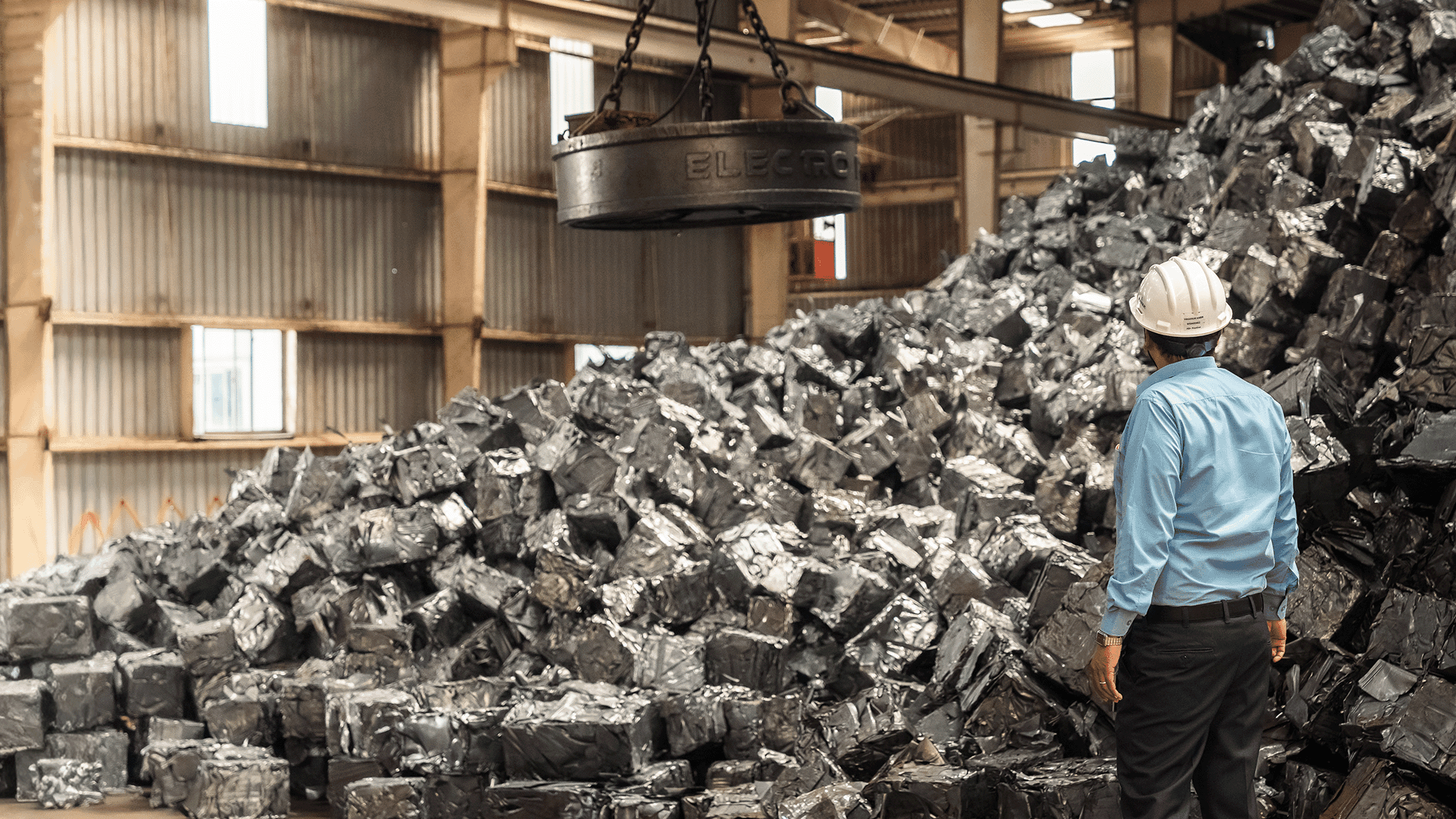
Ian Gillies: And one last one, actually. On the scrap side, can you just provide an update on how that has gone so far as it pertains to the EAF? And how your JV is working as well on the sourcing side?
Rajat Marwah: It is going pretty well. The scrap availability and supply and the use is going pretty well. The JV is working fine, and we are ramping up pretty fast from that. So we are pretty happy with the way things are moving on the scrap side and also the availability.
Ian Gillies: Okay. Thank you very much. I will turn it back over.
Operator: Thanks, Ian. Thank you. There are no further questions at this time. I would like to hand the floor back over to Laura Devoni for any closing comments.
Laura Devoni: Thank you again for your interest in our fourth quarter 2025 earnings conference call and for your continued interest in Algoma Steel Group Inc. We look forward to updating you on our results and progress when we report our first quarter results in the spring.
Operator: This concludes today’s conference. Thank you again for your participation. You may disconnect your lines at this time. Thanks, Paul.