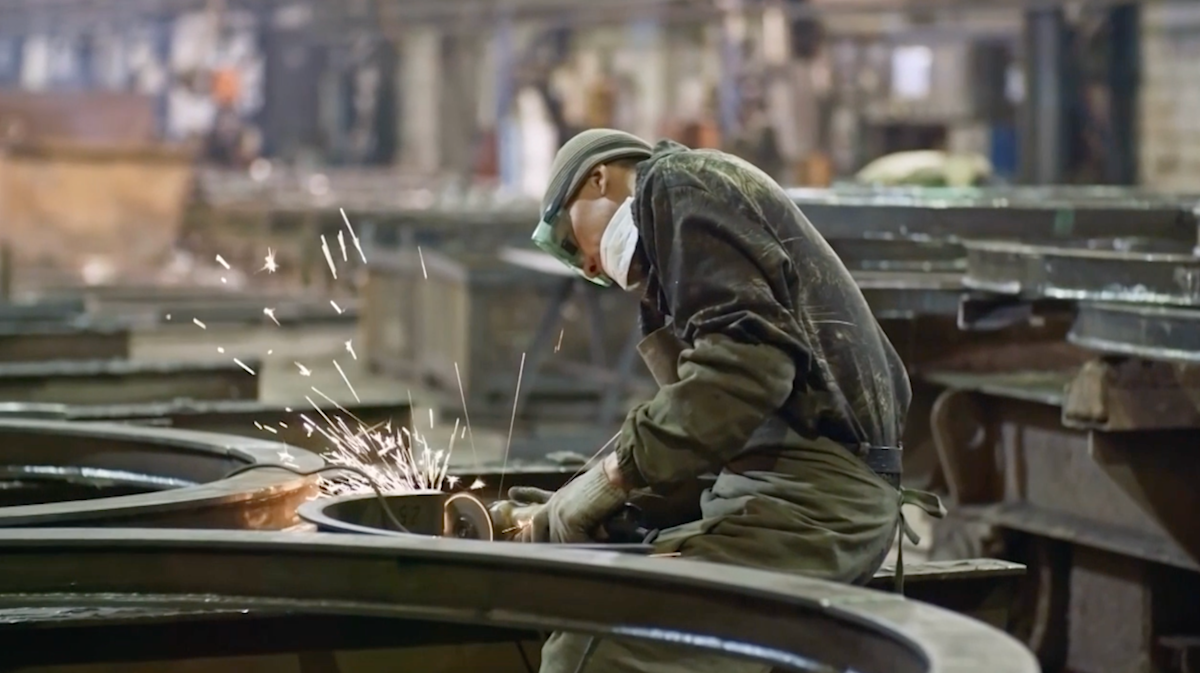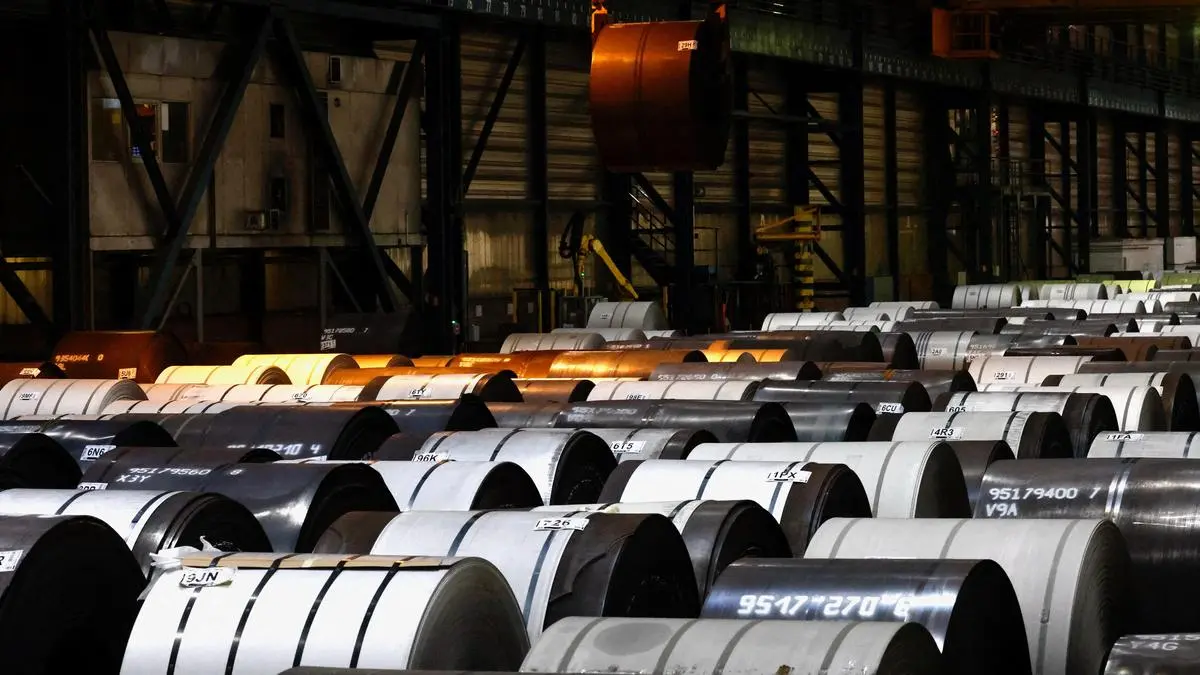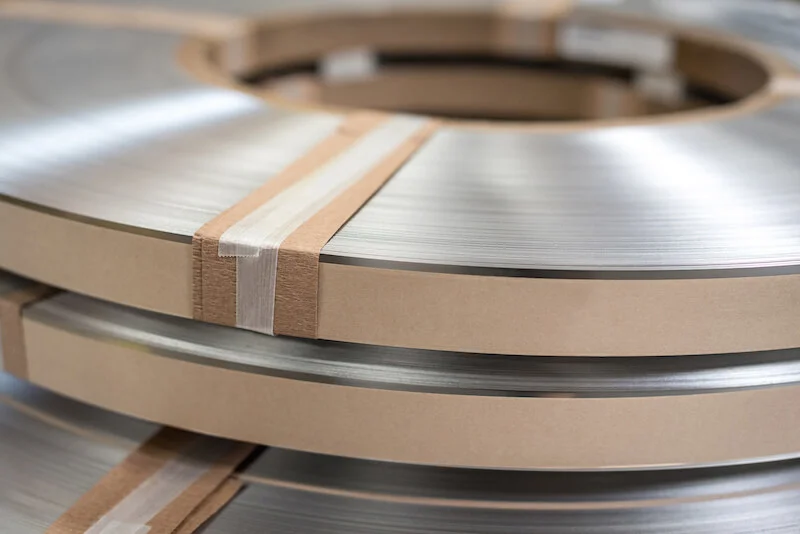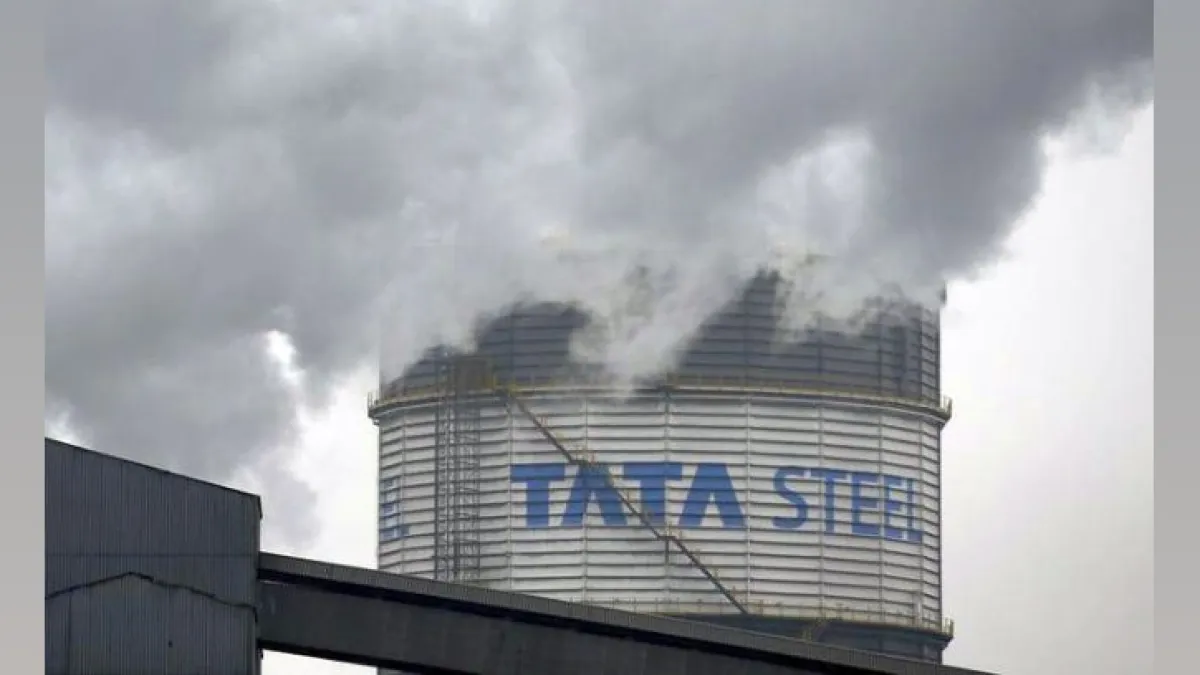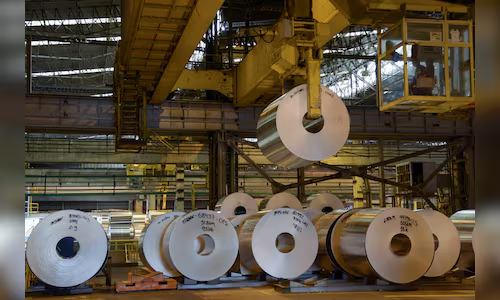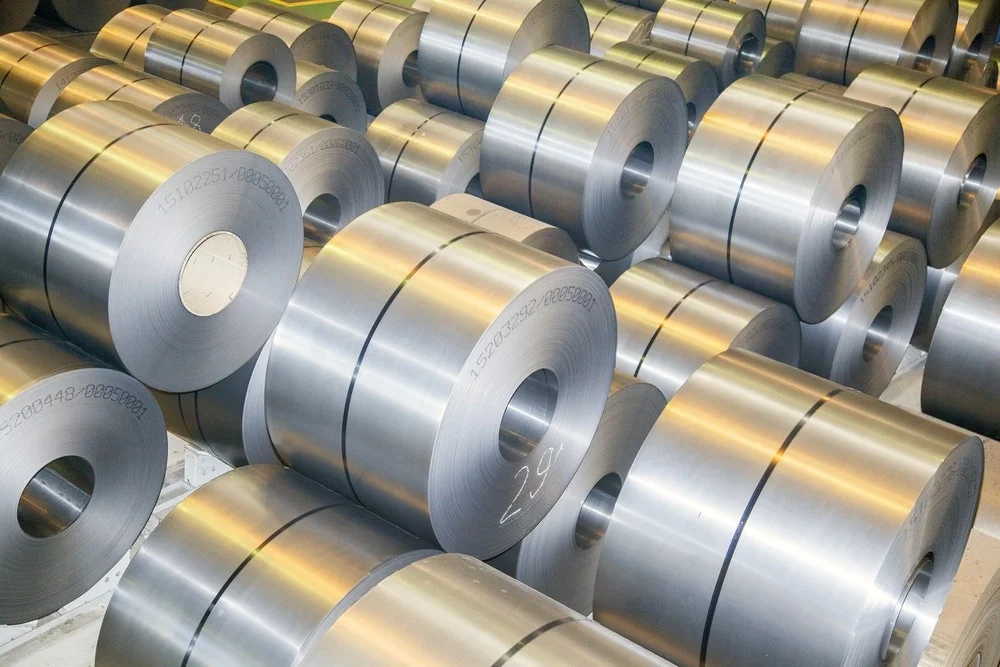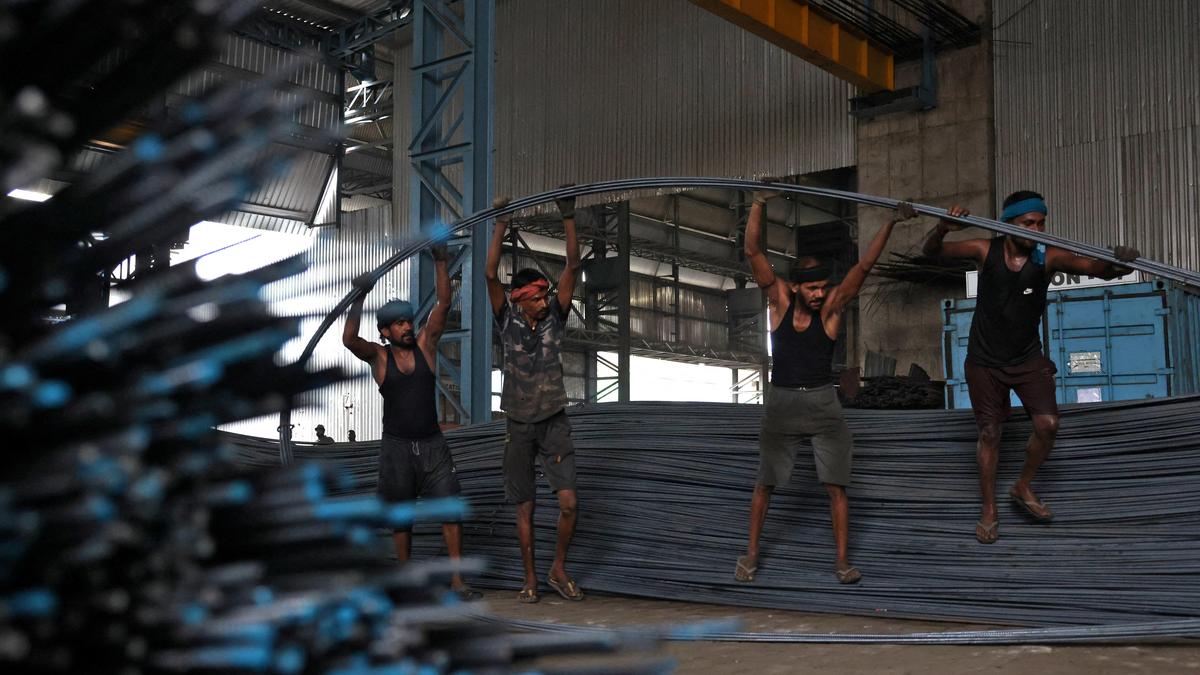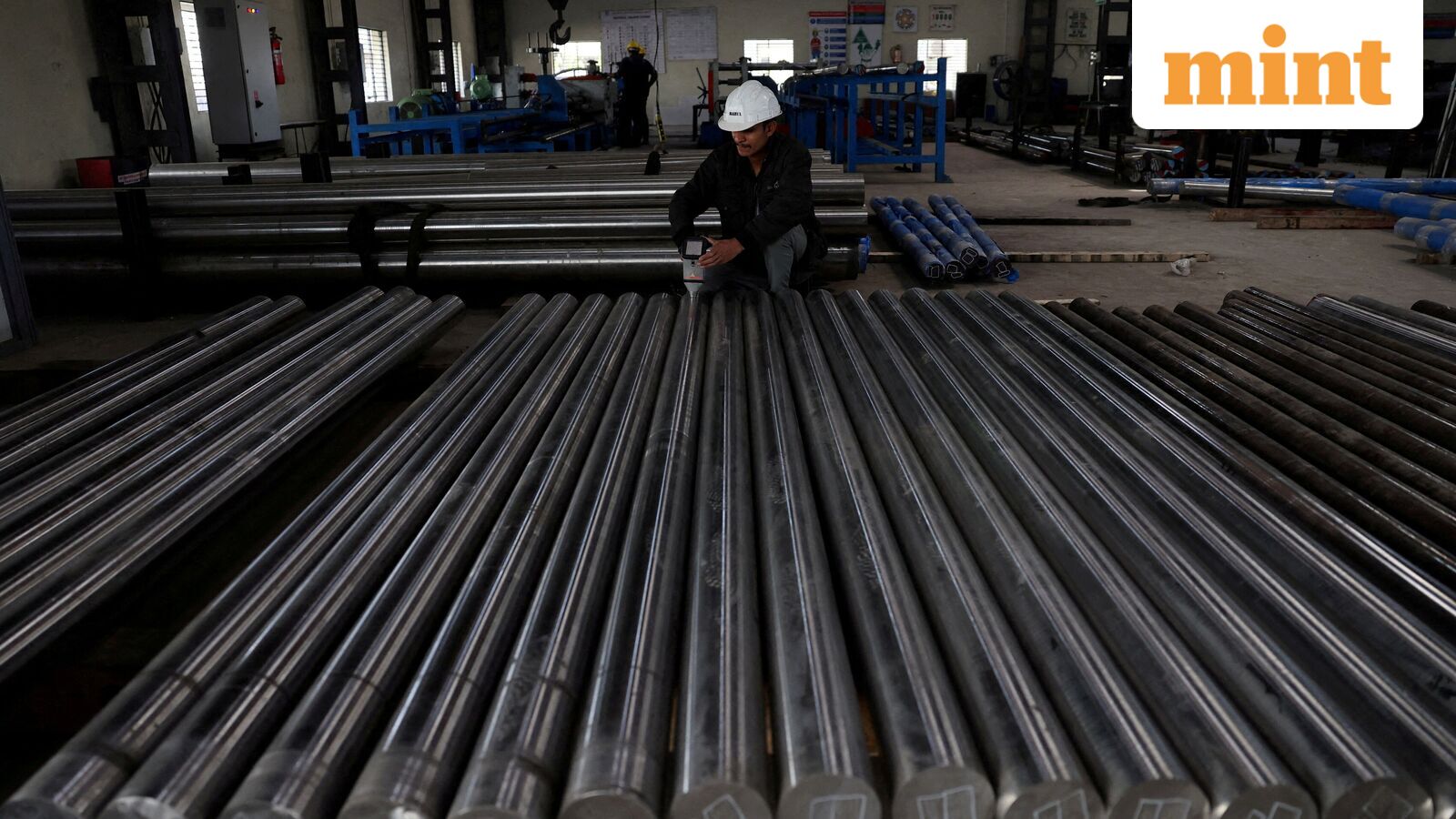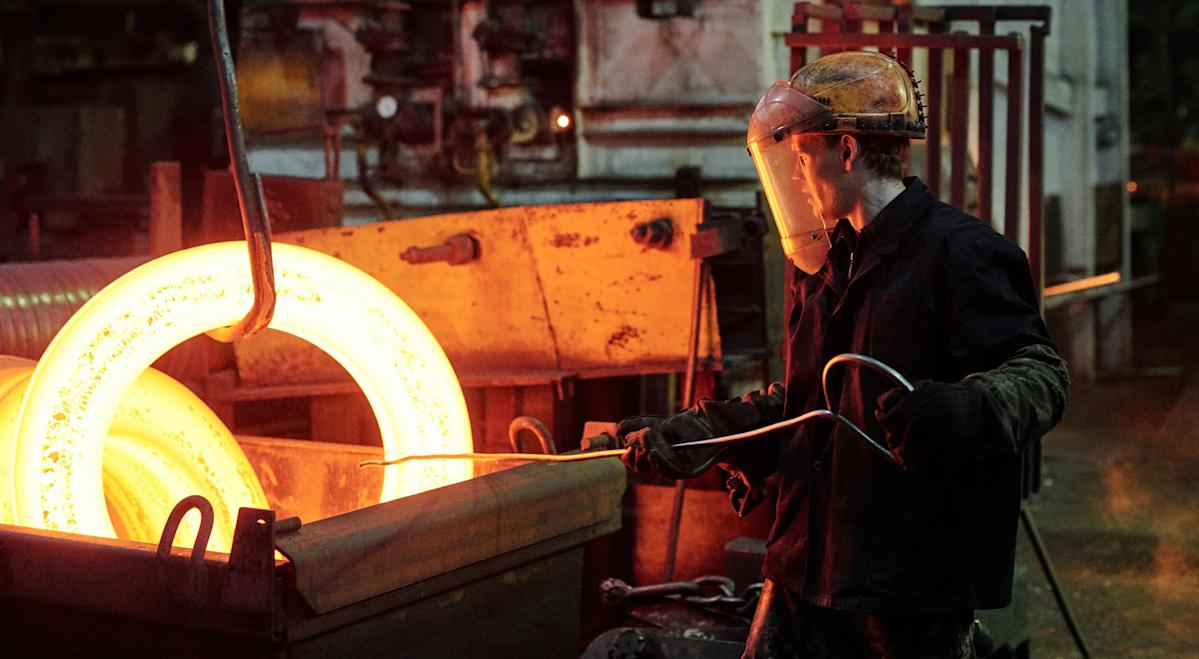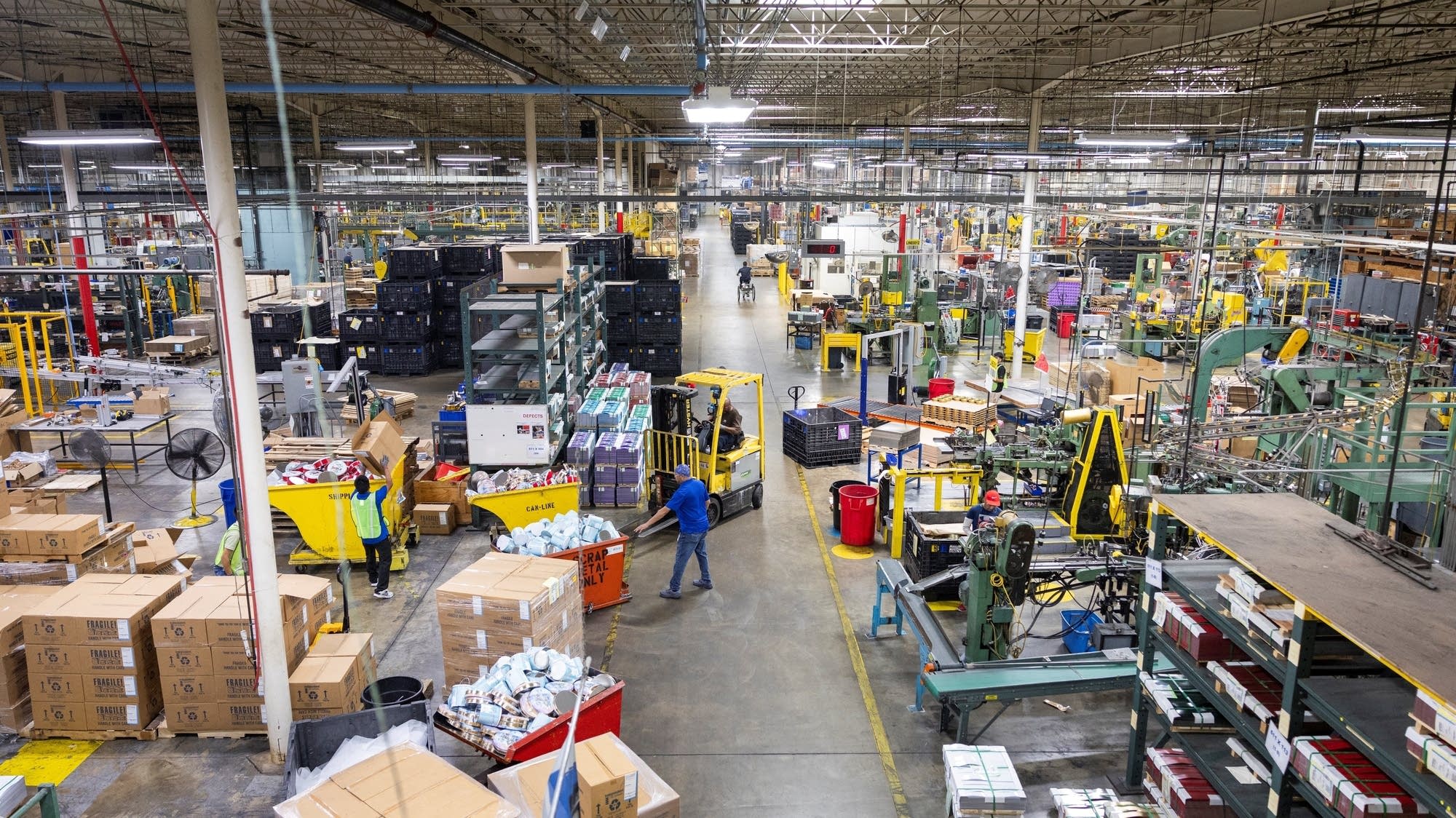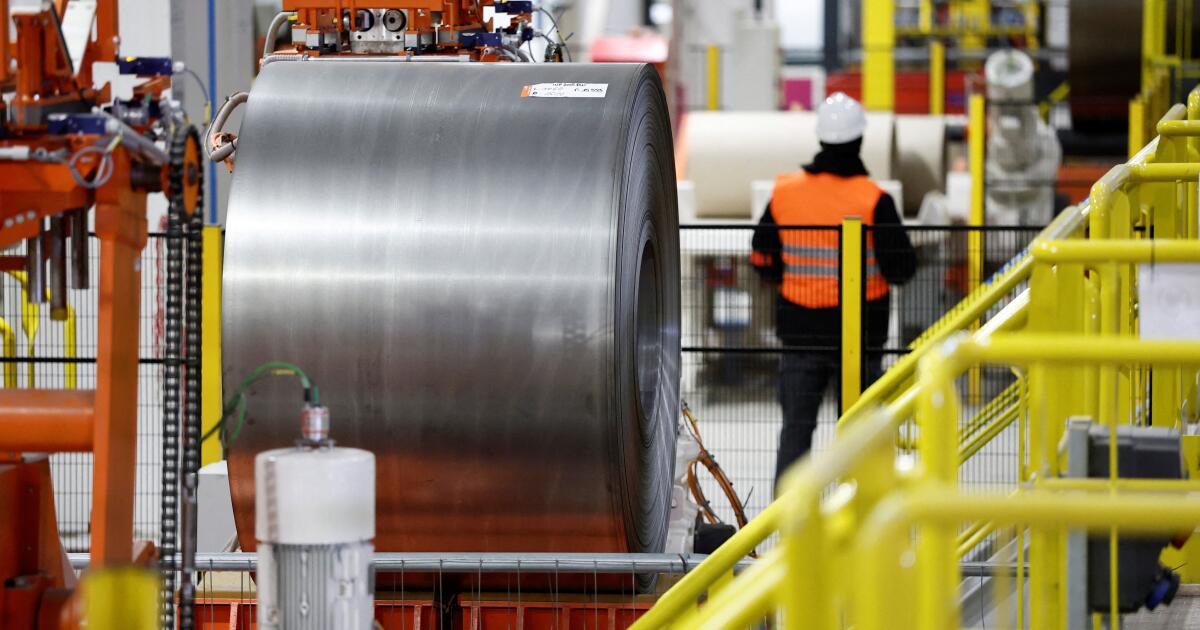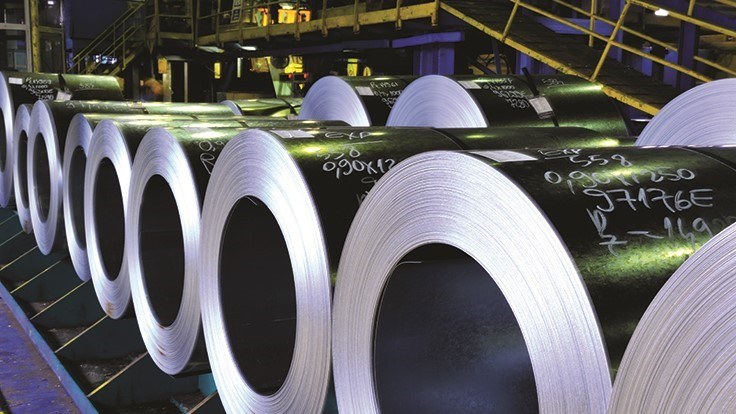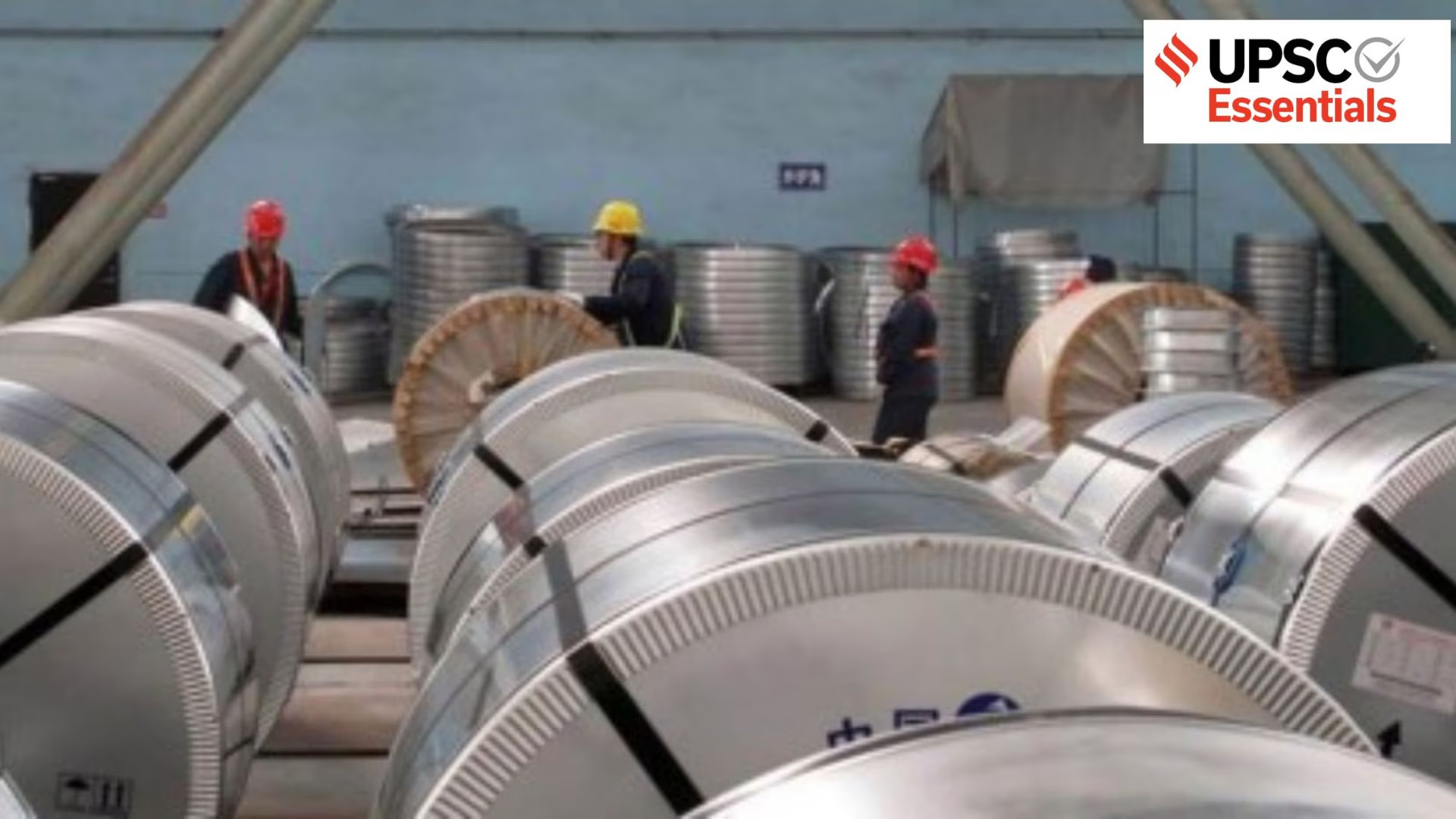

Remell Bryant fed steel coils into the “cold strip” as a way to support her daughter as a single mother.
Valerie Denney worked on the “pickle line,” removing impurities from hot steel, before shifting to a career in public relations.
Jack Weinberg tested metallurgical content until he was laid off, then went on to negotiate international environmental treaties.
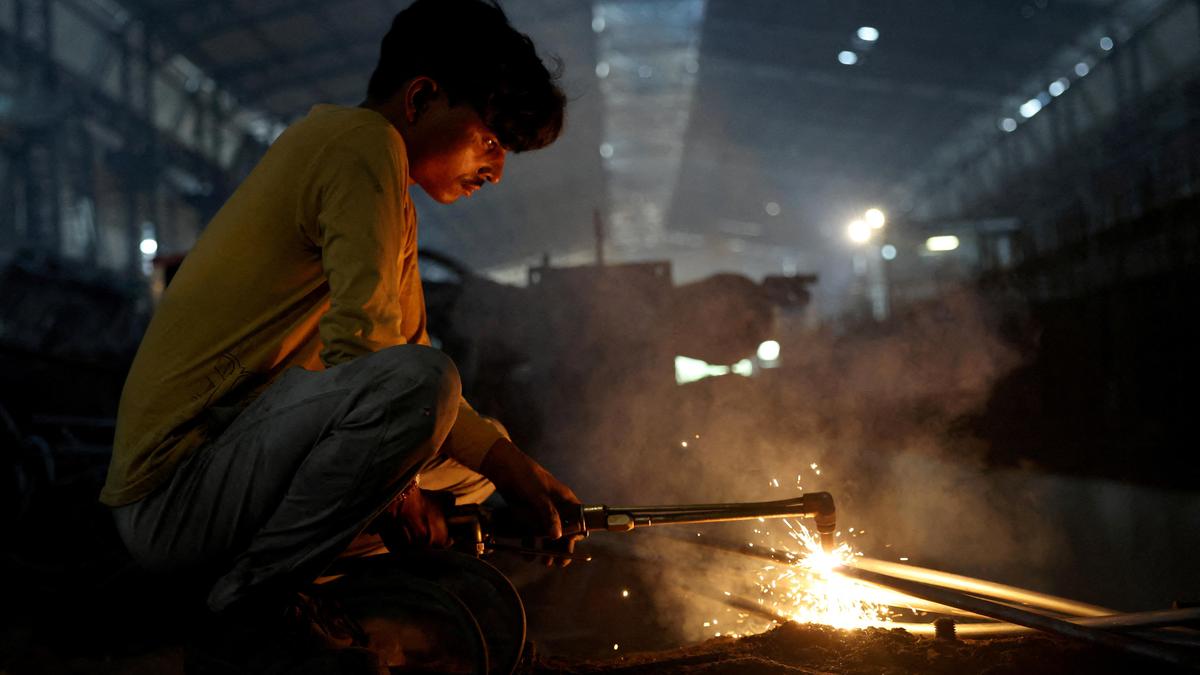
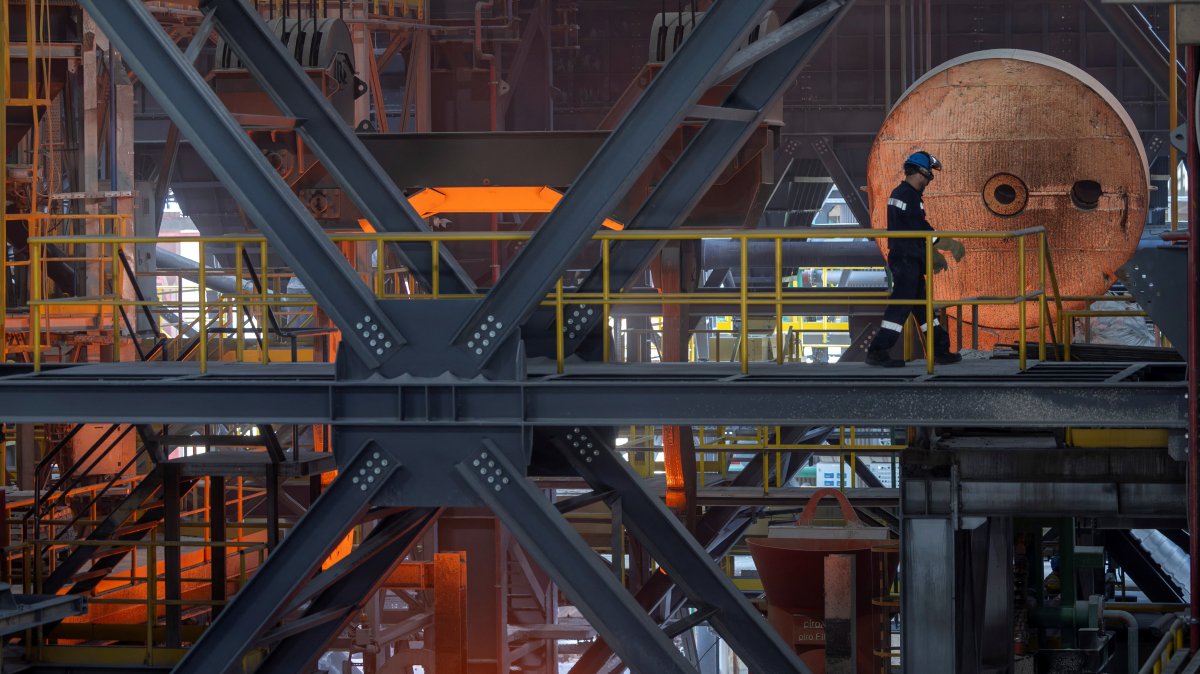
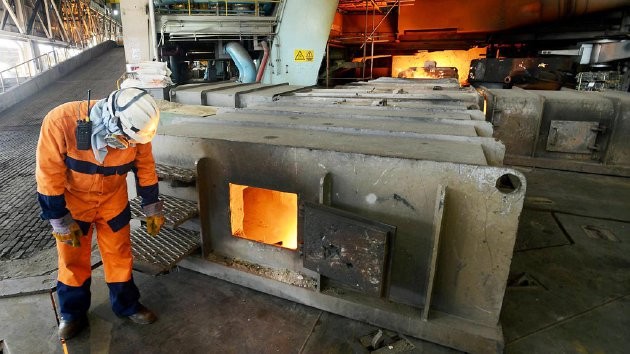
Terry Steagall played on the banks of a polluted river near the steel mill as a child, then spent 41 years inside the mill as a machinist, repairing gearboxes, cranes, and line shafts, before retiring in 2023.
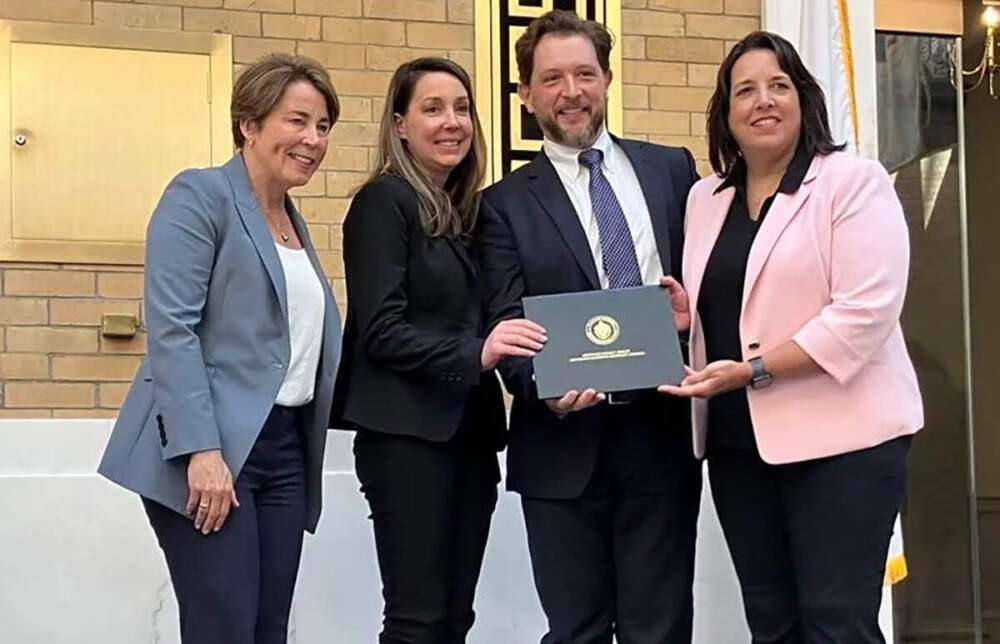
Now, the four are collaborating to demand a shift away from coal-based steelmaking and toward cleaner methods for the Northwest Indiana industry in which they once worked. They’re all members of Gary Advocates for Responsible Development (GARD), a grassroots group founded in 2021 by former steelworker Dorreen Carey.
Such a transition could save thousands of jobs, create new economic opportunities, and avoid about $75 million in healthcare costs in the region, according to a report released Thursday by the Indiana University Environmental Resilience Institute and the consultancy 5 Lakes Energy, and commissioned by Indiana Conservation Voters.
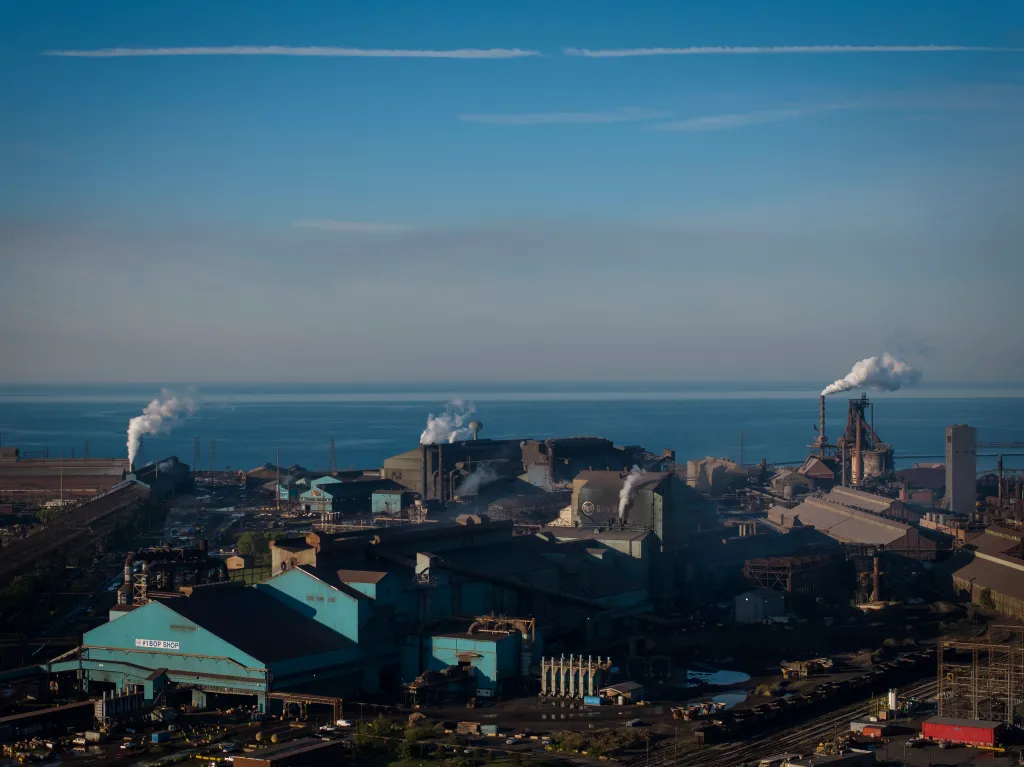
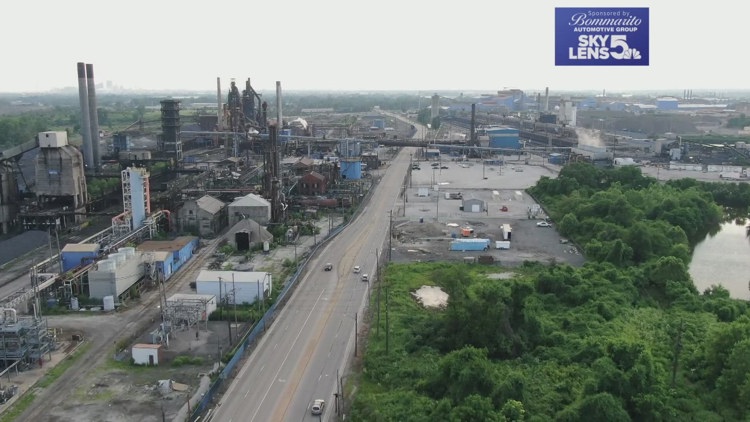
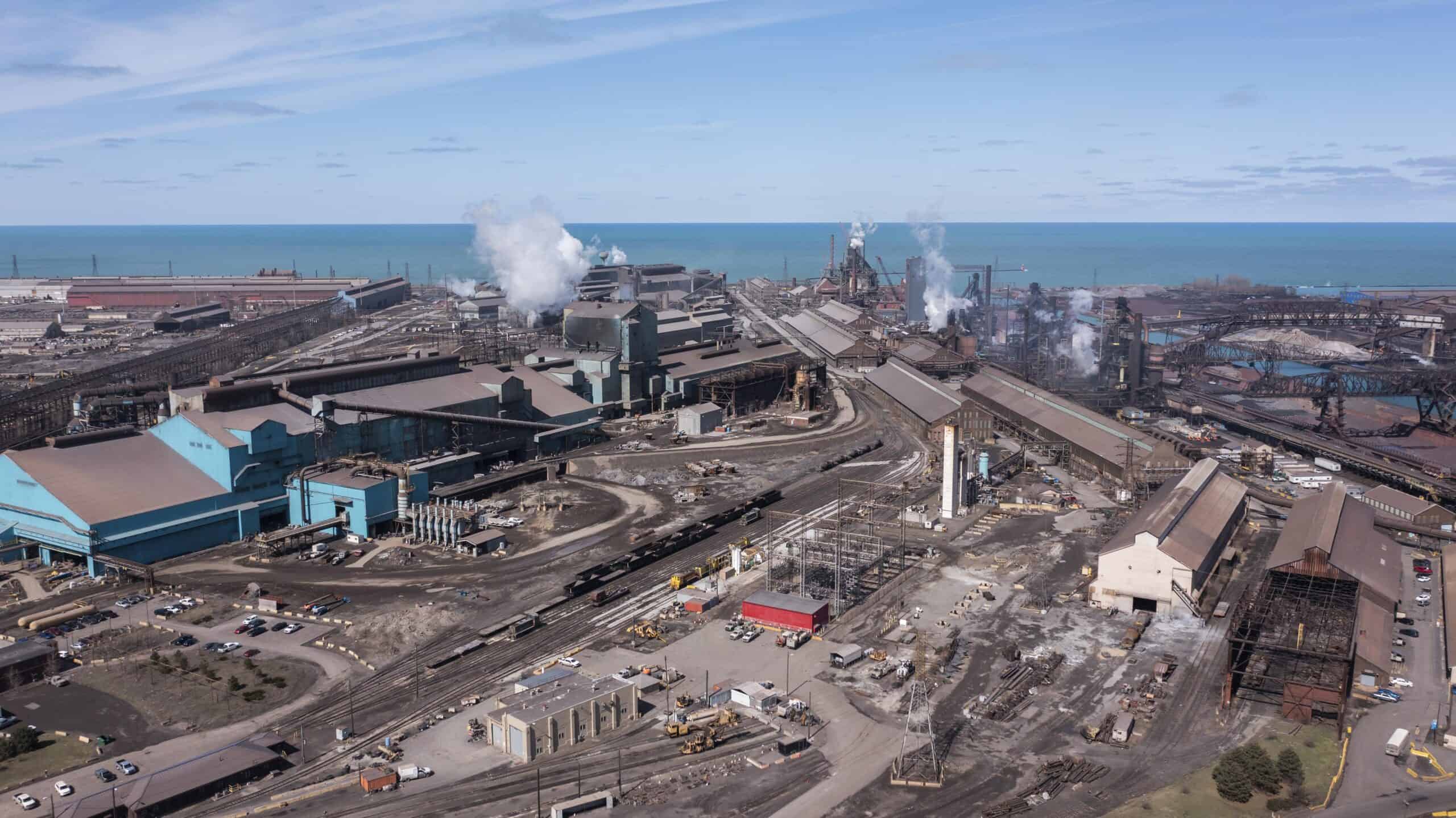
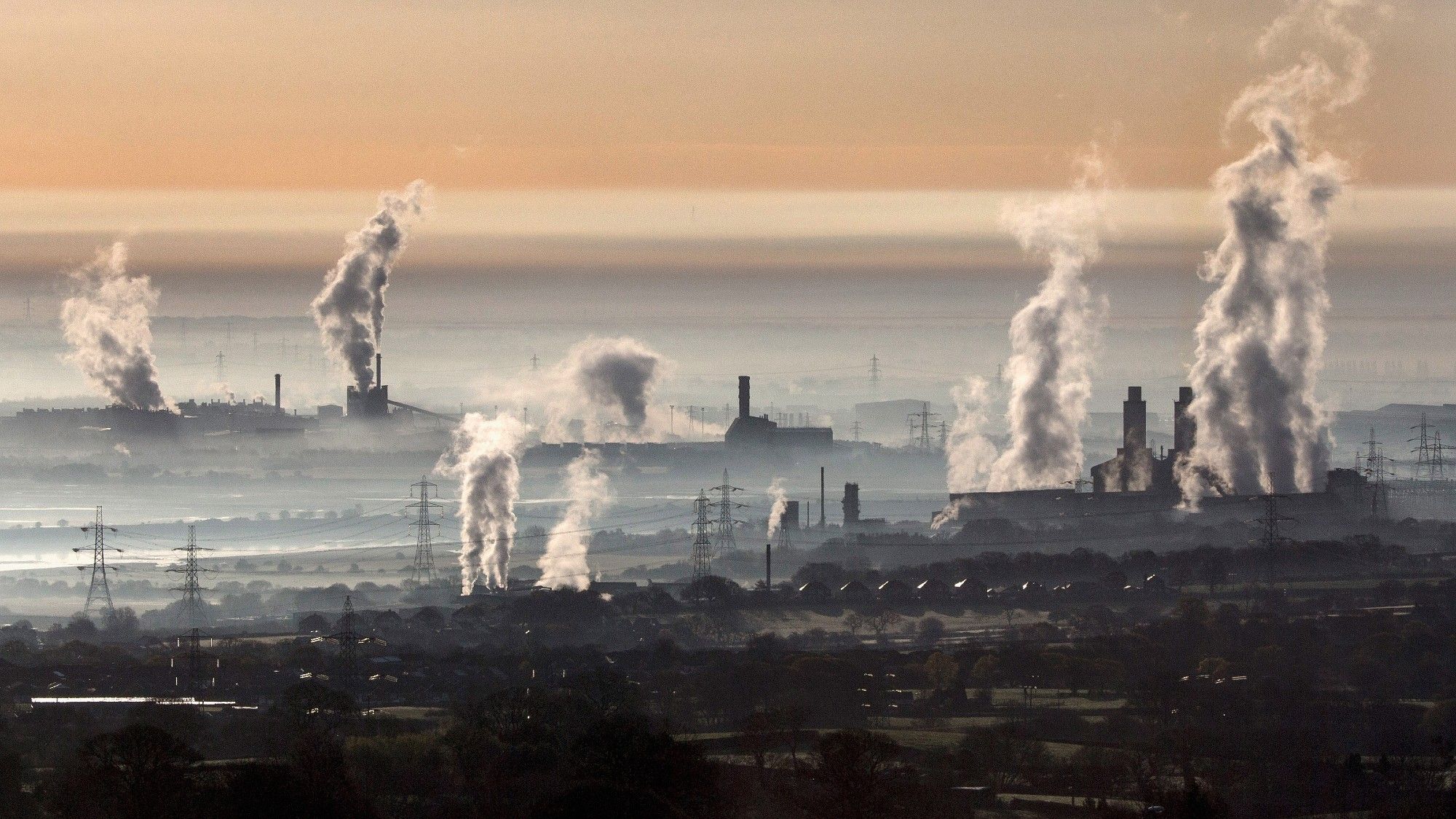
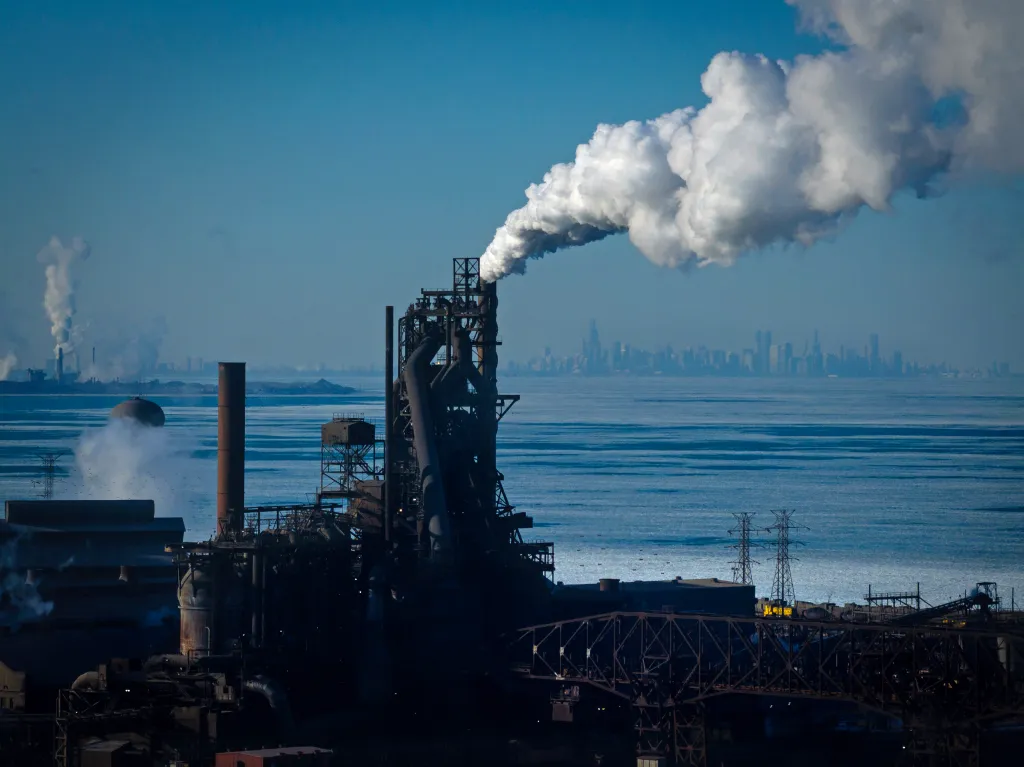
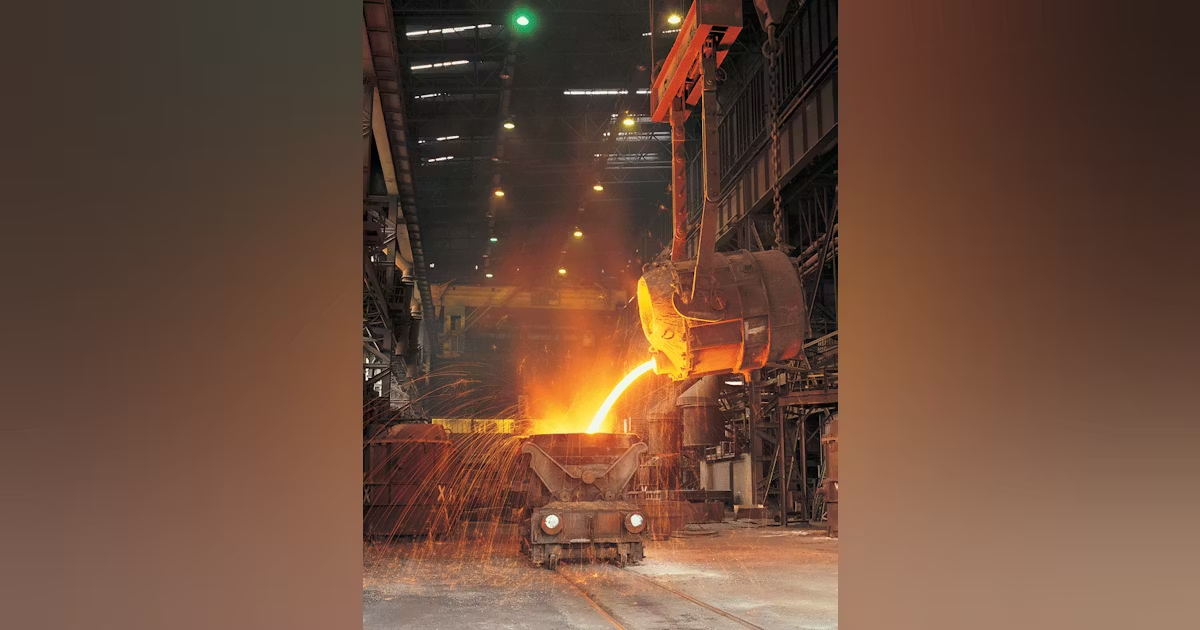
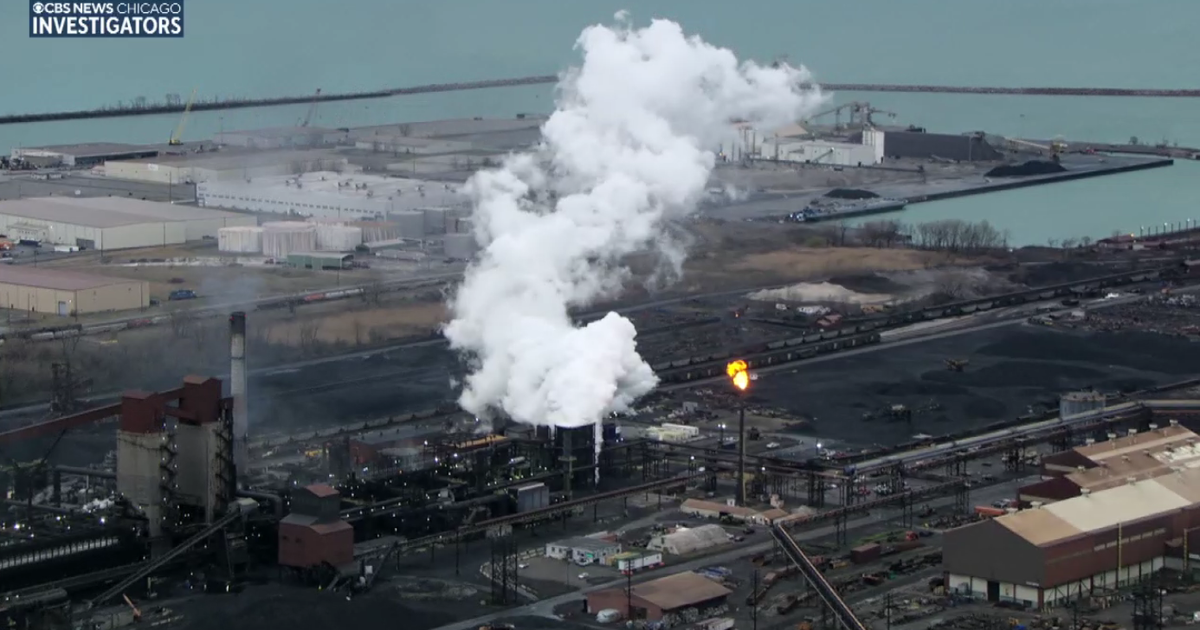
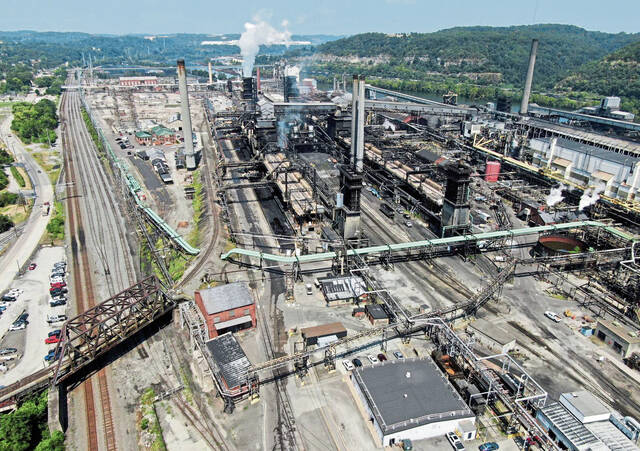
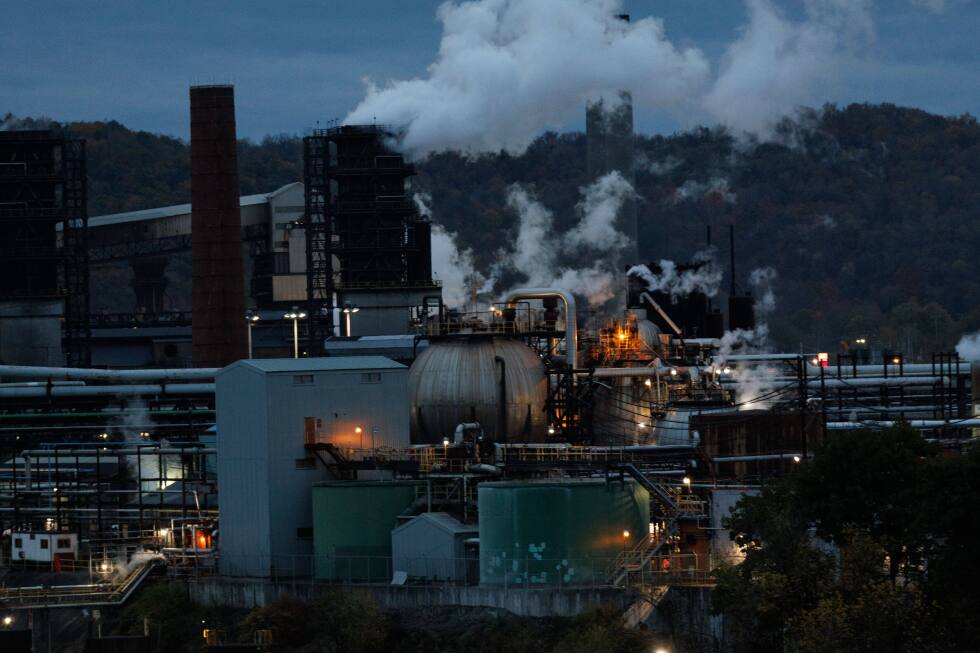
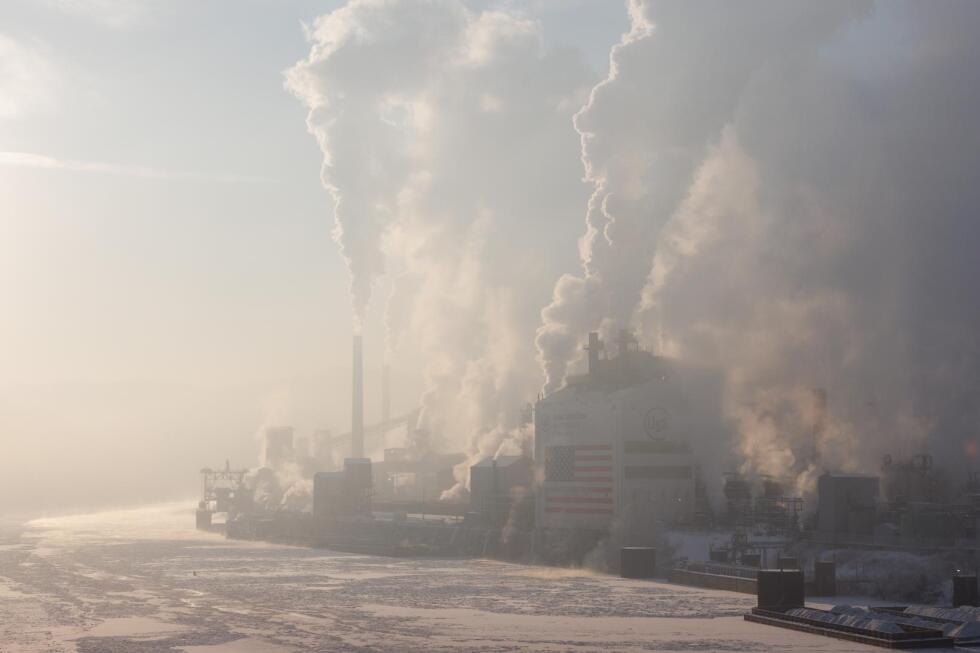
Only six integrated mills — facilities that produce both steel and the iron needed to make it — are operating in the United States, and three of them are in Northwest Indiana. With their hulking, polluting blast furnaces, these mills may soon become a thing of the past in the U.S., as steel is increasingly being produced in smaller and cleaner operations, frequently in the Southern states.
The GARD organizers echo the report’s authors and other industry experts in warning that if Indiana’s mills don’t modernize and clean up, they could go the way of the other steel mills that once proliferated in the region, but were shuttered during the steel industry crisis of the late 1970s and ’80s. The region still hasn’t recovered from that era, and further closures could mean thousands of job losses and gutted public coffers. The report notes that Northwest Indiana’s steel mills once had more than 65,000 workers but employ only about 9,000 today. Without modernization, the study estimates, Northwest Indiana steel mill jobs could fall below 5,000 by 2034.
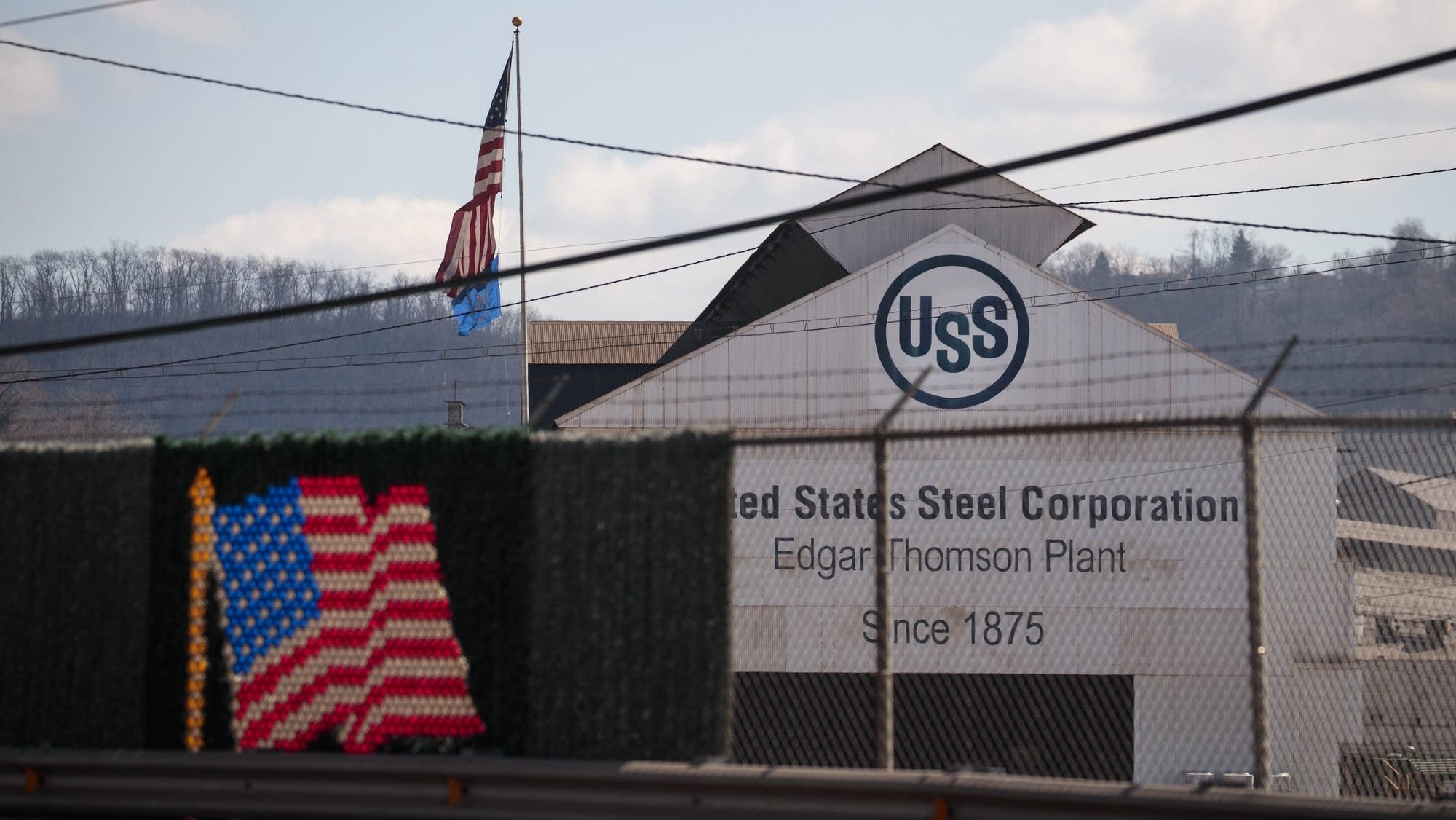
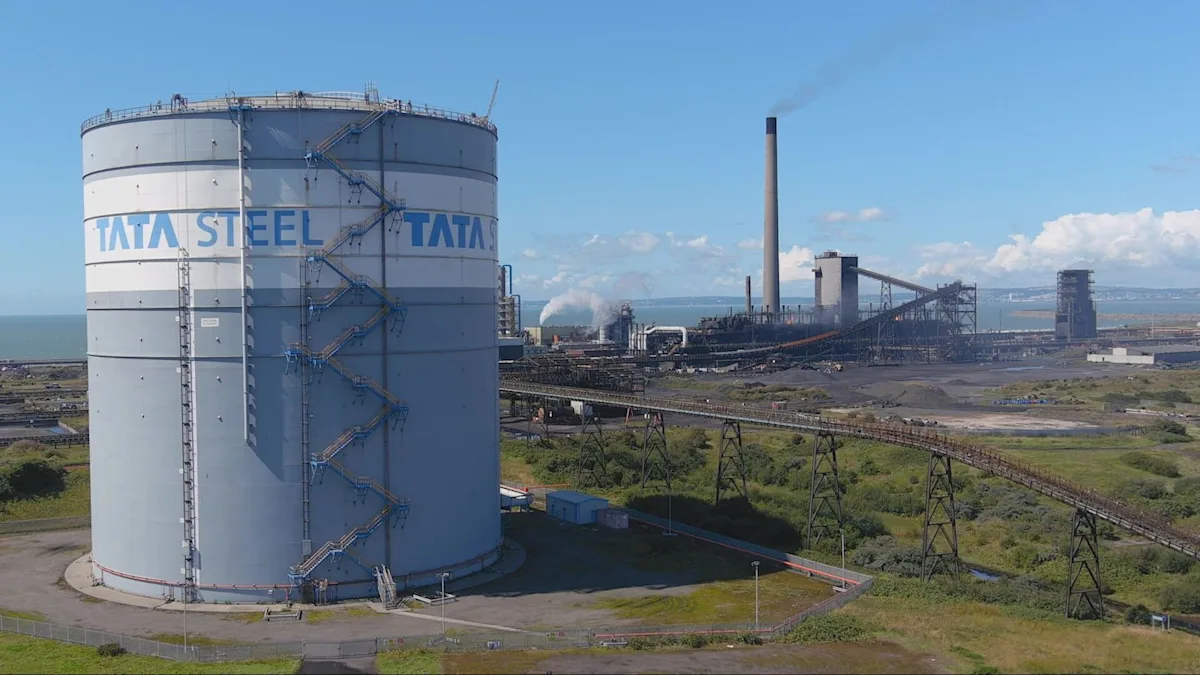
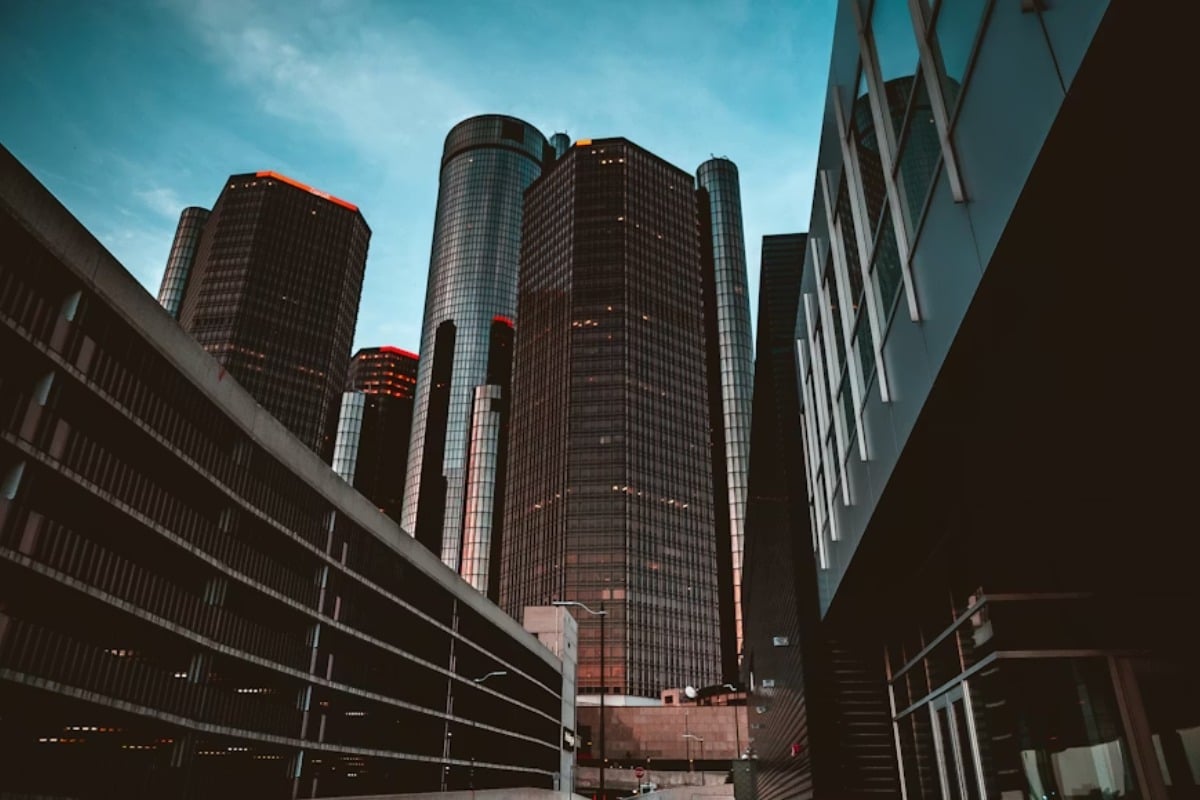
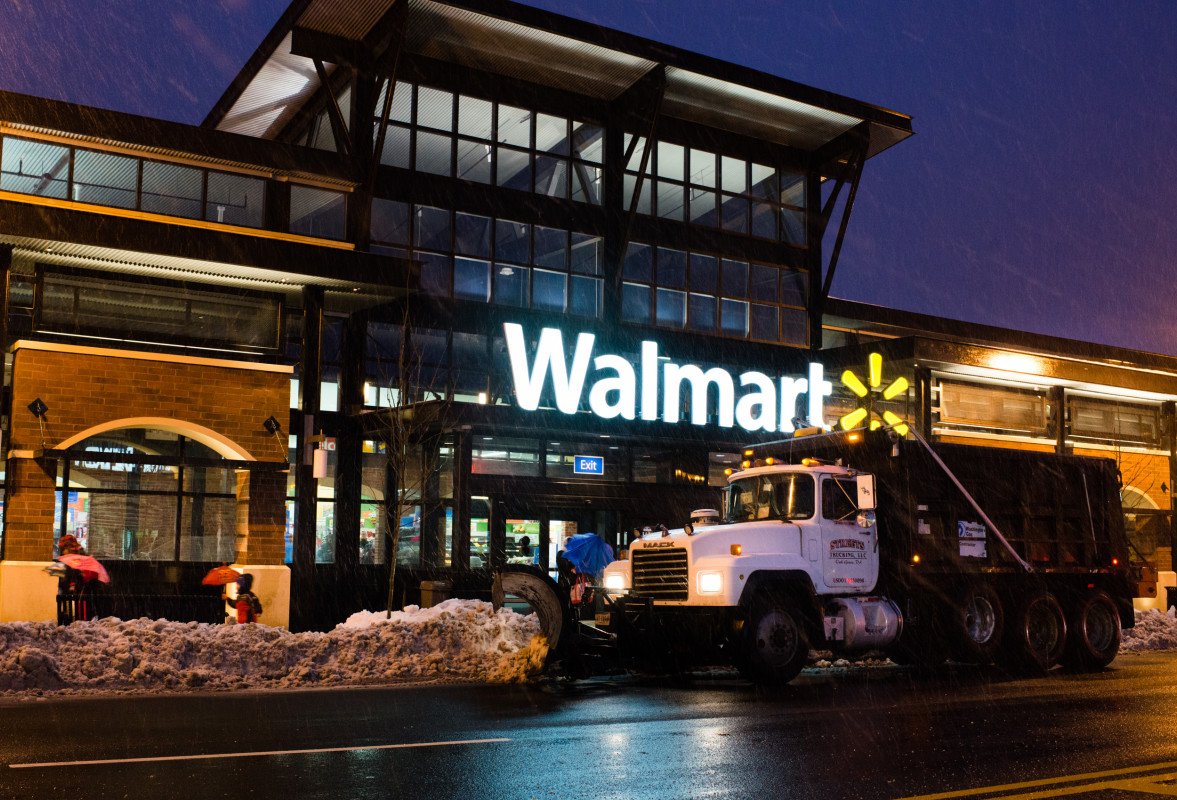
Converting a traditional integrated mill to much-cleaner direct reduced iron (DRI) technology costs billions of dollars, and the Biden-era incentives that could have encouraged companies to make the switch were eliminated by the Trump administration. It’s a hard sell, but GARD considers global steelmaker Nippon Steel’s 2025 acquisition of U.S. Steel’s Gary Works mill, in Gary, Indiana, an opportunity.
Steagall said he “didn’t see a pathway” to green steel until the Japanese company entered the picture.
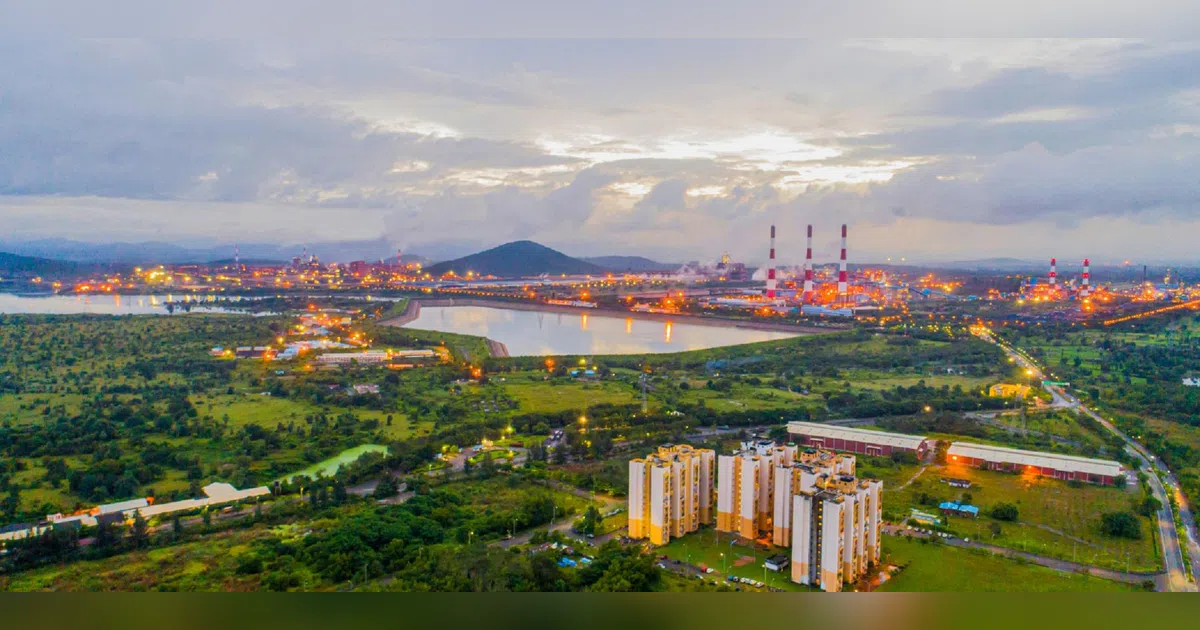
Nippon plans to allocate $3.1 billion for upgrades to Gary Works. About $300 million of that will go toward relining its largest blast furnace — which will extend its life for about another 20 years. The company could use some of the remaining money to replace the mill’s three other blast furnaces with a DRI plant, GARD proposes in a recent report.
It would cost about $3.6 billion to transition Gary Works to cleaner steelmaking, according to the Indiana University report. Modernizing the area’s other two mills, both owned by Cleveland-Cliffs, would cost $2.8 billion to $3 billion each. That’s in line with what the companies have indicated they will spend to maintain those operations.
In a February earnings call, Cleveland-Cliffs announced that it is planning to reline an Indiana blast furnace next year. The company had in fact proposed a DRI conversion at one of its Ohio mills, but backed off the plan after Trump took office in 2025.
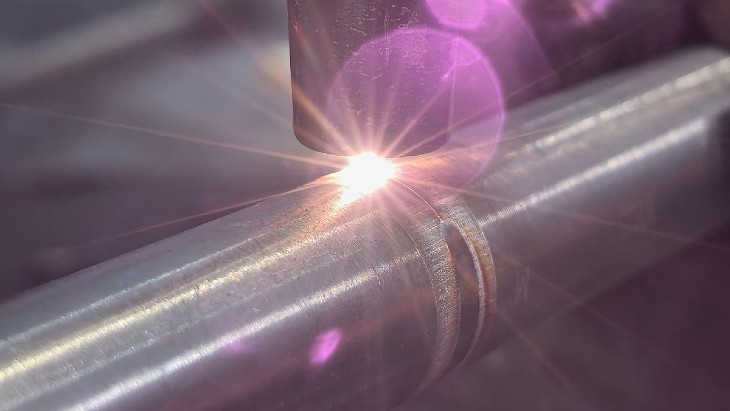
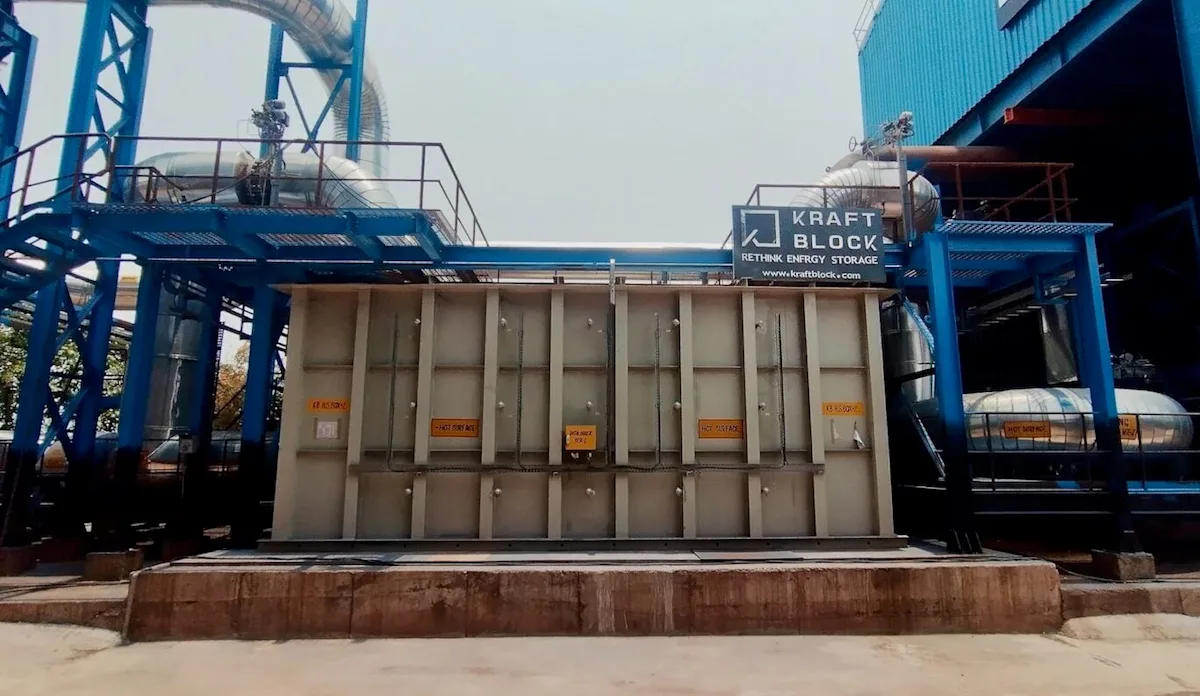
Advocates note that the crucial technology for green steel — DRI paired with an electric furnace — already exists at commercial scale. Large amounts of power are needed for such operations, but it can be provided by natural gas — with far lower emissions than the coal that fuels blast furnaces — or, ideally, green hydrogen, which is produced by splitting water atoms using renewable electricity.
The national climate research groups RMI and Industrious Labs are also touting the feasibility of greening the nation’s integrated steel mills. An RMI analysis shows that such overhauls cost roughly the same as relining and upgrading existing infrastructure.
The biggest challenge may be convincing company leaders to make a major change in an industry that “has never been known to move quickly,” as Steagall put it.
An evolving steel industry
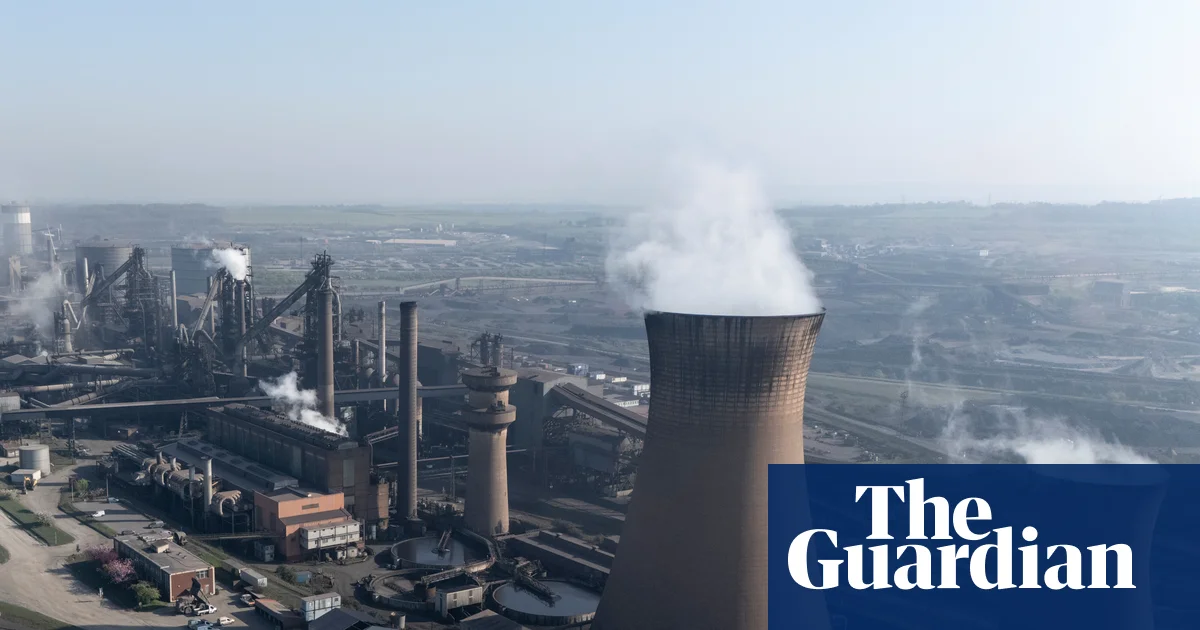
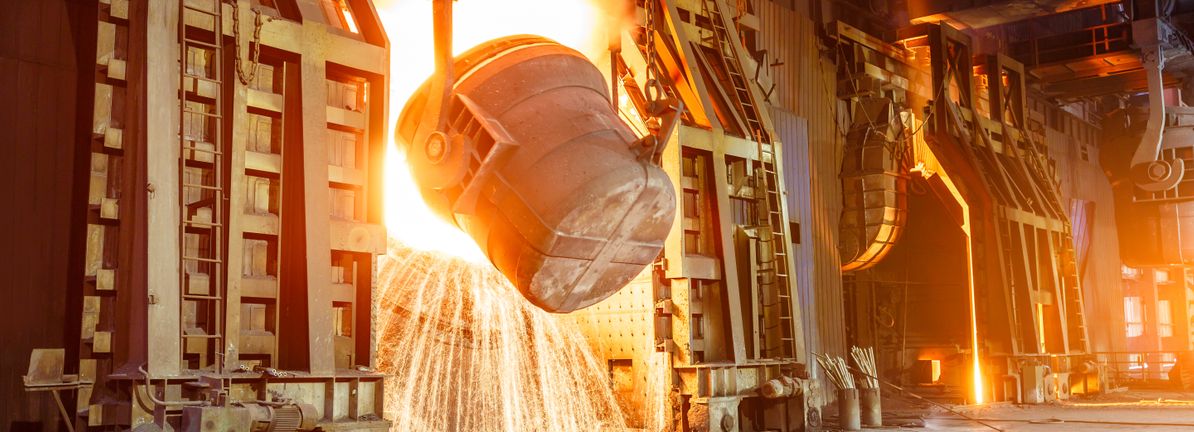
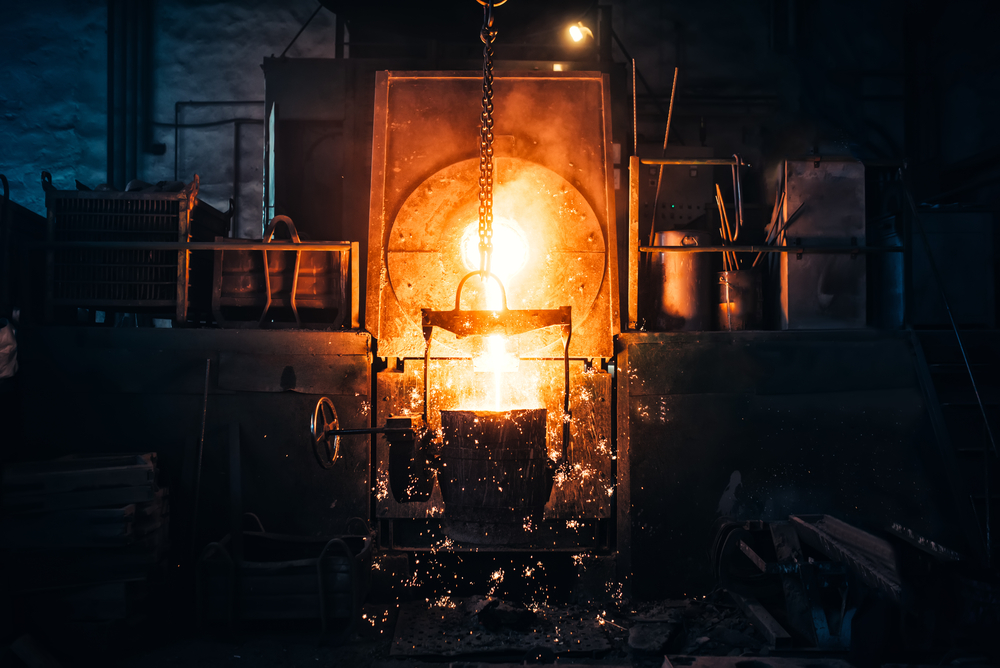
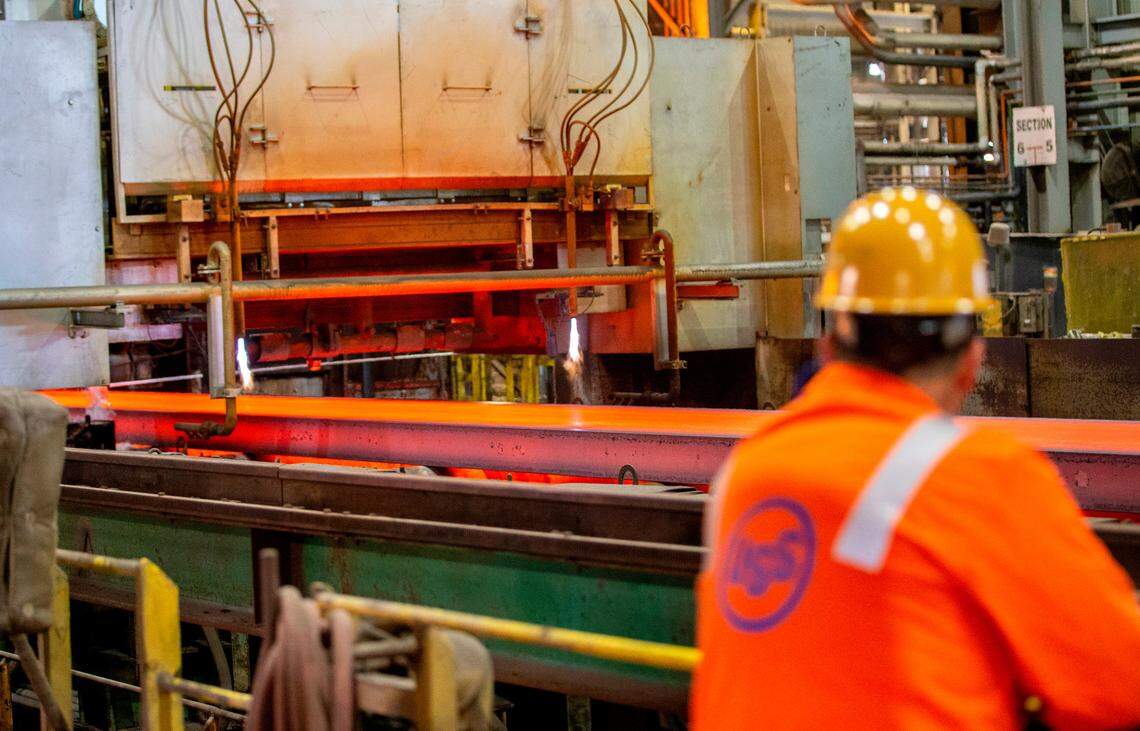
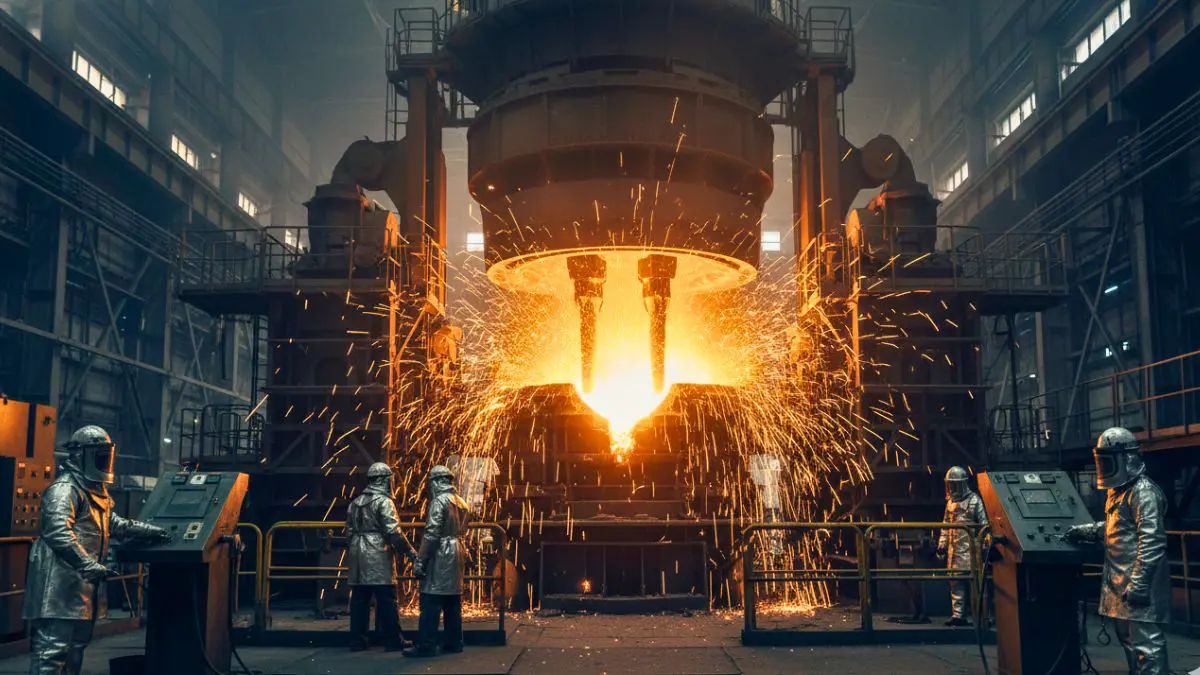
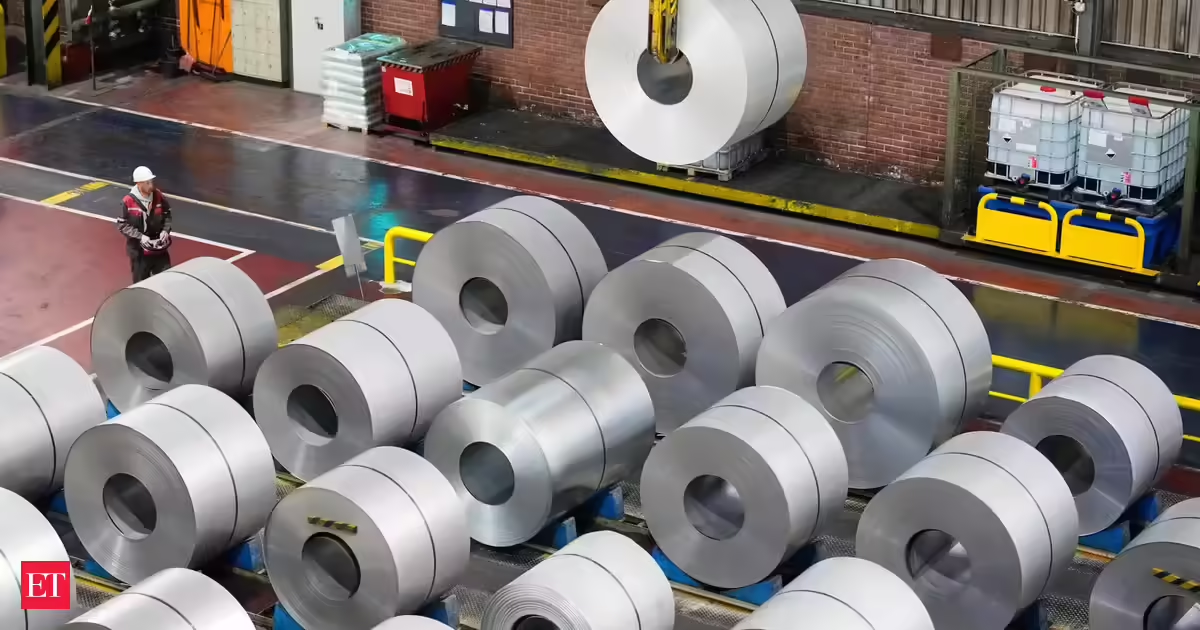
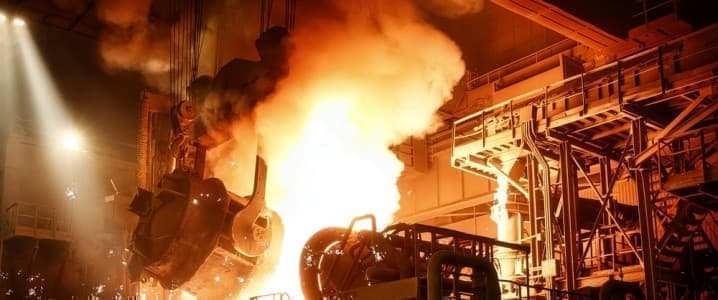
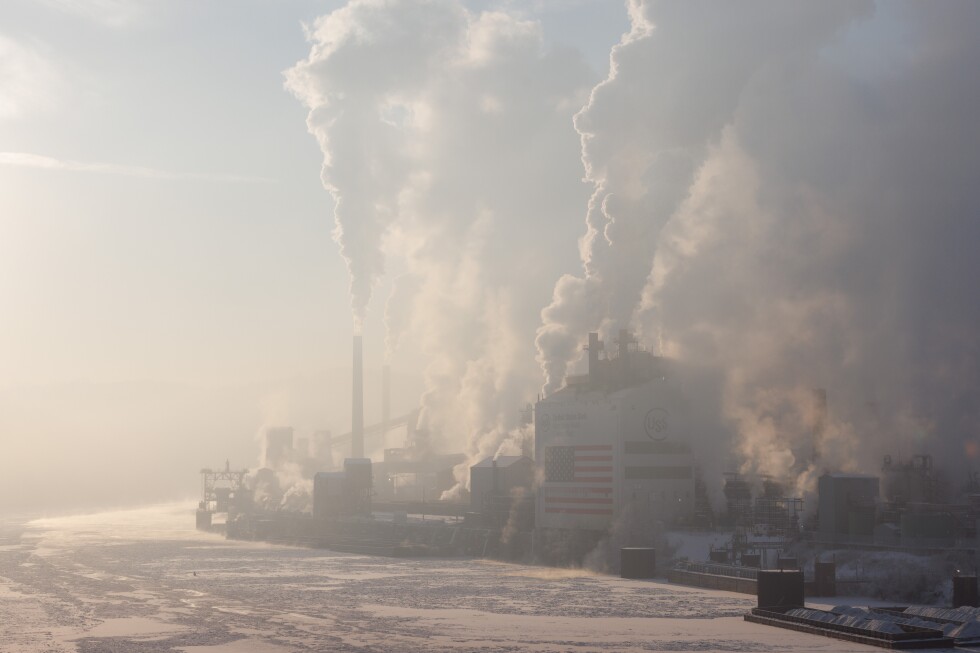
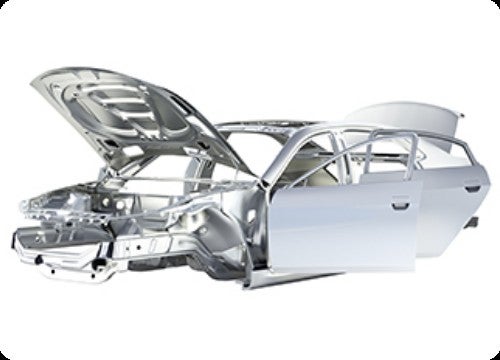
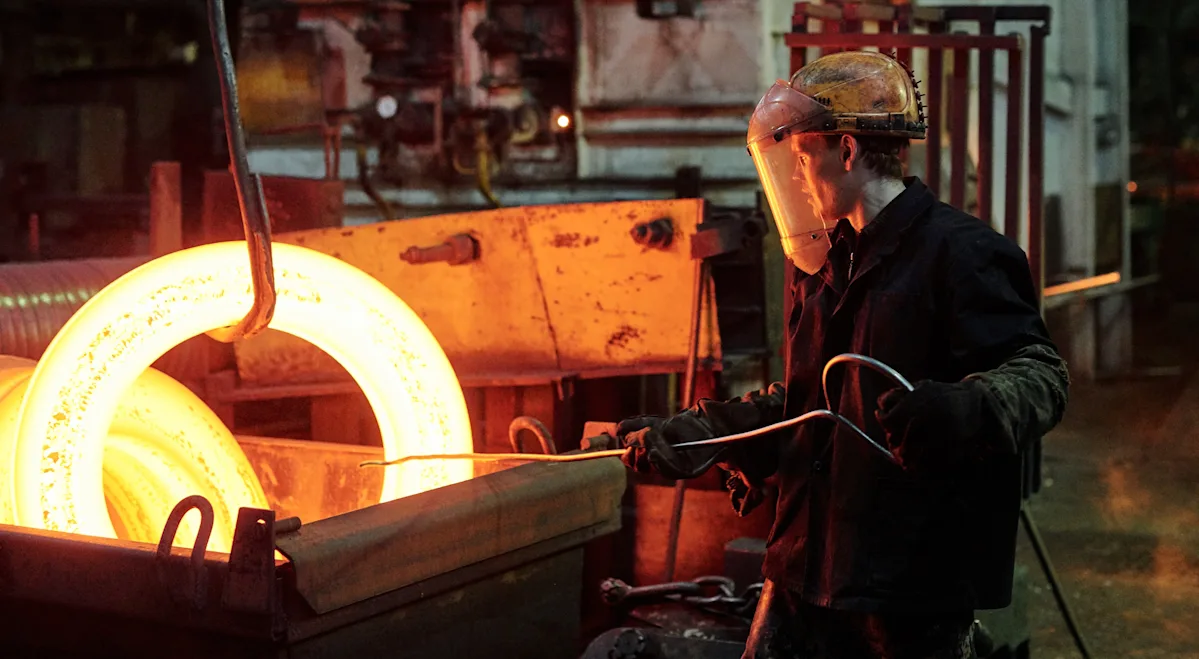
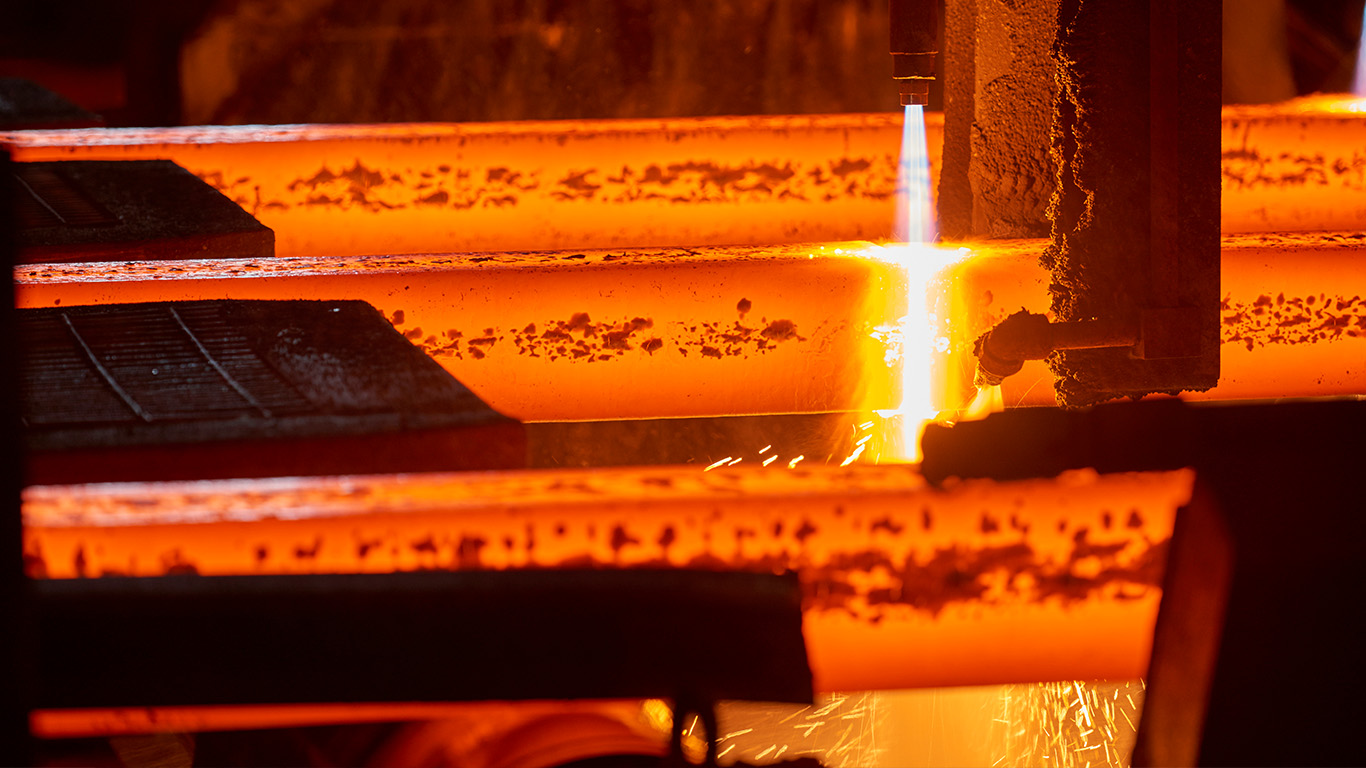
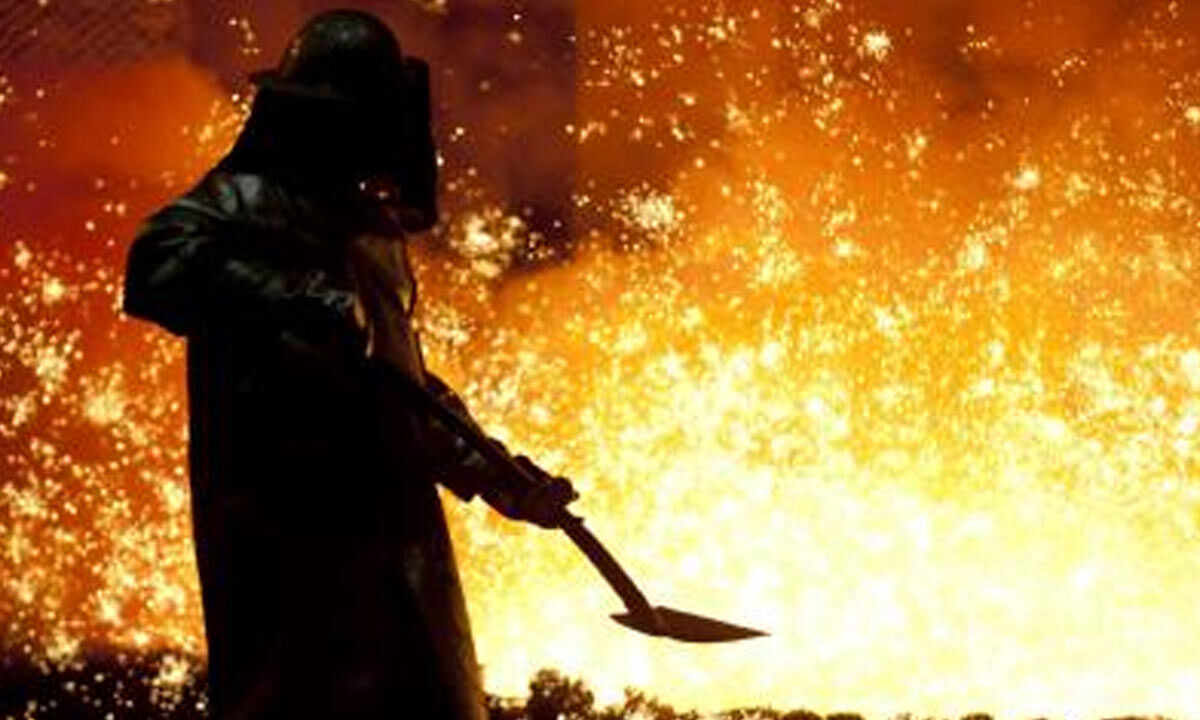
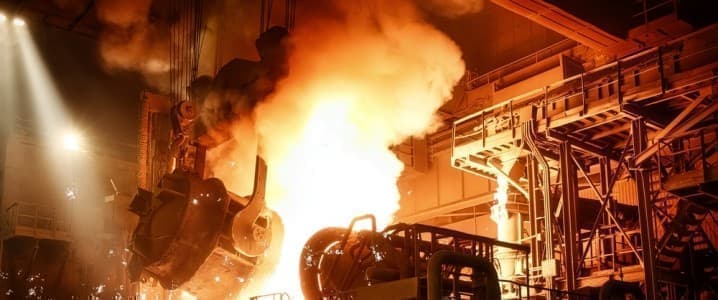
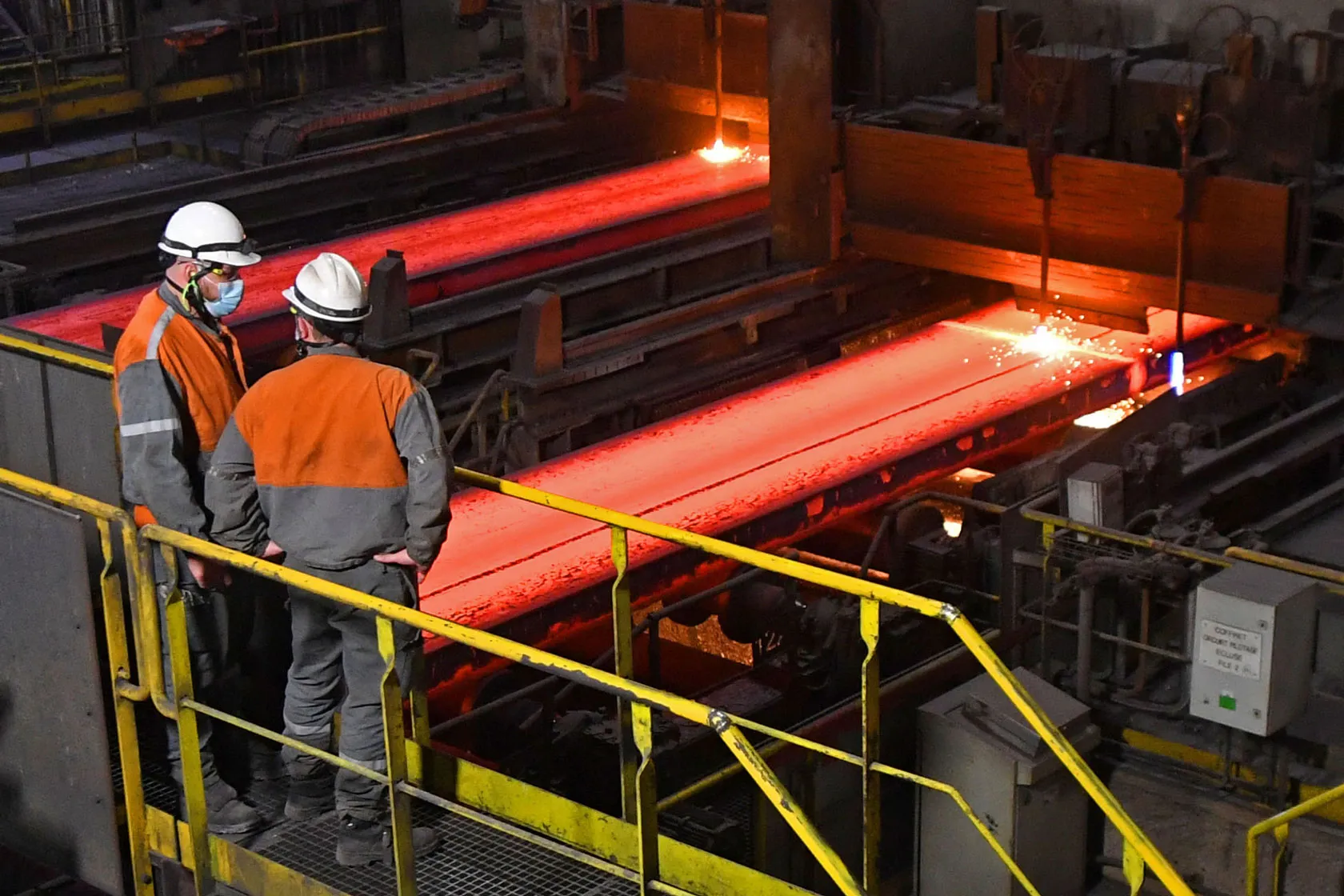
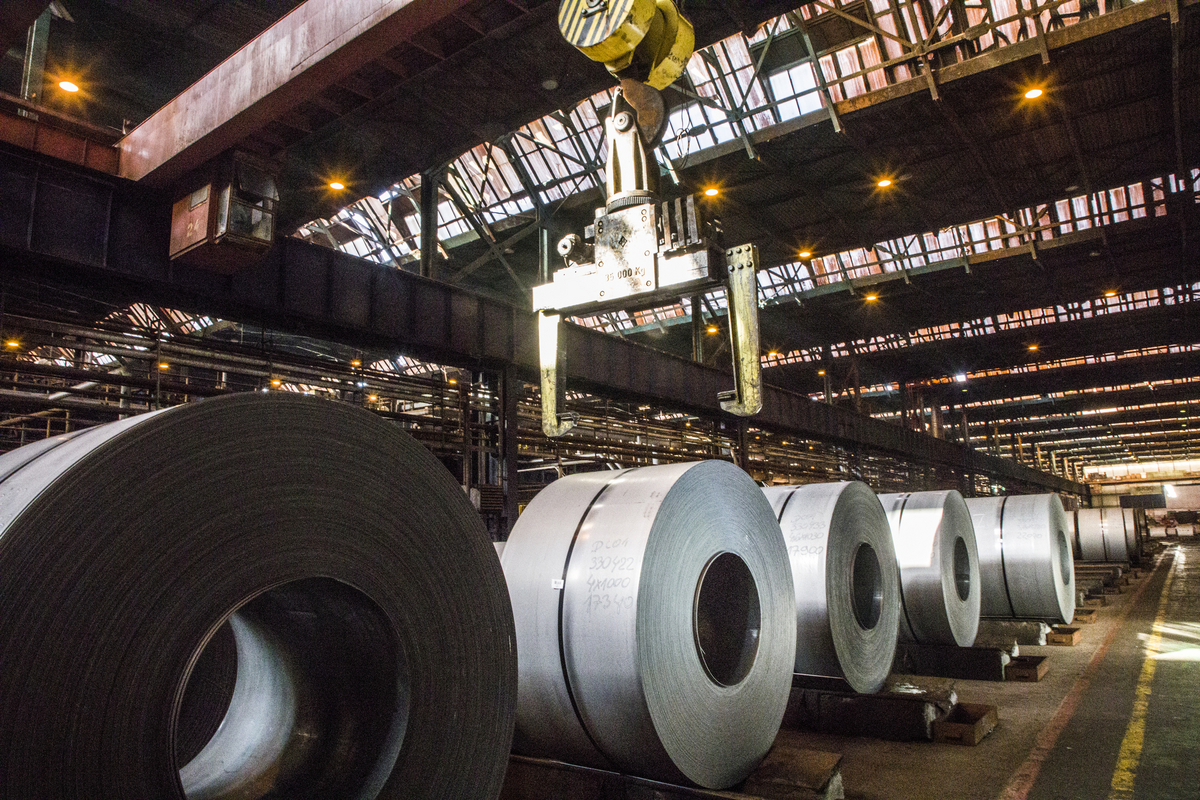
In an integrated steel mill like Gary Works, iron is added to a blast furnace, where it undergoes chemical reactions involving limestone and coke — a baked-down, concentrated form of coal. Molten iron is then converted to “primary steel” in a separate stage. This process results in the type of high-quality, flat-rolled steel suitable for automobiles and buildings.
But it is highly polluting, with about 2 million metric tons of carbon dioxide released for each ton of steel produced globally, along with high levels of particulate matter, sulfur dioxide, nitrogen oxides, and other pollutants.
The fortunes of Gary Works and other integrated steel mills declined starting in the late 1970s because of slowing demand and competition from abroad, including from “mini-mills,” which use electric arc furnaces to make steel — mostly from scrap metal — without producing any iron on-site. Integrated mills in Indiana, Illinois, Ohio, and Pennsylvania downsized their operations and then closed over several decades, transforming thriving cities into Rust Belt relics. Nationwide, steel sector employment fell from about 512,000 in 1974, according to a study by the National Bureau of Economic Research, to about 85,000 today, according to Federal Reserve Economic Data.
“Republic Steel, Bethlehem Steel, J&L Steel, they all shut down or were liquidated,” said Weinberg, who worked for eight years in Gary Works’ sheet and tin division.
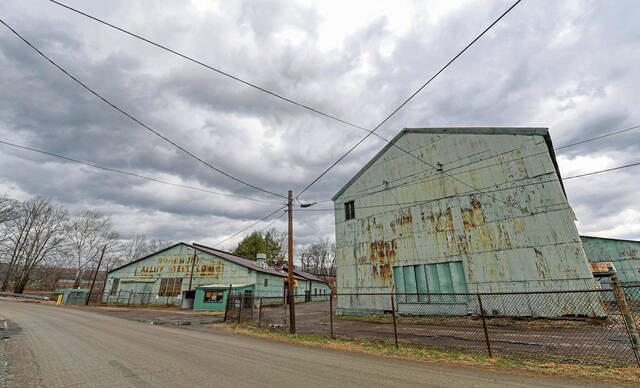
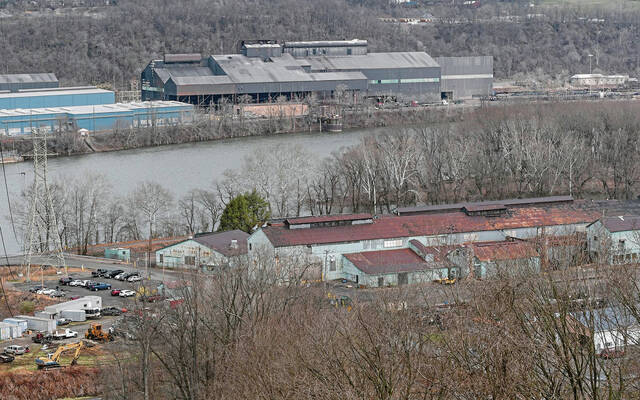
Though the Gary Works mill survived, its workforce was greatly reduced – from more than 30,000 people at its peak in the 1970s to about 4,300 people today. By the 2010s, the city was notorious for its abandoned buildings and urban decay.
As GARD organizers see it, without investments in clean steel, Gary’s fortunes could fall further. The plant’s market niche — high-quality primary steel — is vulnerable to competition from the electric arc furnaces that make at least 60% of the country’s steel today.
Facilities using electric arc furnaces have typically not produced the highest-quality steel, mainly owing to their reliance on recycled steel scrap. But they do still require at least some virgin iron to produce steel, which can come from integrated mills or from on-site DRI facilities. Automakers typically demand steel made in integrated mills, but electric arc furnaces could increasingly compete for that market as their steel quality improves.
Big River Steel, along the Mississippi River in Osceola, Arkansas, is a prime example. Its electric arc furnace uses iron from Gary Works to make high-quality steel. U.S. Steel acquired the mill in 2021, and now it’s part of Nippon’s portfolio. Nippon announced in November that it will build a DRI plant at Big River, which would potentially displace the metal it currently sources from Indiana.
So, such electric arc furnace operations could become competitors, rather than customers, of integrated mills like Gary Works. And they could gain a market advantage if automakers and other industries demand a cleaner supply chain, as GARD and other decarbonization advocates predict.
Nippon lags behind most of its peers globally in its readiness for greening operations, according to a scorecard released March 30 by the international climate advocacy organization SteelWatch. The organization analyzed the decarbonization progress and potential of 18 major steel companies in 29 countries and found that Nippon ranked 17th; U.S. Steel, which was ranked before the acquisition, came in eighth; and Cleveland-Cliffs was sixth. While U.S. Steel could help facilitate Nippon’s decarbonization, SteelWatch said, the plan to reline rather than convert the Gary Works blast furnace represents a “backward trajectory.”
Cleaner steel for a healthier environment
There’s a strong public health argument for greening the mills.
Emissions from blast furnaces are linked to an increase in various cancers, asthma, pulmonary disease, and other ailments. Industrious Labs found that in 2022, Gary Works emitted 182 tons of 24 different toxic chemicals. The health impacts are also a clear environmental injustice: 97% of those living within a three-mile radius of Gary Works are people of color, and almost two-thirds are low-income, according to Industrious Labs’ analysis.
Indiana University’s report found that Gary Works annually emits eight times more carbon monoxide and 50% more particulate matter than the state’s largest coal plant; and the region’s three primary steel mills account for not only the $75 million in healthcare costs but also 27,8000 work days and 26,700 school days lost to illness each year.
GARD member Natalie Ammons did not work in the mills, but her husband did. And she blames the Gary Works blast furnace for his early death from cancer.
Her family’s health problems have continued. Two of Ammons’ granddaughters, both of whom live near the mill, rely on breathing machines that look like scuba apparatus, she said. Modeling done by Industrious Labs using federal algorithms shows up to 114 premature deaths and over 31,000 asthma attacks linked to pollution from Gary Works each year.
Bryant retired from Cleveland-Cliffs Indiana Harbor refinery about four years ago, because she had developed a nodule on her thyroid that impeded her breathing. She attributes it to her exposure to pollution there.
“I was always super healthy. It is odd that happened shortly after I worked a lot of overtime in the lime plant,” she said.
Steagall cites examples like these in calling for Nippon to be “a good corporate citizen” for its American neighbors.
“They’ve got to make their mind up,” he said. “Do they want to be the king of steel or the king of death?”
Nippon has not responded to GARD’s proposals and requests for dialogue nor to a request for comment for this story.
The United Steelworkers union, which the GARD members once belonged to, has similarly not engaged with them. While GARD notes that unions are often reluctant to consider any changes that could disrupt the job market, it warns that the shift to mills in the South with electric arc furnaces could be disastrous for the union — as those plants are typically not unionized. (United Steelworkers did not respond to a request for comment.)
At a recent symposium at Purdue University Northwest, students and faculty clamored to hear more about GARD’s vision for the industry’s future. After the event, the GARD members gathered around a table and reminisced about the jobs they used to do. Their eyes lit up describing the complexities of the steelmaking process.
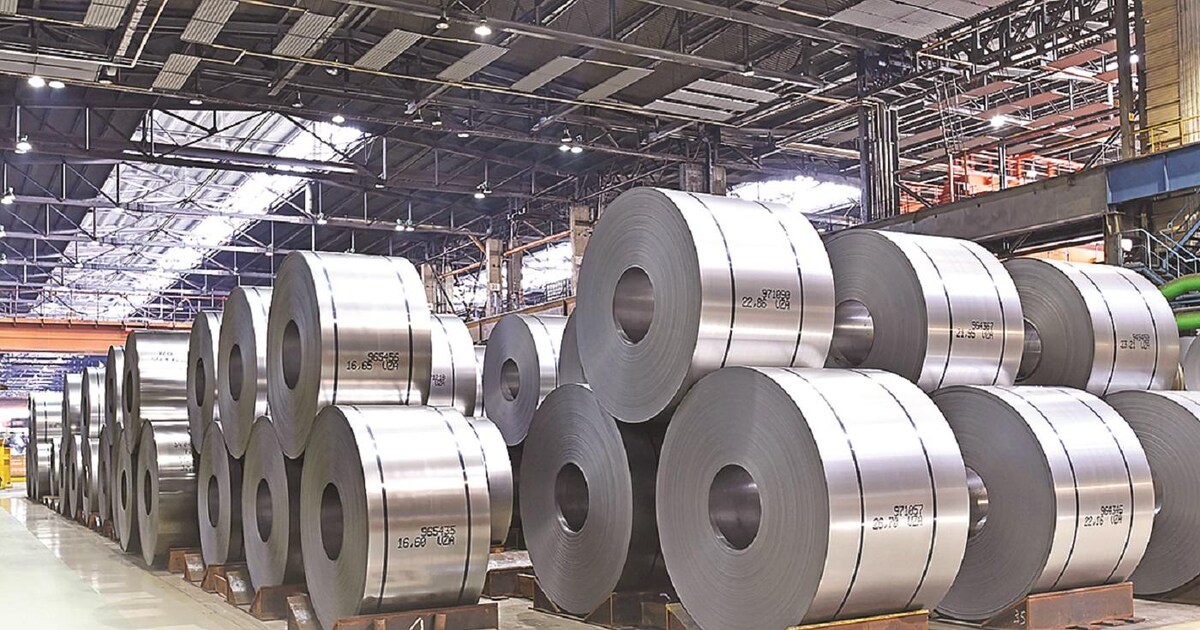
The metal “runs through a big acid bath, then we cut it to specification,” Denney said of the pickle line where she had worked. “At the end, they oil it, and you have this beautiful, very shiny, gorgeous steel.”
Gary itself could be similarly transformed, through clean steel, she imagines.
“People are used to Gary being kind of a throwaway city,” she said. “It’s all bad. There’s an opportunity for it to be all good now for the first time in a while. Nippon could be part of this change. It could be part of changing Gary forever.”
Maria Gallucci contributed reporting for this article.