
Topics Covered
Introduction
Chemical Composition
Physical Properties
Mechanical Properties
Thermal Properties
Other Designations
Fabrication and Heat Treatment
Forging
Annealing
Tempering
Applications
Introduction
High-speed tool steels are divided into molybdenum high-speed steels and tungsten high-speed steels. Molybdenum high-speed steels are known as Group M steels. These steels have lower initial cost even though both types of high-speed steels are equivalent in performance. Tools made using high-speed tool steels can be coated with titanium carbide, titanium nitride, and other coatings by physical vapor deposition process for enhancing performance and prolonging life of the tool. There are different types of molybdenum high speed tool steels. Except M6, M 1 to M 10 contains some tungsten, but no cobalt.
M7 molybdenum high speed tool steels contain chromium, tungsten, and vanadium for strengthening. They have high wear resistance and good hardenability.
Chemical Composition
The following table shows the chemical composition of M7 molybdenum high speed tool steels.
|
Element |
Content |
|---|---|
|
C |
0.84-1.05% |
|
Mn |
0.10-0.40% |
|
Si |
0.20-0.45% |
|
Cr |
3.75-4.50 % |
|
Ni |
0.3 % |
|
Mo |
7.75-8.50% |
|
V |
1.80-2.20% |
|
Cu |
0.25% |
|
P |
0.03% |
|
S |
0.03% |
|
Fe |
Remainder |
Physical Properties
The physical properties of M7 molybdenum high speed tool steels are outlined in the following table.
|
Physical Properties |
Metric |
Imperial |
|---|---|---|
|
Density |
7.95 x 1000 Kg/m3 |
496 lb/ft3 |
|
Melting Point |
1427°C |
2600°F |
Mechanical Properties
The mechanical properties of M7 molybdenum high speed tool steels are tabulated below.
|
Mechanical Properties |
Metric |
Imperial |
|---|---|---|
|
Hardness, Rockwell C (@649°C/1200°F) |
42 |
42 |
|
Hardness, Rockwell C (@50.0°C/122°F) |
65 |
65 |
|
Izod impact unnotched (oil quenched at 1204°C; 482°C temper temperature) |
33.2 J |
24.5 ft-lb |
|
Izod impact unnotched (oil quenched at 1204°C; 593°C temper temperature) |
38.0 J |
28.0 ft-lb |
|
Izod impact unnotched (oil quenched at 1204°C; 622°C temper temperature) |
40.7 J |
30.0 ft-lb |
|
Izod impact unnotched (oil quenched at 1177°C; 482°C temper temperature) |
40.7 J |
30.0 ft-lb |
|
Izod impact unnotched (oil quenched at 1177°C; 593°C temper temperature) |
42.0 J |
31.0 ft-lb |
|
Izod impact unnotched (oil quenched at 1177°C; 622°C temper temperature) |
46.1 J |
34.0 ft-lb |
|
Poisson’s ratio |
0.27-0.30 |
0.27-0.30 |
|
Elastic modulus |
190-210 GPa |
27557-30457ksi |
Thermal Properties
The following table shows the thermal properties of M7 molybdenum high speed tool steels.
|
Properties |
Conditions |
||||
|---|---|---|---|---|---|
|
T (°C) |
Treatment |
||||
|
Thermal expansion |
9.5 x 10⁻⁶/°C |
20-260 |
– |
||
Other Designations
Other designations that are equivalent to AISI M1 molybdenum high speed tool steels include:
-
DIN 1.3348 -
ASTM A600 -
FED QQ-T-590 -
UNS T11307
Fabrication and Heat Treatment
M7 steel can be preheated at 788°C (1450°F). It is then rapidly heated to 1204°C (2200°F). Parts are held at 1204°C (2200°F) for 2 to 5 minutes followed by salt bathing, or quenching in oil or air.
Forging
M1 steels are medium machinable alloys. Machining should be carried out before performing hardening by heat treatment. The machinability of M1 molybdenum high speed tool steels is 50% of that of the W group or water-hardening low alloy tool steels.
Annealing
M7 steels can be annealed at 843°C (1550 to 1600°F). They are then slowly cooled in furnace at a temperature of less than 4°C (40°F) per hour.
Tempering
M1 steels are preheated at 760°C (1400°F ) before heat treatment. They are then heated rapidly to 1190°C (2175°F) for 3 to 5 min followed by oil-quenching, salt bathing or cooling in air. It is then subjected to tempering.
Applications
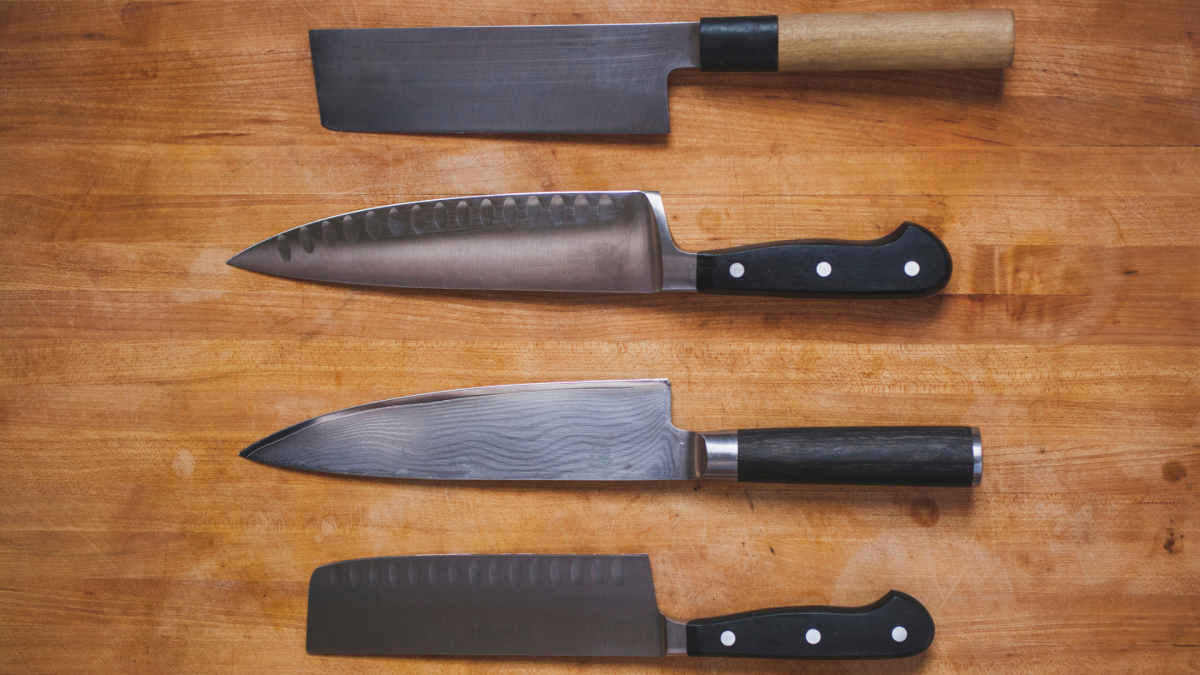
M7 molybdenum high-speed tool steels are mainly used for cutting tools in all machining operations.