
Rye bread and sourdough are both popular choices for snacking or sandwiches. But when it comes to nutrition, rye bread may have a leg up—when it’s made from whole-grain rye, it can pack a punch of fiber that benefits heart health, digestion, and blood sugar. Still, sourdough’s beneficial bacteria make it a smart choice for your gut health, too.
Any style of bread, as long as it’s made with whole-wheat or another whole grain, can be part of a heart-healthy diet. However, rye bread has a slight nutritional edge for heart health—that’s because it contains more fiber than sourdough:
- Sourdough: 1 gram of fiber per slice (28 grams)
- Rye bread: 1.86 grams of fiber per slice (32 grams)
High-fiber foods help you feel full longer, which can reduce overall caloric intake and help you manage your weight. Among other health benefits, maintaining a healthy weight puts less stress on your heart and lowers your risk of heart disease.
Plus, rye bread doesn’t just have more fiber—it also contains a wider variety of different fiber types. Unlike wheat, rye has a significant amount of beta-glucan, a type of soluble fiber linked to lower levels of “bad” low-density lipoprotein (LDL) cholesterol. Healthy cholesterol levels can decrease your risk of developing heart disease, stroke, and other heart health concerns.
Rye bread also contains more potassium than most white or whole-wheat sourdough breads. Potassium helps counteract the effects of sodium in the body, helping lower blood pressure and easing strain on the heart.
Both rye bread and whole-wheat sourdough fall in a similar range on the glycemic index (GI) scale, which measures how quickly a food raises blood sugar after you eat. They’re both generally considered low-to-medium GI foods, and they lead to a less substantial rise in blood sugar than white bread does.
Though the two have similar GI scores, they affect blood sugar for different reason:
- Rye bread and fiber: Rye bread is a good source of fiber, a nutrient that has been associated with healthier blood sugar levels. Specifically, the small amounts of soluble fiber in rye bread may help slow down digestion, reducing sharp spikes in blood sugar. Rye bread has also been linked to improvements in insulin levels, which is key for people with diabetes.
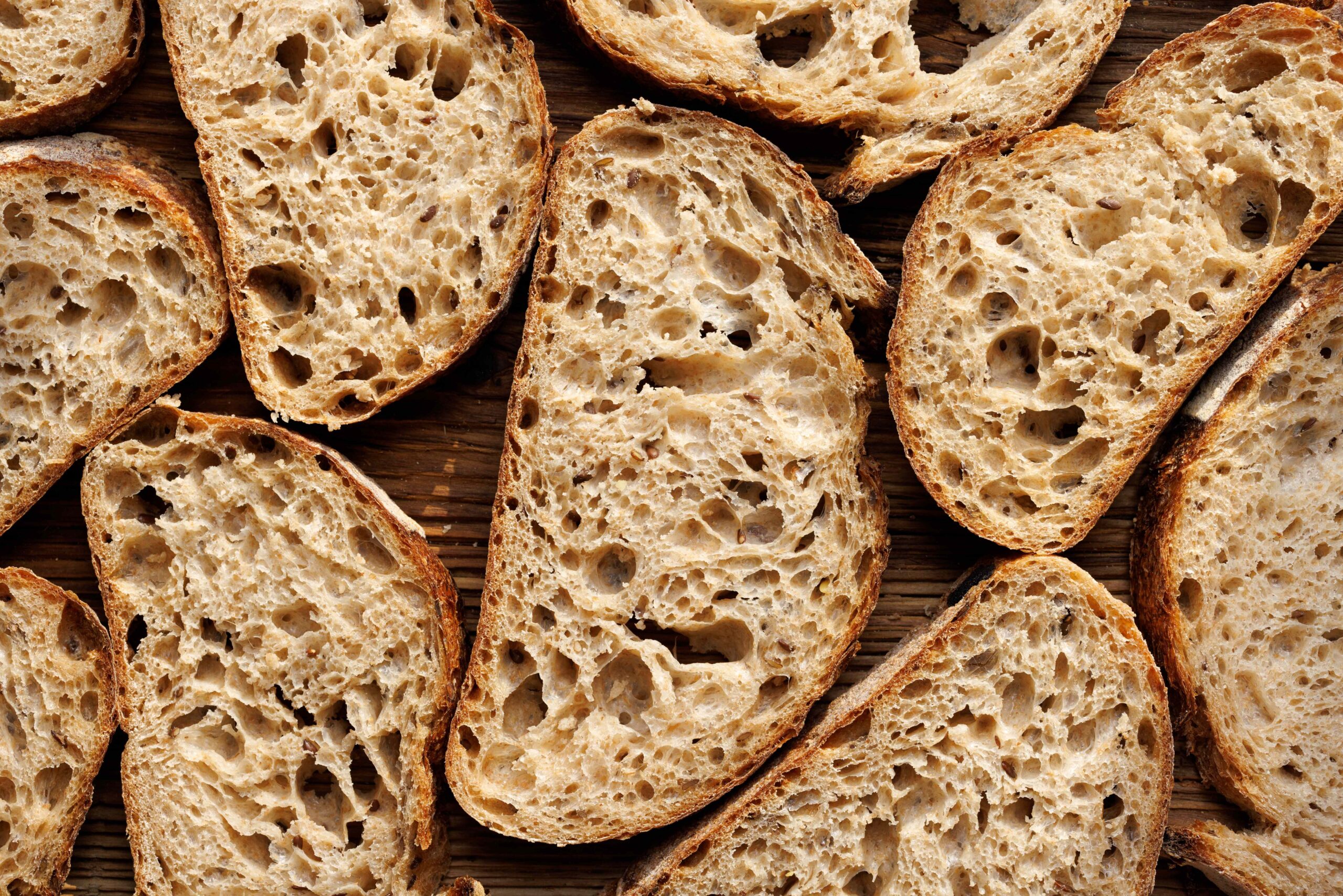
- Sourdough and fermentation: The special yeast and bacteria fermentation used to make sourdough may improve the bread’s impact on blood sugar. Though results vary based on flour type, baking process, and other factors, the sourdough fermentation process generally raises bread’s resistant starch content. Resistant starch can lower a food’s impact on blood sugar levels.
If you are managing blood sugar, consider pairing bread with lean protein or healthy fats to reduce rapid increases in blood sugar.
Rye bread and sourdough can both support digestive health, but which is best depends on your dietary needs and tolerances.
If you need more fiber to promote regular bowel movements, whole-grain rye bread may be the better choice. Rye contains both soluble fiber, which supports overall gut health, as well as insoluble fiber, which adds bulk to stool and prevents constipation. Research has also shown that consumption of high-fiber rye foods is associated with a healthier gut microbiome (the collection of microorganisms that live in your gastrointestinal tract).
Sourdough offers its own distinct digestive advantages. The bread is made by fermenting yeast and bacteria—this process breaks down phytic acid, a compound that can block absorption of minerals, such as iron, calcium, and zinc. By reducing phytic acid, sourdough may boost your body’s ability to absorb nutrients.
On top of that, sourdough may be easier to digest for some people. The fermentation process reduces gluten, which may make sourdough more tolerable for people with minor gluten sensitivities. Additionally, sourdough contains fewer FODMAPs, a group of carbohydrates that can cause stomach pain and other symptoms for people with irritable bowel syndrome (IBS).
Rye bread has a slight edge over sourdough when it comes to vitamin and mineral density, plus it has more fiber. That may make it a healthier choice for some people.
But it’s important to remember that bread’s nutritional quality largely depends on the type of flour used. Whole wheat sourdough is much better for you than refined, white flour versions. The same goes for rye bread—it only lives up to its status as a high-fiber food if you’re consuming whole-grain varieties made from dark rye or pumpernickel flour. Light or medium rye flour is not considered a whole grain.
In addition to choosing whole-grain versions, rye and sourdough bread can be part of a healthy diet. That’s especially true if you:
- Watch portion sizes: A typical serving for rye and sourdough is technically one slice of bread. Eating large servings of any bread can add extra calories to your diet, potentially undermining weight management goals.
- Pair bread with other nutritious foods: Eat bread alongside protein, healthy fats, or vegetables to create a balanced meal or snack. These combinations can help you feel full longer and support more stable blood sugar.